
Choosing the right sander depends on your project size, desired finish, and dust control needs. The following picks represent a range of corded and cordless models ideal for woodworking tasks from detailed work to large surface prep. This guide highlights who each sander is best for, with clear comparisons to help you decide quickly.
Summary of chosen products
| Product | Brand | Type | Best For |
|---|---|---|---|
| SKIL 5” Random Orbital Sander | Skil | Random Orbital | General sanding, dust control |
| SKIL Corded Multi-Function Detail Sander | Skil | Detail Sander | Edges, contours, fine finishing |
| DEWALT Random Orbit Sander (DWE6423) | DEWALT | Random Orbit | Balanced power and comfort |
| DEWALT 20V MAX Orbital Sander (DCW210B) | DEWALT | Cordless Orbital | Portable, quick touch-ups |
| WEN 6301 Electric Detailing Palm Sander | WEN | Detail Palm | Precision, small projects |
Skil SR211601 5” Random Orbital Sander

Key features include a 2.8-amp motor delivering up to 13,000 OPM for fast material removal, a cyclone dust box for easier cleanup, and variable speed control to adapt to different materials. Best for: hobbyists and DIYers who need solid, affordable performance with straightforward dust containment. Limitation: smaller dust container may need more frequent emptying on heavy-duty jobs. This sander is a strong all-around choice for general preparation and finishing tasks.
Skil SR232301 Corded Detail Sander
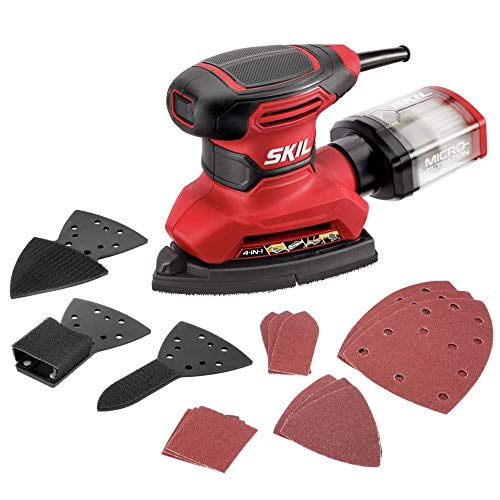
This 4-in-1 detail sander offers 13,500 OPM with a 1.2-amp motor and includes three attachments for fine finishing, corners, and edges. Best for: detail-oriented tasks on curved or complex profiles where precision matters. Limitation: lighter motor may be less effective on heavy stock removal compared to larger orbital sanders. Choose this if you need versatility and fine control in tight areas.
DEWALT Random Orbit Sander, DWE6423

With a 3-amp motor and 8,000–12,000 OPM, this sander focuses on smooth operation and reduced vibration thanks to a separate counterweight. Best for: users seeking a balance of power and comfort for longer sanding sessions. Limitation: corded design limits portability for remote work areas. Use this for large surface prep where consistent speed matters.
DEWALT 20V MAX Orbital Sander, DCW210B

This cordless option uses a brushless motor for efficiency and runtime, with variable speed from 8,000 to 12,000 OPM and a low-profile body for close-to-surface sanding. Best for: projects needing mobility without a power cord, such as assembly lines or outdoor work. Limitation: battery dependence may require additional packs for extended jobs.
WEN 6301 Electric Detailing Palm Sander

Featuring a small 3.75 x 5.5 inch pad with an angled tip and a lightweight 1-amp motor delivering up to 13,500 OPM, this model is ideal for precision on small panels. Best for: tight detail work and edges. Limitation: lower power makes it less suited for aggressive material removal on larger surfaces.
WEN Benchtop Belt And Disc Sander
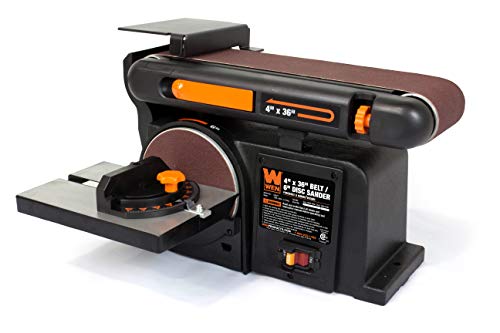
Two-in-one sanding machine with a belt (4 x 36 in) and a 6 x 6 in disc, plus a cast iron base for stability. Best for: versatile setups where you need rapid stock removal and shaping on larger components. Limitation: belt and disc alignment may require occasional maintenance to maintain precision.
Buying Guide: Key Purchase Considerations
- Project size and material: For large flat areas, consider random orbital sanders with higher OPM. For intricate edges, detail sanders excel.
- Power source: Corded models provide consistent performance; cordless models offer mobility for remote work locations.
- Dust management: Look for integrated dust boxes or vacuum-attachable dust ports to minimize cleanup and protect your breathing zone.
- Vibration control: Models with counterweights or optimized ergonomics reduce fatigue on long sessions.
- Pad size and shape: 5-inch pads are common for general use; smaller detailing pads are better for corners and contours.
- Attachments and accessories: Extra sanding sheets and various attachments add versatility for different finish tasks.
Frequently Asked Questions
- What is the difference between random orbital and detail sanders?
– Random orbital sanders offer faster material removal on flat surfaces with a random pattern for a smoother finish, while detail sanders excel at corners, edges, and contours with precise control. - Are dust collection systems worth it?
– Yes, for cleaner workspaces and better respiratory safety, especially in enclosed spaces. - Should I choose a corded or cordless sander?
– Corded models provide steady power for longer jobs; cordless options are better for mobility and cramped areas. - What pad size should I start with?
– A 5-inch pad covers most projects; smaller pads are better for intricate work and edges. - How important is vibration reduction?
– Important for comfort and control, which can improve finish quality and reduce user fatigue.