
If you’re refinishing a wood deck, you need a sander that delivers a smooth, even surface without gouging the wood or wasting time. This guide highlights five well-rounded sanders that are suitable for deck work, including detail sanders for tight corners and random-orbit sanders for larger surfaces. Each product is chosen for its balance of performance, dust control, and comfort. Whether you’re a DIY homeowner or tackling a professional deck project, these options help you finish faster with reliable results.
| Product | Best For | Key Feature |
|---|---|---|
| Skil SR211601 | General deck sanding and finishing | Cyclonic dust box and variable speed |
| Skil SR232301 | Detail work on railings and edging | Micro-filter dust box with 4-in-1 attachments |
| DEWALT DWE6421K | Longer projects with steady power | Low-vibration counterweight and dust-sealed switch |
| DEWALT DWE6423 | Versatile sanding in tight spaces | Variable speed, strong dust management |
| BLACK+DECKER BDERO100 | Budget-friendly, lightweight decks | High 12,000 OPM for fast material removal |
Skil 5” Random Orbital Sander With Cyclonic Dust Box

Best for general deck refinishing. This sander uses a 2.8-amp motor delivering 13,000 orbits per minute for smooth, efficient material removal. The cyclonic dust box helps keep the work area cleaner, with an easy-to-empty transparent container. Variable speed control allows adjusting power for different deck woods and finishes. Ideal for mid-sized decks and follow-up finishing on rails and boards.
Who it’s best for: Homeowners tackling mid-sized decks or projects requiring a balance of speed and dust control. Why selected: Combines strong sanding performance with a user-friendly dust collection system.
Caution: The compact dust container may fill quickly on very dusty jobs; plan for regular emptying on large areas.
Skil Corded Multi-Function Detail Sander
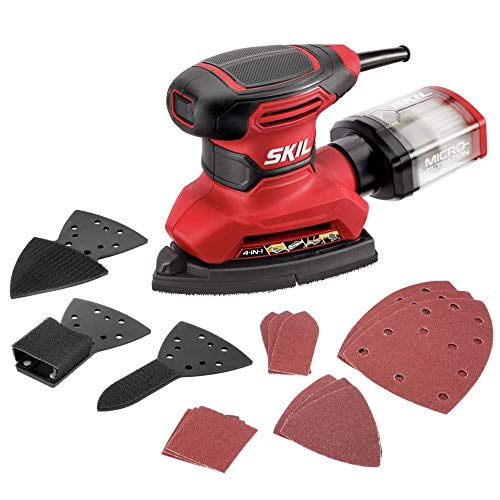
This 4-in-1 detail sander excels on edges, corners, and tight spots around a deck’s rail posts and stair stringers. It features an easy-to-change set of three detail attachments for targeted finishing and a 1-1/4″ dust port compatible with vacuum attachments, helping keep dust away from you and the deck. The motor delivers 13,500 orbits per minute for efficient micro-detail work and better edge control.
Who it’s best for: enthusiasts who need precise control in corners and along boards. Why selected: The attachment set and micro-filtration-like dust management improve results in tricky deck areas.
Caution: The tool’s higher precision does not replace the need for steady hands on large flat surfaces, which may still require a larger orbital sander.
DEWALT Orbital Sander Kit, 5 Inch, 3 Amp
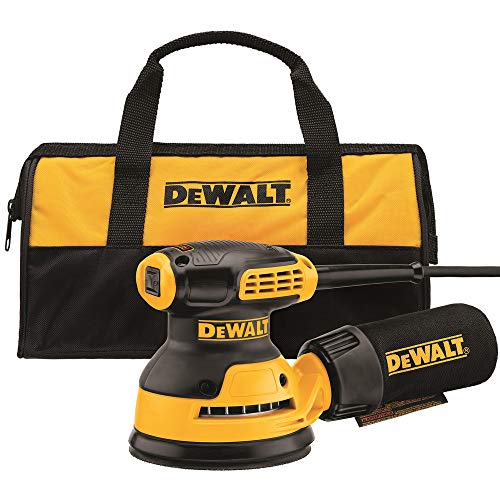
Best for longer deck projects needing steady performance. The 3-amp motor combined with a 12,000 OPM rating provides reliable material removal. A shorter height helps you get closer to the workpiece, and a separate counterweight design reduces vibration for greater comfort over extended sanding sessions. It’s a solid choice for decks with larger surface areas and minimal contouring requirements.
Who it’s best for: DIYers or professionals doing mid- to large-area deck refinishing with a focus on vibration control. Why selected: Durable and consistent performance with practical vibration reduction.
Caution: Heavier use may still cause fatigue; consider a lighter alternative for overhead or high-angle finishes.
DEWALT Random Orbit Sander, Variable Speed (DWE6423)

Best for versatile deck work in tight spaces. The sander offers variable speed and a robust 3-amp motor that spans 8,000–12,000 OPM, making it adaptable to different deck woods and finishes. A notable feature is the improved dust-sealed switch which enhances durability in dusty job sites. The tool’s compact design helps reach corners and edges effectively.
Who it’s best for: Deck projects requiring flexibility and reliable dust management. Why selected: Combines adjustable speed with rugged construction for extended use.
Caution: The higher-profile body may feel bulkier in cramped deck corners; use a detail sander for tight spots as needed.
BLACK+DECKER Orbital Sander BDERO100

Best budget-friendly option for deck prep. It delivers 12,000 OPM and an efficient swirl-free finish with a 2.0-amp motor. The sander is lightweight and compact, making it easy to maneuver in tight deck spaces or on curved boards. It’s a solid entry model for basic deck sanding and cleanup runs between coat applications.
Who it’s best for: Beginners or budget-conscious DIYers working on small to mid-sized decks. Why selected: Affordable, compact, and capable of quick material removal.
Caution: May lack some advanced dust management features found in pricier models; plan for additional dust control when sanding dusty woods.
Buying Guide: How To Choose The Right Deck Sander
- Sanding task and surface area: For large, flat deck areas, opt for a random-orbit sander with higher OPM. For edges, corners, and detail work, a 4-in-1 detail sander or a compact orbital sander is advantageous.
- Dust management: Look for a tool with a built-in dust collection system or a compatible vacuum port. A cleaner work surface reduces finish imperfections and health risks.
- Power and speed controls: Variable speed helps match the tool to different deck woods and coatings. Higher speeds remove material faster on soft woods; lower speeds reduce gouging on hard woods.
- Ergonomics and vibration: Consider counterweight designs and comfortable grips. Less vibration improves control on elevated decks and long sanding sessions.
- If you need precision near rails or steps, a detail sander with accessible attachments is valuable. Check dust port compatibility with your vacuum system.
- Weight and mobility: Heavier units may fatigue you over extended jobs. Lighter options excel for overhead work or frequent repositioning.
Frequently Asked Questions
- What sander is best for decks overall? – A random-orbit sander with a dust collection system is usually best for large deck surfaces, while a detail sander helps with edges and corners.
- Should I use a variable speed sander for decks? – Yes. Variable speed lets you adapt to different woods and finishes, reducing gouging on hard woods and improving finish quality on soft woods.
- Is dust collection important for deck sanding? – Yes. Dust control improves visibility, reduces inhalation risk, and helps prevent finish contamination.
- Can I use a drill-powered disk sander for decks? – A dedicated orbital or detail sander offers more consistent results and better control on curves and edges, so it is generally preferred for deck work.
- What about attachments? – Attachments expand versatility for edging, corners, and rail gaps. Ensure compatibility with the sander’s dust port and mounting system.
- How do I avoid gouging the deck during sanding? – Start with a coarser grit for removal, then finish with finer grits. Apply even pressure and keep the sander moving to prevent flat spots.