
Choosing a rubber roof coating involves balancing durability, UV resistance, flexibility, and ease of application. This guide reviews five top-rated options to help homeowners, RV owners, and commercial technicians select coatings that seal leaks, extend roof life, and improve energy efficiency. Each product is evaluated on adhesion, elasticity, reflectivity, and suitability for common roof substrates like EPDM, asphalt, and metal.
| Product | Brand | Key Benefit | Typical Use |
|---|---|---|---|
| AMES RESEARCH MSS1 Maximum Stretch Roof Coating | AMES | 650% elongation; high reflectivity | Low-slope roofs, metal, tar, RV roofs |
| Liquid Rubber Waterproof Sealant | Liquid Rubber | Over 950% elongation; durable waterproof membrane | Flat roofs, foundations, gutters, metal and more |
| HENG’S Rubber Roof Coating | HENG’S INDUSTRIES | UV resistant; expands/contracts with roof | RV roofs, seams, vents, and repairs |
| Gardner-Gibson Rubberized SBS Roof Coating | Gardner-Gibson | Rubberized SBS formula; flexible seal | Asphalt and rubberized coatings for roofs |
| RubberTop Roof Coating | Rubbertop USA | Waterproof, UV resistant; easy to apply | Elastomeric roof coating for diverse substrates |
Note: Each product below is evaluated for compatibility with common roof materials, including EPDM, TPO, metal, and asphalt-based surfaces. Application methods vary between brush, roll, or spray. Always follow the manufacturer’s instructions and perform a small test area before full-scale use.
AMES Maximum-Stretch Roof Coating Review
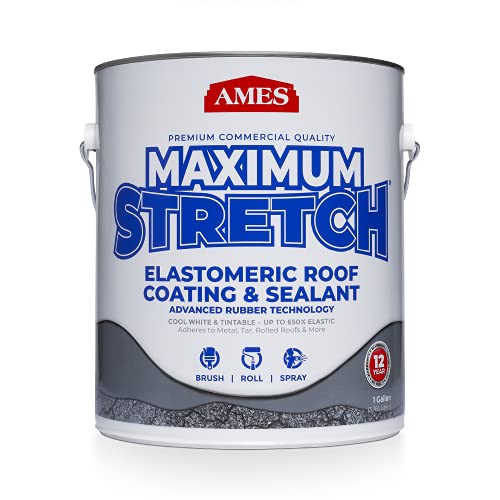
AMES RESEARCH LABORATORIES MSS1 Maximum Stretch Roof Coating is a white, elastomeric acrylic coating designed to resist cracking and peeling through 650% elongation. Its high reflectivity—up to 88%—helps reduce surface temperatures, potentially lowering cooling costs. The product adheres to metal roofing, tar, rolled roofs, and is marketed for RV roofs and other low-slope applications. The coating remains flexible over time, maintaining an elastic seal during expansion and contraction. The versatility to brush, roll, or spray makes it suitable for varying project sizes and preferred application methods.
Performance considerations include the balance between weather resistance and ease of cleanup. While the bright white finish reflects solar heat effectively, ensure surface prep is thorough to maximize adhesion to textured or aged substrates. For roof maintenance programs, MSS1 provides a reliable option for patching small leaks and restoring waterproof integrity across diverse roof types.
Liquid Rubber Waterproof Sealant Overview

Liquid Rubber’s Waterproof Sealant is a robust, bitumen-based formula designed to create a seamless waterproof membrane on flat, low-slope, and standing water surfaces. With claimed elongation exceeding 950%, the sealant maintains adhesion even during movement and temperature fluctuations. It offers strong resistance to cracking, peeling, and UV damage, and can be applied via brush, roller, or spray. Coverage varies by surface type: about 15 square feet per gallon on flat roofs (with 60-80 mils thickness) and up to 30 square feet on vertical surfaces like foundations. This makes it a practical option for both roof repairs and preventative maintenance.
For users targeting long-term waterproofing on complex roof geometries, Liquid Rubber provides a flexible, durable layer that accommodates structural shifts. However, the thicker application required for full membrane performance means planning ahead for larger projects and ensuring adequate ventilation during application and curing.
HENG’S Industries Rubber Roof Coating Review
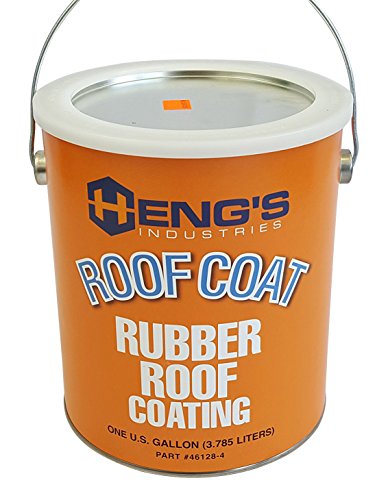
HENG’S Industries Rubber Roof Coating is designed specifically for RV rubber roofs. It emphasizes UV resistance and the ability to expand and contract with roof movement, helping to prevent cracking and maintaining a watertight seal at seams, tears, vents, and air conditioners. The coating is promoted as non-polluting and non-toxic, aligning with safety considerations for occupied spaces. Its formulation aims to provide reliable flexibility in variable weather conditions, which is essential for mobile or semi-permanent roof installations where substrate movement can be pronounced.
Users should plan for proper surface preparation, including cleaning and drying of the roof surface, to maximize adhesion and longevity. While the product offers strong UV resistance and elasticity, performance is highly dependent on clean, dry substrates and correct thickness application. HENG’S is a strong option for RV owners seeking a dedicated solution for rubber-roof repairs and sealing vulnerabilities in high-traffic or exposed areas.
Gardner-Gibson Rubberized SBS Roof Coating

Gardner-Gibson’s 4.75 gallon Rubberized SBS Roof Coating blends rubber with reinforcing fibers to deliver a strong, flexible seal for asphalt or rubber roof systems. The SBS (styrene-butadiene-styrene) modification enhances elasticity and crack resistance, making it suitable for areas with roof movement and temperature variation. The product’s high-volume container suits larger roofing projects or surface re-coating needs. It provides a unified protective layer that can bridge minor substrate irregularities while maintaining waterproof performance over time.
Application requires careful substrate preparation and appropriate substrate compatibility checks. Because of its heavier volume and heavier-duty composition, coverage per gallon will vary with substrate porosity and application thickness. For projects involving older or slightly damaged roofs, this coating can serve as a durable bridge coating between structural repairs and long-term maintenance cycles.
RubberTop Roof Coating Fundamentals

RubberTop USA’s RubberTop Roof Coating is an elastomeric coating based on acrylic and siliconized chemistry. It is designed to be waterproof, with notable UV resistance and performance under both heat and cold. The product claims to lower interior temperatures by reducing heat transfer, which can contribute to energy savings in warm climates. Its user-friendly application formats include spray, roller, or brush, enabling quick coverage for different roof profiles and project scales.
When applying RubberTop, prepare the surface to remove debris and ensure dryness. The coating’s elastomeric nature helps accommodate minor roof deflections, but excessive structural movement or ponding should be addressed prior to coating. Its versatility makes it a viable choice for multi-substrate roofs, including metal, asphalt, and single-pipe penetrations where sealing is critical.
Buying Guide: Key Considerations For Rubber Roof Coatings
Choosing the right rubber roof coating requires evaluating substrate compatibility, climate, and maintenance plans. Consider these factors to select a product that offers long-term performance:
- Elongation And Elasticity: Higher elongation values indicate better resistance to cracking and movement. This is especially important on aging roofs or roofs prone to thermal expansion.
- Reflectivity And Heat Reduction: Light-colored coatings reflect solar radiation, reducing surface temperatures and potentially lowering cooling costs. Measure reflectivity to estimate energy benefits in hot climates.
- Substrate Compatibility: Confirm whether the coating adheres to EPDM, TPO, asphalt, metal, or concrete. Some formulas are substrate-specific or require primers for best adhesion.
- Application Method: Brush, roller, and spray options offer flexibility for different project sizes and access. Check coverage rates per gallon to plan quantities accurately.
- Durability Under Weather: UV resistance, resistance to cracking and peeling, and performance under freeze-thaw cycles impact longevity. Consider products with proven UV stability for exposed roofs.
- Maintenance and Repairs: Some coatings allow patching and touch-ups without re-coating the entire surface. This can reduce maintenance costs over time.
- Safety And VOCs: Look for formulations that meet local environmental and safety standards. For inhabited spaces, low-VOC options may be preferred.
Bottom line: For small to medium roof projects prioritizing elasticity and reflective benefits, the Ames MSS1 Maximum Stretch and Liquid Rubber Waterproof Sealant provide strong performance with different application needs. HENG’S Industries offers RV-specific flexibility, while Gardner-Gibson’s SBS blend adds ruggedness for asphalt-coated roofs. RubberTop delivers a versatile option with heat-reflective properties suitable for varied substrates. A careful assessment of roof type, climate, and maintenance goals will guide the best coating choice for durable waterproofing.