
The best roofing underlayment for shingles combines tear resistance, weather protection, and ease of installation. This guide highlights five reliable options and explains who each product is best for. Whether you’re a DIY homeowner, a professional contractor, or tackling a roof refresh, these selections offer durable secondary protection and practical installation features.
Summary of selected products:
| Product | Best For | Key Benefit |
|---|---|---|
| Grip-Rite SL154250LWE | Budget projects and labor savings | Lighter, stronger, energy-efficient; 10 square roll saves time |
| FT Synthetics Platinum HT-B | Low-slope or high-temp applications | Self-adhering with 100% butyl for strong bond |
| DuPont Roof Protector | Durable multi-layer protection | Four-layer construction with grip and moisture barrier |
| SFNSM EPDM Peel & Seal (50 mil) | Flat or low-slope roofs and repairs | Self-adhesive EPDM for broad coverage and sealing |
| HYDROSHIELD Lifetime Synthetic | Long-term projects and warranty-minded jobs | Limited lifetime warranty; fast installation cues |
Grip-Rite SL154250LWE 48 in. x 250 ft. Synthetic Underlayment

This lightweight, woven polypropylene underlayment offers durability without the weight of traditional felt. Best for labor-conscious projects where a strong secondary barrier is needed and wind resistance is a consideration. It’s UV treated for up to 180 days, helping protect exposed roofing during installation.
Who it’s best for: homeowners and remodelers seeking a cost-effective, tear-resistant option that speeds installation. Why selected: its high-tensile substrate reduces tearing and blow-off risk in windy conditions.
Caution: long-term UV exposure beyond 180 days may reduce effectiveness; plan to cover promptly in high-sun locales.
FT Synthetics Platinum HT-B Self-Adhering Underlayment

This underlayment uses 100% butyl for a strong bond to plywood or OSB and is suitable for low-slope roofs. It’s nail-sealable and UV resistant, with compatibility for EPDM and TPO materials. This makes it well-suited for continuous moisture protection around the deck edge and in heat-prone environments.
Who it’s best for: professionals tackling roofs where a reliable self-adhering option is needed in higher-temperature conditions. Why selected: its all-butyll composition provides dependable adhesion and a robust vapor barrier.
Caution: heavier than some alternatives; handling and startup work may require more effort on steep roofs.
DuPont Roof Protector Roofing Underlayment Roll
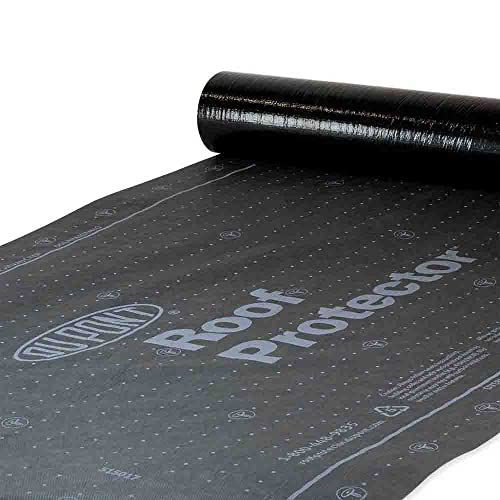
DuPont’s four-layer construction blends grip, moisture barrier, and strength. The top layer provides grip for installation, while the lamination layer and woven scrim add tear resistance and durability. This option is designed to protect the deck during installation and offer reliable secondary moisture protection.
Who it’s best for: projects requiring a multi-layer solution with strong walkability and dependable secondary weather resistance. Why selected: superior tear resistance and layered design outperforming basic felt substitutes.
Caution: higher material complexity may require careful handling during cutting and alignment to maximize adhesion and grip.
SFNSM 50mil EPDM Peel & Seal Underlayment, 16.5 ft x 40 in

This EPDM-based membrane provides a self-adhesive second water barrier for flat or low-slope sections. The 50 mil thickness supports puncture and tear resistance, and it’s designed to be cut to fit with flexible application across varied roof configurations.
Who it’s best for: projects needing a dedicated peel-and-seal solution for flat or low-slope areas. Why selected: EPDM composition offers long-term resilience against temperature shifts and water intrusion.
Caution: best used where self-adhesion and a flexible cut are advantageous; may require careful alignment to ensure complete seam adhesion.
SFNSM 50mil EPDM 32.8 ft x 40 in Underlayment
This longer roll version covers more area for fewer seams on larger roofs. Like the shorter variant, it uses EPDM rubber for broad weather resistance and a strong, self-adhesive edge. It supports efficient installation over extended roof sections.
Who it’s best for: larger roof projects needing extended roll coverage and consistent peel-and-seal performance. Why selected: reduced seam count translates to fewer potential leak points on big roofs.
Caution: ensure proper overlapping and seam sealing to prevent water intrusion along long seam lines.
Buying Guide: Key Considerations When Selecting Roof Underlayment
What type of underlayment should you choose? Consider tear resistance, adhesion method, temperature tolerance, and roof slope. Self-adhering membranes simplify installation on steep roofs and cold surfaces, while non-adhered options rely on fasteners and overlapping seams.
Weather and Slope Compatibility
EPDM-based underlayments excel in varied temperatures and provide reliable moisture barriers. Self-adhering options are advantageous on low-slope or intermediate-sloped roofs where wind uplift is a concern.
Durability and Tear Resistance
Look for woven or multi-layer constructions that resist tearing during installation and wind-driven uplift. Higher-tear resistance reduces the chance of premature failure during construction.
Installation Ease and Labor
Roll size, weight, and nailing or adhesive requirements affect installation speed. Larger rolls can save labor time on bigger projects, while lighter materials reduce fatigue on rooftops.
Compatibility and Safety
Verify compatibility with your chosen roof deck (plywood, OSB) and with shingles or other final roofing layers. Consider UV exposure limits during installation to prevent degradation before covering.
Warranty and Longevity
Some products emphasize limited or lifetime warranties tied to installation conditions. Understanding these terms helps predict long-term performance and peace of mind for the project.
Practical Quick-Reference Comparison
- Best for labor savings and general use: Grip-Rite SL154250LWE
- Best self-adhering moisture protection: FT Synthetics Platinum HT-B
- Best multi-layer durability: DuPont Roof Protector
- Best for flat or low-slope repairs: SFNSM EPDM Peel & Seal (50 mil)
- Best for long runs on large roofs: SFNSM EPDM 32.8 ft x 40 in and HYDROSHIELD Lifetime Synthetic
Frequently Asked Questions
- What is the difference between underlayment types for shingles?
Answer: Styles include non-adhesive, self-adhesive, and multi-layer membranes. Adhesion methods affect installation ease and wind resistance. - Can I use EPDM underlayment on any roof?
Answer: EPDM is suitable for a variety of roofs, but check compatibility with final roofing materials and local climate requirements. - How thick should underlayment be for durability?
Answer: Thicker membranes (such as 50 mil) generally offer better puncture resistance and long-term protection, especially on exposed areas. - Is a longer roll worth it for large roofs?
Answer: Yes, longer rolls reduce seam points and can speed up installation on big projects. - Should I prioritize UV resistance?
Answer: UV resistance helps protect exposed underlayment during installation; plan to cover promptly. - Are multiple layers necessary?
Answer: Multi-layer constructions provide enhanced tear resistance and moisture control, useful in challenging environments.