
The best quiet inverter generators balance low noise with clean power for sensitive electronics, portability for camping or RV use, and enough output for essential appliances. This guide highlights five top options and explains who should buy each. Ideal buyers include RV travelers, homeowners seeking backup power, campers with delicate electronics, and anyone needing a compact, fuel-efficient generator.
Comparison Table Of The Chosen Models
| Model | Power (Surge / Running) | Fuel Type | Best For | Notable Feature |
|---|---|---|---|---|
| WEN DF480iX | 4800 / 4000 W | Gas / Propane | RV users and home backup | CO watchdog, dual-fuel flexibility |
| Oxseryn 4400 | 4400 / 3400 W | Gas | Campers and light home backup | Multiple outputs, long runtime with ECO mode |
| WEN 2350iX | 2350 / 1900 W | Gas | Tailgating and small electronics | Ultralight, ultra-quiet operation |
| Champion 4000-Watt | 4000 / 3000 W | Gas | Camping and home essentials | CO Shield, optional parallel kit |
| PowerSmart 3600 | 3600 / 3200 W | Gas | RV or home use with 30A outlet | Advanced inverter technology, extended runtime |
WEN DF480iX Quiet Dual-Fuel Inverter Generator

The WEN DF480iX uses a 224cc dual-fuel engine, delivering 4800 surge watts and 4000 running watts on gasoline and 4320 surge / 4000 running watts on propane. It operates quietly, with noise levels comparable to a normal conversation. It produces clean power ideal for smartphones, tablets, and laptops, reducing the risk of electronics damage. This model is best for RVers who want flexibility between gasoline and propane plus a CO watchdog for safety. A limitation is that dual-fuel operation can add weight and complexity compared to single-fuel units.
Oxseryn 4400-Watt Inverter Generator

The Oxseryn 4400 is a gas-powered inverter with 4400 peak watts and 3400 running watts. It offers multiple outputs: two 120V AC ports, one 12V DC port, and an RV outlet, plus ECO mode for longer runtime—up to about 14 hours at 25% load. It’s well suited for RV trips and small home backup needs where multiple outlets and a clear fuel gauge are advantageous. Limitation: some users may prefer a higher continuous wattage for larger appliances.
WEN 2350-Watt Ultra-Quiet Inverter (56235i)
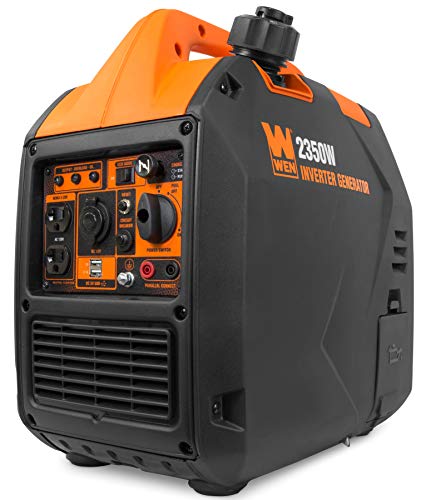
The compact and lightweight WEN 56235i weighs about 39 pounds, ideal for easy transport and storage. It delivers 2350 surge watts and 1900 running watts, sufficient for charging phones, tablets, laptops, and small TVs. Its quiet operation makes it a good choice for quiet environments like campsites or neighborhood gatherings. Better for solo travelers or small power draws; not ideal for running higher-wattage appliances for extended periods.
Champion 4000-Watt RV-Ready Inverter

This Champion inverter weighs under 49 pounds and runs at around 64 dBA at 23 feet, making it a flexible option for camping or home backup. It offers 4000 starting watts and 3000 running watts with up to 10 hours of run time. It includes CO Shield automatic shutoff for safety and can be paralleled with another unit to double output. Choose this if you anticipate needing more capacity through parallel operation or a balance of light weight and power. Limitation: parallel kit is optional and adds to total cost.
PowerSmart 3600-Watt Portable Inverter

The PowerSmart 3600-watt inverter delivers 3600 surge watts and 3200 running watts, powered by a 149cc OHV engine. It features advanced inverter technology, producing a clean sine wave with less than 3% THD, suitable for charging laptops and high-end smartphones safely. The 1.3-gallon fuel tank enables up to eight hours of runtime at 25% load, which is helpful for overnight camping or power outages. Best for campers needing solid, stable power with longer intervals between refueling; not ideal for heavy air conditioners.
Buying Guide: Quiet Inverter Generator Essentials
What should I prioritize?
Look for a low THD rating (ideally under 3%), which ensures clean power for electronics. A quiet decibel level (generally under 65 dBA at 23 feet) improves campsite comfort and neighbor relations. Consider weight and portability if you’ll transport the unit often. Dual-fuel options add flexibility but may add complexity and cost. A CO sensor or automatic shutoff improves safety, especially for indoor or semi-enclosed use.
How much power do I actually need?
Estimate by listing essential devices and their wattage. For RV use, determine whether you’ll run a refrigerator, air conditioner, or an entertainment system simultaneously. Units around 3000–4000 running watts suit most camping and RV backups; smaller models (around 2000 W) fit basic charging and small appliances. If you anticipate future expansion, consider models that allow parallel operation for more power.
Fuel considerations
Gasoline is widely available and quick to refuel, but propane offers cleaner burning and longer storage. Dual-fuel units provide flexibility during fuel shortages but may cost more and require additional maintenance. Check fuel tank size for runtime expectations and choose a unit with a dependable ECO or economy mode to maximize runtime.
Safety and maintenance
Look for a CO shutdown feature and a low-oil and fuel alert. Regular maintenance areas include oil changes, air filter checks, and spark plug inspection. Consider units with a covered or easily accessible control panel to simplify routine service.
Usage scenarios to compare
- RV travel: prioritize RV-ready outlets and a compact footprint.
- Home backup: prioritize higher running watts and longer runtime with a larger fuel tank; consider dual-fuel for flexibility.
- Camping: prioritize ultra-quiet operation and light weight for easy transport.
- Electronics-sensitive devices: prioritize clean power (low THD) and stable voltage.
FAQ
- What is the quietest inverter generator? Many models advertise around 50–65 dBA at 23 feet, with ultralight units providing near-silent operation in normal conversation range.
- Do inverter generators power air conditioners? Some smaller models may struggle with room-size air conditioners; typically, higher-wattage inverter gensets are required for A/C units.
- Is dual-fuel better than single-fuel? Dual-fuel offers flexibility and longer-term fuel options but adds weight, cost, and maintenance complexity.
- Can inverter generators parallel? Some models support parallel kits to double output; verify compatibility before purchase.
- What safety features matter most? CO sensors, auto shutoff, and low-oil shutdown are important for safe operation around people and electronics.
- How long will a full tank last? Runtime depends on load; lighter loads yield longer runtimes. Check the manufacturer’s run-time spec at a specific load percentage for planning.