
For users seeking clean, stable AC power from a DC source, pure sine wave inverters are essential. They support sensitive electronics, reduce noise, and extend device life. This article highlights five top options that balance capacity, portability, and features. Each product is evaluated on waveform quality, output power, efficiency, and practical perks like remote monitoring or multiple outlets. Use the buying guide at the end to compare key differences and pick the ideal inverter for your RV, truck, solar setup, or outdoor adventures.
Summary table of selected products:
| Product | Brand | Key Power | Outlets | Special Feature |
|---|---|---|---|---|
| BELTTT 2000W Pure Sine Wave Inverter | BELTTT | 2000W continuous, 4000W peak | 2 AC, USB | Intelligent LCD display |
| BESTEK 500W Pure Sine Wave Inverter | BESTEK | 500W continuous | 2 AC, 2 USB | Low THD, thermal protection, auto sense |
| ZETAWALE 4000W Pure Sine Wave Inverter | ZETAWALE | 4000W continuous, 8000W peak | 4 AC, USB-C, USB | LCD remote, long reach |
| Jackery Solar Generator 300 | Jackery | 300W continuous | 2 AC outlets, multiple USB ports | Integrated solar and banked power |
| Genkins 4500W Open Frame Inverter | Genkins | 3700W rated, 4500W peak | TT-30R RV outlet, NEMA 5-20R | Lightweight for power |
BELTTT 2000W Pure Sine Wave Inverter

The BELTTT 2000W Pure Sine Wave Inverter converts 12V DC to 110V/120V AC with a solid 2000W continuous rating and up to 4000W surge. The pure sine output minimizes harmonic distortion, making it suitable for televisions, home theaters, and other sensitive electronics. Efficiency exceeds 91% under typical loads and there are low idle losses, helping preserve battery life in remote setups. An intelligent LCD display shows input/output voltages, battery status, and load, with the ability to fine-tune display brightness and voltage within a small range. A remote controller is included for convenient monitoring and control from a distance. This unit is well-suited for RVs, trucks, solar banks, and outdoor environments where consistent power matters.
Key considerations:
- Power balance: 2000W continuous supports mid-sized appliances; plan on peak loads to avoid tripping.
- Protection: includes thermal and short-circuit safeguards; monitor battery health via LCD readouts.
- Connection flexibility: two AC outlets plus USB charging options help run devices and charge accessories.
BESTEK 500W Pure Sine Wave Power Inverter
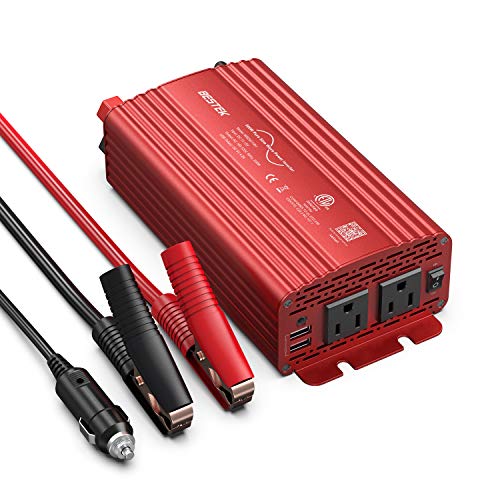
The BESTEK 500W inverter provides a compact, reliable option for portable power. Its pure sine wave output closely resembles mains power, reducing noise and wear on sensitive electronics. The dual USB ports deliver automatic fast charging up to 2.4A per port, while the AC outlets power standard 110V devices within the 500W limit. The unit emphasizes safety with an intelligent circuit design that guards against short circuits, overvoltage, overload, and overheating, alongside a thermal control fan for temperature regulation. It is ideal for road trips, camping, or emergency kits where modest power is enough for devices like laptops, CPAP machines, and small appliances.
Key considerations:
- Low noise and clean power are ideal for electronics alike.
- Automatic detection ensures efficient charging without manual adjustments.
- Thermal management helps extend inverter life during longer runs.
ZETAWALE 4000W Pure Sine Wave Inverter

The ZETAWALE inverter delivers substantial capacity with 4000W continuous power and up to 8000W peak. Its advanced pure sine wave output ensures smooth operation for heavy loads, including home appliances and power tools, with minimal noise and excellent stability. The unit features a large LCD display and a long-range wired remote control, allowing you to monitor input/output, battery status, and operating conditions from a distance. Four AC outlets, plus USB and USB-C ports, provide versatile charging for multiple devices. It’s designed for off-grid solar, RVs, trucks, boats, and heavy-duty outdoor use, with protections against overload and short circuits and a robust chassis for rugged environments.
Key considerations:
- High power output supports simultaneous high-wattage devices.
- Remote monitoring improves setup efficiency in remote locations.
- Multiple outlets enable diverse device charging without stacking adapters.
Jackery Solar Generator 300

The Jackery Solar Generator 300 blends a compact lithium battery with dual Pure Sine Wave AC outlets and multiple USB ports, delivering up to 300W of continuous power. This unit is designed for outdoor enthusiasts and travelers, providing a flexible way to run laptops, cameras, small appliances, and charging devices while on the go. The system supports recharging via wall outlets, car adapters, or Jackery’s SolarSaga panels for off-grid reliability. Weighing around 7 pounds, it remains portable for camping trips, RV stops, or emergency backup without compromising power quality or safety.
Key considerations:
- Mobility with reasonable capacity makes it a practical backup for short trips.
- Integrated battery management delivers stable performance for sensitive devices.
- Expands with solar panels for more sustainable off-grid power.
Genkins 4500W Open Frame Inverter

The Genkins 4500W open-frame inverter targets heavier-duty use with a robust 3700W nominal output and a peak of 4500W. Its pure sine wave output keeps power smooth for sensitive electronics and home appliances. The unit features a TT-30R RV outlet and a NEMA 5-20R for flexible connection to various devices, making it suitable for RVs, trucks, and off-grid systems. While heavier than some portable options, its open-frame design facilitates mounting in a dedicated power cabinet or vehicle compartment. It is designed to balance power with portability for extended, demanding use.
Key considerations:
- High continuous power supports multiple devices simultaneously.
- RV-ready outlets provide convenient compatibility with camping setups.
- Open-frame design is ideal for fixed installations with adequate cooling.
Buying Guide: Key Purchase Considerations For Pure Sine Wave Inverters
Choosing the right pure sine wave inverter depends on power needs, installation context, and how you plan to use it. Consider the following perspectives to balance performance with value:
- Power capacity and surge: Estimate your peak draw. Inverters list continuous wattage and peak surge. For devices with motors or compressors, ensure the surge rating exceeds the startup requirement.
- Waveform quality: Pure sine wave provides the cleanest output, supporting sensitive electronics and minimizing device wear. This matters for TVs, laptops, CPAP machines, and audio equipment.
- Portability vs. fixed installation: For mobile use (vehicles, camping), compact units with multiple outlets and USB ports offer flexibility. Fixed installations (off-grid cabins, deeper battery banks) may benefit from higher wattage and open-frame designs with better heat management.
- Outlets and ports: Check the mix of AC outlets and USB-C/USB-A ports. USB-C PD ports enable fast charging for modern devices, while multiple AC outlets support several appliances simultaneously.
- Protection features: Look for overvoltage, undervoltage, overload, short-circuit, overheat protection, and automatic shutoff. An LCD or remote monitoring helps track battery health and output consistency in real time.
- Battery compatibility: Ensure the inverter works with your battery type (lead-acid, Li-ion, LiFePO4) and check if remote monitoring is compatible with your system’s control strategy.
- Installation and safety: Some inverters are designed for cigarette-lighter sockets, others require direct battery clamps or hardwiring. For higher power units, professional installation may be advisable to ensure proper wiring and fusing.
- Durability and warranty: For outdoor or rugged use, opt for enclosures with solid build quality, ingress protection, and a favorable warranty to cover longer-term reliability.
- Portability vs. efficiency: Higher-wattage models offer more capacity but can draw more current and require larger batteries. Balance your daily energy budget with system weight and cost.
Across these options, users should map their power profile against the inverter’s specifications. A mix of high-wattage capability for critical devices and portable forms for travel can yield robust, flexible power solutions for RVs, solar setups, and outdoor living.