
Answering the top buyer question: which professional-grade pole saws deliver reliable reach, cutting power, and ease of use for high branches? This guide focuses on five strong options suited for experienced homeowners, landscape pros, and DIYers who want to prune tall trees without ladders. Each option offers distinct advantages—reach, blade quality, or cordless convenience—so you can pick the best fit for your yard. Below is a quick comparison of the chosen models to help you decide quickly.
| Product | Reach | Power Type | Best For |
|---|---|---|---|
| Husqvarna 122LKP | Up to 12 ft | Gas | Heavy-duty pruning with long reach |
| Jameson LS-Series | 18 ft | Manual | Ladder-free trimming with light weight |
| LETYANGER Pole Saw | 7.3–27 ft | Manual | Flexible height, value package |
| URBANVISTA 30 Ft | Up to 30 ft | Manual | Very tall or palm tree pruning |
| EGO Power+ PS1001 | Up to 13 ft (17 ft with extension) | Cordless electric | Quiet, low-maintenance electric reach |
Husqvarna 122LKP Gas Pole Saw

The Husqvarna 122LKP is a gas-powered pole saw with a 12-foot reach and an X-CUT chain for sharp, durable cuts. Automatic oiling helps extend bar and chain life, supporting consistent performance in longer pruning sessions. This model is best for heavy pruning work where a robust, high-reach tool is needed and where constant fuel-based power is preferred over battery dependence. Best for professionals or serious DIYers who frequently trim tall branches and require reliable torque.
Who it’s best for: landscapers, property managers, and home owners with frequent tall-branch pruning tasks. Why selected: combines classic gas power with Husqvarna’s renowned X-CUT chain for longer-lasting sharpness. Caution: heavier than manual options and requires mixing fuel and regular maintenance.
Jameson LS-Series Hollow Core Kit

The Jameson LS-Series kit features an 18-foot reach with three 6-foot fiberglass poles and a 16-inch Barracuda saw blade. The hollow-core design offers flexibility and durability, and leaf-spring locking buttons enhance setup speed. This option is ideal for trimming without ladders while maintaining a lower weight profile. Best for homeowners who need substantial reach with a portable, ladder-free approach.
Who it’s best for: those who want a long reach without climbing and prefer a lightweight, modular system. Why selected: solid balance of reach, blade efficiency, and straightforward assembly. Caution: may require careful handling on very tall, windy days due to pole flexibility.
LETYANGER 7.3–27 Ft Extendable Pole Saw
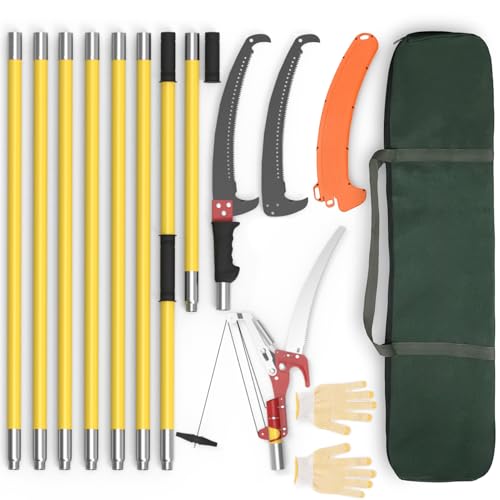
LETYANGER’s model offers an impressive 7.3 to 27-foot reach with a 16-inch Barracuda blade and a versatile pulley system. The package includes multiple poles, a spare saw, and a carry bag for storage. It’s best for budget-conscious buyers who need extensive height without ladders and want a complete kit for varied pruning tasks. Best for: homeowners needing a broad reach at a reasonable price. Caution: overall weight can be noticeable when fully extended, requiring steady handling.
URBANVISTA 30 Ft Manual Pole Saw Kit
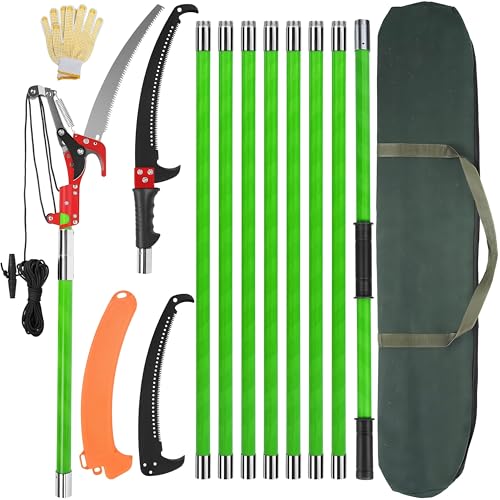
This 30-foot manual pole saw kit emphasizes maximum reach for very tall trees, palms, and hard-to-reach limbs. A nine-pole assembly keeps the tool adjustable for various pruning heights. It is best for large yards or professional use where ladder-free pruning at extreme heights is required. Caution: the setup and balance may require time to master due to length and weight.
EGO Power+ PS1001 Cordless Pole Saw

The EGO Power+ PS1001 is a cordless pole saw with a telescopic carbon fiber shaft and LED cut line indicator for precise dark-area cutting. It runs on a 56V ARC Lithium battery and offers up to 100 cuts per charge with the included battery. Best for quiet operation and easy maintenance in medium-height pruning tasks. Choose this if you want a clean, battery-powered option with extendable reach. Caution: limited by battery life for very large jobs.
Buying Guide
What should you consider when choosing a professional pole saw?
- Reach and height: Match the tool’s maximum reach to your tallest pruning task. Manual options offer very long reach but require effort to handle weight and balance.
- Power source: Gas power offers strong, consistent torque for tough cuts; manual options reduce noise and maintenance; cordless electric provides convenience with limited noise and no fuel, but depends on battery capacity.
- Blade quality and maintenance: Look for robust blades (e.g., Barracuda or similar) and features like auto oiling on gas models. Plan for sharpening and replacement parts.
- Weight and ergonomics: Heavier tools reduce fatigue on long sessions. Consider pole diameter, locking mechanisms, and handle design for comfortable operation.
- Set completeness: Some kits include multiple poles, spare blades, and carrying bags. A complete kit can reduce extra purchases and storage concerns.
- Safety features: Non-slip grips, rope pulleys, and secure locking systems help maintain control when pruning at height.
Frequently Asked Questions
- What is the best pole saw for reaching tall branches without a ladder?
The URBANVISTA 30 Ft Manual Pole Saw Kit and Jameson LS-Series both offer long reach without ladders; choose based on weight tolerance and blade type. - Are gas pole saws worth it over cordless options?
Gas models generally deliver steady power for heavy-duty cuts but require fuel, maintenance, and heavier handling; cordless models offer convenience with limited runtime per charge. - How important is blade type for pruning efficiency?
A sharp, durable blade (e.g., Barracuda-style) improves cut quality and reduces repeated passes. Rust resistance and coatings help longevity. - Can I prune palm trees with a pole saw?
Yes, many models are suitable for palms, but ensure the blade design accommodates huskier fronds and that you work safely at height. - What maintenance is required for a gas pole saw?
Regular oiling, fuel management, and chain sharpening are essential to maintain performance and extend life. - Is an extension pole necessary for most yards?
An extension improves reach for tall trees but adds weight; assess the height of your pruning tasks first.