
Find the best cabinet primer to prepare wood surfaces for paint or stain, ensuring strong adhesion and a flawless finish. This guide highlights five reliable primers suited for wood cabinets, focusing on adhesion to glossy surfaces, stain blocking, and fast drying. Ideal buyers include DIY homeowners refinishing kitchens, professional painters seeking fast recoats, and renovators working with existing glossy or stained cabinetry. The quick reference table below helps you compare essentials at a glance.
| Product | Best For | Key Benefit |
|---|---|---|
| 1 Quart Bulls Eye 1-2-3 Primer Sealer Stain Killer | Glossy surfaces, interior/exterior | Bonds to glossy surfaces without scuff sanding |
| INSL-X SXA11009A-04 Stix | Challenging surfaces | Exceptional adhesion to hard-to-coat materials |
| Zinsser 286258 Bulls Eye 1-2-3 All Surface | Various substrates | Fast-drying, versatile for multiple surfaces |
| Zinsser 02244 Bulls Eye Water-Base | Interior surfaces | Low-odor, good stain blocking |
| INSL-X AP100009A-04 Prime All | Multi-surface interiors/exteriors | Strong sealing with easy application |
1 Quart Bulls Eye 1-2-3 Primer Sealer Stain Killer

Best for light to medium wood finishes and glossy surfaces, this interior/exterior primer sealer offers stain blocking and adhesion without scuff sanding. It dries quickly to reduce project timelines and can be applied at low temperatures (as low as 35°F). Best for homeowners refinishing cabinets with glossy varnish or prior coatings who want a reliable base coat. Caution: performance may vary on extremely porous or heavily stained surfaces; additional coats could be needed.
INSL-X SXA11009A-04 Stix Acrylic Bonding Primer
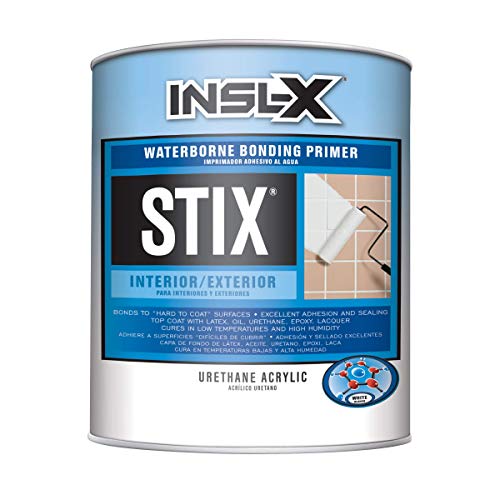
Choose this when primers must stick to hard-to-coat materials such as glossy tile, PVC, metal, or previously painted finishes. This acrylic-urethane bonding primer provides exceptional adhesion and can be top-coated with many finishes, making it a versatile base for wood cabinets with complex surfaces. Best for projects requiring durable, long-lasting adhesion. Limitation: some users may experience longer drying times in cooler environments.
Zinsser 286258 Bulls Eye 1-2-3 All Surface Primer

Best for mixed-material cabinets or renovating spaces with several surface types, this all-surface primer seals uniformly and adheres well to drywall, wood, concrete, or metal. It dries to the touch quickly and supports rapid recoating, which helps when you’re coordinating multiple finishes. Caution: for heavily glossy or highly reactive surfaces, a light sanding between coats may improve bite.
Zinsser Rust-OLEUM 249933 1-2-3 Plus
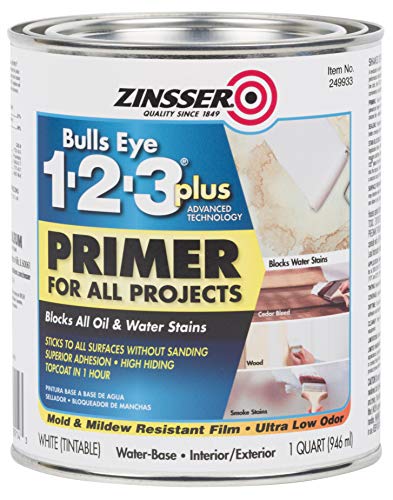
Better for projects requiring an odor-blocking primer with ease of use in mind, this dual-purpose primer helps prepare cabinets in spaces where odors or pinhole imperfections need attention before paint. Best for interiors where a quick, uniform base coat is desired. Limitation: the packaging notes it’s a broader interior/exterior kit; ensure compatibility with your chosen topcoat.
Zinsser Bulls Eye Water-Base Primer

Best for interior surfaces such as walls, doors, and trim in cabinets where low odor and easy cleanup are priorities. It hides stains well on dark or porous substrates and dries within about 30 minutes. Choose this if you want a reliable water-based primer that works smoothly on wood cabinet components with minimal fumes. Limitation: not ideal for exterior use or very glossy surfaces without additional surface prep.
INSL-X AP100009A-04 Prime All Multi-Surface
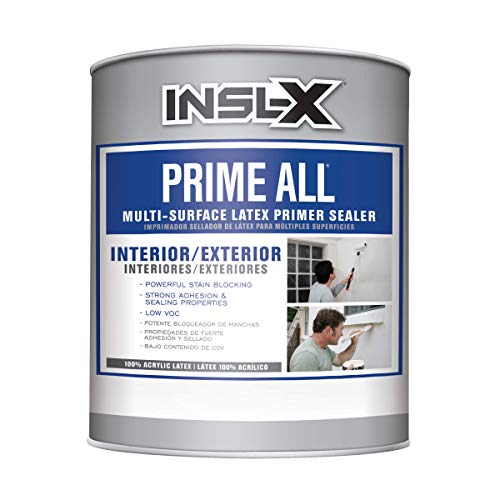
Best for multi-surface interiors and exteriors, this 100% acrylic primer provides strong sealing properties across diverse substrates. It offers easy application and robust adhesion, making it a solid choice when cabinetry includes mixed materials. Caution: verify topcoat compatibility across different surfaces to avoid finish mismatches.
Buying Guide: Key Purchase Considerations
- Surface compatibility: Match the primer to cabinet material (wood, veneer, existing coatings) and consider hard-to-coat surfaces like glossy finishes or pre-coated materials.
- Adhesion vs. stain blocking: If you’re painting over stains or gloss, prioritize primers with stain-blocking and bonding properties to prevent bleed-through and edge lifting.
- Drying time and recoats: For kitchen cabinets, faster drying and quick recoats reduce project duration but may require more precision in application.
- Odor and cleanup: Water-based primers tend to have lower odor and easier cleanup, which matters in interior cabinet work.
- Topcoat compatibility: Ensure the primer is compatible with your chosen paint or stain and that the finish will adhere well to the primed surface.
- Environmental conditions: Temperature and humidity can affect bonding primers; select formulas rated for your climate and project timeline.
FAQ
- What primer is best for glossy cabinet surfaces? A bonding primer like Stix or a high-adhesion all-surface primer is recommended to prevent peeling after painting.
- Do I need to sand cabinets before priming? Light scuff sanding improves adhesion on very smooth or glossy surfaces, but some primers bond well without sanding.
- Can I use water-based primer on wood cabinets? Yes, water-based primers are common for interiors and offer low odor and easy cleanup, with good stain hiding.
- How soon can I recoat after priming? Many primers allow recoating within 1–2 hours, but follow label directions for best results.
- Is primer necessary if I plan to stain cabinets? Some stainable primers, like Retique It Wood’n Primer, are designed to enhance stain penetration and depth for a natural look.
- Should I choose a multi-surface primer? If cabinets include mixed materials or if you also work on walls or trim, a multi-surface primer can simplify preparation.