
Top choices for preparing concrete floors blend adhesion, moisture control, and ease of use. This guide compares five primers that suit different concrete projects, from garages to living spaces. Ideal buyers include DIY homeowners refinishing basements, professionals prepping commercial floors, and hobbyists seeking long-lasting topcoats. The quick overview below helps choose the right primer at a glance.
| Product | Best For | Key Benefit |
|---|---|---|
| Zinsser Bulls Eye 1-2-3 All Surface Primer (Quart, Gray) | New or painted concrete, masonry, or glossy floors | Sticks to challenging surfaces without sanding; dries quickly |
| SIKA Sikalevel Self-Leveling Underlayment Primer (1 Gallon) | Self-leveling underlayments on concrete | Ready to use, no dilution; prevents water loss from the underlayment |
| Coral Crystal Waterborne Penetrating Primer (63 Fl Oz) | Porous concrete and masonry surfaces | Deep penetration for adhesion, dust control, and moisture sealing |
| FloorPops FPP4182W Peel Stick Tile Primer | Flooring projects with Peel & Stick tiles | Full-strength latex primer; primes bare floor for best tile adhesion |
| Rust-Oleum Concrete & Garage Floor Recoat Primer (1 Gallon, Gray, 2 Pack) | Previously painted or sealed concrete floors | One-part, water-based primer that requires no sanding |
Ready to compare quickly? The table above highlights each product’s primary strength and ideal usage. The following sections break down what each primer delivers, who should consider it, and any practical caveats to help you decide.
Zinsser Bulls Eye 1-2-3 All Surface Primer

Best for multi-surface prep on concrete floors that may have prior coatings or glaze. This water-based primer is formulated to adhere to drywall, concrete, wood, masonry, metal, and glossy surfaces without heavy sanding. It dries to the touch in about 30 minutes and can be recoated in one hour, covering up to 100 square feet. Choose this if you need a versatile, quick-dry primer that works across a variety of surface types. A limitation is its general-purpose design, which may not target extreme porosity or moisture-specific needs as effectively as specialized products.
SIKA Sikalevel Self-Leveling Underlayment Primer

Best for projects that use self-leveling underlayment on concrete. This primer is ready to use with no dilution and must be used with Sika Self-Leveling Underlayment. It helps prevent moisture-related issues from the underlayment by sealing the substrate prior to leveling. Choose this if your floor plan includes a leveling layer and you want dependable bond and moisture management. A potential limitation is the need to pair with the corresponding Sikalevel product for optimal performance.
Coral Crystal Waterborne Penetrating Primer

Best for aging concrete or new surfaces with dust-prone finishes. This penetrating primer locks in dust, stabilizes loose particles, and reduces surface porosity. It also blocks moisture vapor transmission, helping to prevent topcoat failures like bubbles or white spots. It’s designed for indoor and outdoor use and emphasizes low odor and low VOC characteristics. Use this when you need a deep-penetrating seal before topcoats such as epoxy or polyurethane. A limitation is that penetrating primers may require longer cure times before applying certain topcoats, depending on environmental conditions.
FloorPops Peel Stick Tile Primer
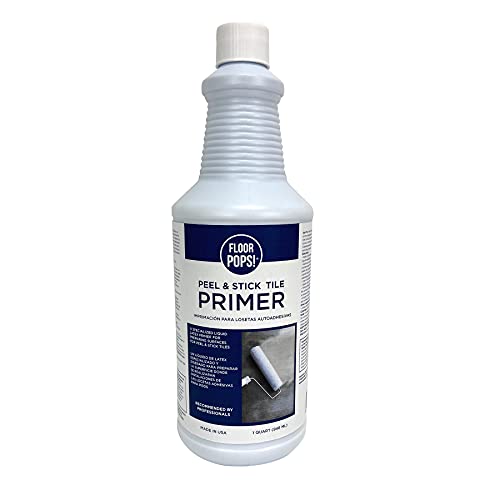
Best for priming floors before Peel & Stick tile installations. This latex floor primer should be used at full strength with sound, dry, clean surfaces free of contaminants. It ensures adhesion for vinyl tile applications and helps avoid failures due to poor substrate prep. Choose this primer if your project centers on a floor tile upgrade. Limitations include the need for a dust-free, intact substrate and that results rely on proper tile adhesive compatibility with the primer used.
Rust-Oleum Concrete & Garage Floor Recoat Primer

Best for previously painted or sealed concrete floors in garages or high-traffic areas. This 1-part, water-based primer primes without sanding and covers up to 400 square feet per gallon on smooth, previously sealed concrete. It’s designed for use under a topcoat after about six hours. Choose this if you’re refreshing an already-treated floor and need a straightforward recoat primer without heavy preparation. A limitation is that performance can vary on very rough or heavily etching substrates, where additional surface preparation may be required.
Buying Guide: Key Considerations For Your Concrete Floor Primer
- Surface condition: Is the concrete dusty, rough, or sealed? Penetrating primers work well on porous slabs, while bonding primers suit glossy or sealed surfaces.
- Moisture control: Do you anticipate moisture transfer from the substrate? If yes, consider primers that seal or block moisture vapor transmission.
- Underlayment needs: Will you pour a self-leveling underlayment or install tiles? Use a primer designed for underlayment or tile adhesion as appropriate.
- Topcoat compatibility: What finish comes after the primer? Ensure the primer is compatible with your intended topcoat (epoxy, polyurethane, paint, or tile adhesive).
- Drying and recoat times: Do you need rapid handling? Quick-dry primers enable faster project completion, but verify cure times for your climate.
- Application method: Do you prefer ready-to-use formulas, or primers requiring dilution? Ready-to-use options save preparation steps, while dilution can affect coverage and drying.
Frequently Asked Questions
- What is the purpose of a concrete floor primer?
A concrete floor primer improves adhesion, seals porous surfaces, and prepares the substrate for the topcoat or tile adhesive.
- Can I apply a primer directly to new concrete?
Yes, but choose a primer formulated for new concrete to ensure proper penetration and bonding.
- Do primers require sanding before top coating?
Most primers do not require sanding, but some glossy or difficult surfaces may still benefit from light scuffing for improved adhesion.
- How long should I wait before applying a topcoat after priming?
Drying and recoat times vary by product; follow the manufacturer’s guidance for best results.
- Is a penetrating primer better than a bonding primer for concrete?
Penetrating primers excel at dust control and pore sealing, while bonding primers are ideal for glossy or challenging surfaces.
- Should I use a primer for self-leveling underlayment?
Yes, if your project includes self-leveling underlayment, use the corresponding primer to ensure bond and performance.