
Whether you’re planning an outdoor adventure, preparing for emergencies, or seeking reliable home backup, a portable power station can keep essential devices running without fuel. This guide highlights five top options designed for American consumers, focusing on capacity, charging speed, and practical usability. Each listing includes key specs and how they fit common power needs, from camping fridges to laptops and CPAP machines. Explore models that blend safety, longevity, and portability to help you choose the best fit for your lifestyle and off-grid plans.
| Product | Capacity | Weight | Key Benefit |
|---|---|---|---|
| Jackery Explorer 1000 v2 | 1070Wh | 23.8 lbs | High output with fast charging |
| Jackery Explorer 300 | 293Wh | 7.1 lbs | Ultra-portable for basics |
| Jackery HomePower 3000 | 3072Wh | varies | Home backup with UPS |
| Jackery Explorer 2000 v2 | 2042Wh | 39.5 lbs | High capacity, fast charging |
| OUPES Mega 1 | ~1024Wh | varies | Expandable with extra batteries |
Jackery Explorer 1000 v2 Portable Power Station

The Explorer 1000 v2 combines a robust 1,070Wh LiFePO4 battery with a strong 1,500W continuous AC output and a 3,000W surge, enough to power multiple appliances such as refrigerators, air conditioners, and kitchen devices. At just 23.8 pounds, it remains portable for camping, road trips, and emergencies. Advanced ChargeShield 2.0 supports safer, faster charging, and the unit offers a one-hour fast-charging mode when emergency charging is activated via the Jackery App. Its long lifecycle—over 4,000 charge cycles with retention above 70%—ensures durable, long-term use for off-grid living. This model is well-suited for users who need reliable, mid-to-large capacity power on demand.
Jackery Portable Power Station Explorer 300
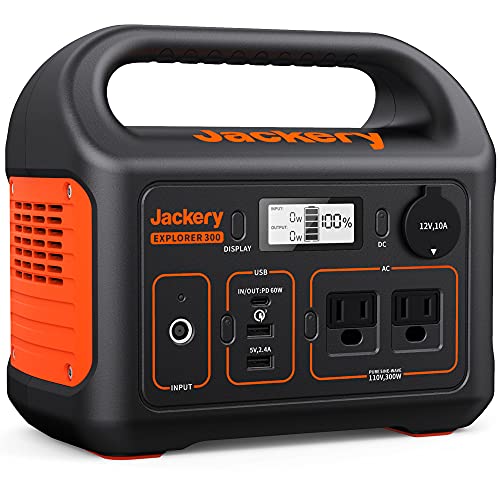
The Explorer 300 brings 293Wh of lithium power in a compact form, weighing about 7.1 pounds. It supports rapid recharging, reaching 80% in roughly two hours via wall outlet and a 60W PD USB-C input/output. Two Pure Sine Wave AC outlets deliver safe, stable power for sensitive devices, while multiple ports—AC, USB-C, USB-A, and a DC car port—allow simultaneous charging of several devices, such as drones, laptops, cameras, and phones. This model is ideal for light camping trips, cars, and small off-grid setups where portability takes precedence over large scale power needs.
Jackery HomePower 3000 Portable Power Station

Designed for home backup and emergencies, the HomePower 3000 offers a substantial 3,072Wh capacity with a 3,600W continuous output (7,200W surge). Its system supports essential household needs during outages, such as refrigerators, routers, lights, and small appliances, with a focus on seamless UPS function that transitions within 20 milliseconds. The unit is compatible with solar charging and can be paired with solar panels, giving homeowners a practical off-grid backup. This model is particularly suitable for households seeking robust, uninterrupted power during prolonged outages or when off-grid living becomes a necessity.
OUPES Mega 1 Portable Power Station
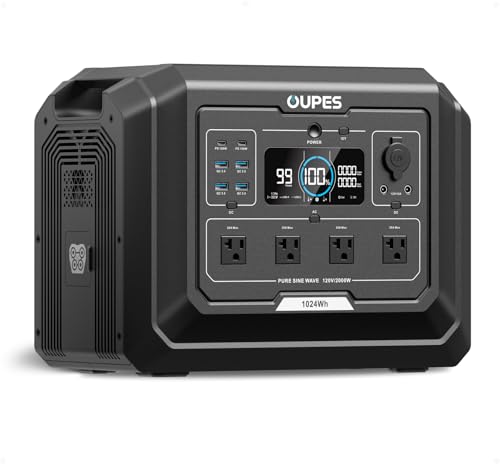
The Mega 1 delivers a solid 1,024Wh LiFePO4 battery with a versatile 2,000W AC output (4,500W peak) and expandability to up to 5,000Wh using additional batteries, making it a flexible option for longer off-grid sessions. It supports fast charging via dual inputs, enabling 0–80% in a short time, and is designed to handle high-watt appliances like refrigerators and CPAP machines. The expandable design is attractive for users who anticipate growing power needs, trading initial portability for long-term scalability.
Buying Guide: Key Purchase Considerations
- Capacity and load: Match the watt-hour rating to your essential devices. For frequent fridges or CPAP units, prioritize higher capacity (1000Wh+). For weekend camping, smaller models (200–500Wh) may suffice.
- Output options: Check the number and type of outlets (AC, USB-C PD, USB-A, 12V). Ensure there are enough ports to charge multiple devices simultaneously.
- Recharge speed: Consider fast-charge features and multiple recharging methods (solar, AC wall, car). A unit with 0–80% fast charging can dramatically reduce downtime.
- Battery chemistry and lifespan: LiFePO4 chemistry generally offers longer cycle life and better stability, translating to a longer usable life in outdoor or emergency scenarios.
- Weight and portability: If you travel frequently, lighter units with ergonomic handles improve usability. Heavier models may offer more capacity but require planful transport.
- UPS and safety features: For home backup, a unit with an automatic UPS switch provides uninterrupted power for critical devices. Look for safety protections like overcharge, short-circuit, and thermal management.
- Expandability: Some models allow adding extra batteries to scale capacity, useful for long outages or larger homes.
- Warranty and service: A solid warranty and responsive customer support help ensure long-term reliability, especially for off-grid use.
Choosing the right portable power station depends on how you plan to use it. For casual outdoor trips, a compact unit with sufficient USB and basic AC outlets is often enough. If you need reliable home backup with fast recharging and UPS, a larger capacity model paired with solar charging can provide peace of mind during outages. Expandability and battery longevity are also important considerations for users who anticipate ongoing off-grid use or home resilience against storms and other disruptions.