
When outages strike or off-grid adventures call, a 2000W-capacity portable power station can keep essentials running. The following selections are among the most capable and versatile models on the market, offering rapid recharging, robust continuous output, and expandable options. This guide highlights five top choices, outlines their strengths, and compares features to help you choose the right unit for your needs.
Summary of chosen products
| Product | Brand | Capacity | Peak Power | Key Benefit |
|---|---|---|---|---|
| Anker SOLIX C1000 Gen 2 Portable Power Station | Anker | 1,024Wh LiFePO4 | 3,000W | Ultra-fast recharge, compact design |
| OUPES Mega 1 Portable Power Station | OUPES | 1,024Wh LiFePO4 | 4,500W | Expandable to 5kWh; strong inverter |
| Anker SOLIX C1000 Gen 2 With 100W Panel | Anker | 1,024Wh LiFePO4 | 3,000W | Solar charging option plus fast recharge |
| GRECELL 999Wh Solar Generator | GRECELL | 999Wh | 2,000W | High surge in a lightweight frame |
| Jackery Explorer 1000 v2 | Jackery | 1,070Wh LiFePO4 | 3,000W | One-hour fast charge option |
Anker SOLIX C1000 Gen 2: Fast, Flexible Power

The Anker SOLIX C1000 Gen 2 delivers a robust 2,000W continuous output with a 3,000W peak and a 1,024Wh LiFePO4 battery. Notable features include UltraFast Recharging up to 1,600W through HyperFlash technology and an app-enabled charging optimization. It is designed for home backup and outdoor use, with a compact form factor that is 14% smaller and 11% lighter than comparable models. With ten ports, it can power multiple devices simultaneously, making it a strong option for emergency kits or weekend camping trips.
Key specifications and notes:
– Recharges quickly, enabling rapid resupply after outages.
– Multiple ports support a broad range of devices from small electronics to larger appliances.
– Portability helps with easy relocation during a grid-down situation or at a campsite.
OUPES Mega 1 Portable Power Station: Capacity To Expand
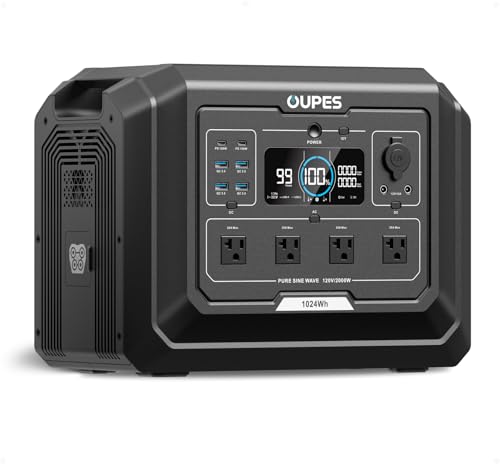
With a 1,024Wh LiFePO4 pack and a 2,000W AC output (4,500W surge), the OUPES Mega 1 provides dependable power for refrigerators, CPAP machines, and power tools. Its standout feature is expandability: add a B2 extra battery to reach up to 5,120Wh capacity for longer outages or more demanding camping trips. Dual charging speeds—up to 1,400W fast charge—help reduce downtime, while the higher surge capability supports high-wattage loads. Solar charging is optional, enabling flexible off-grid operation.
Highlights include:
– Large, expandable battery system for longer outages.
– Strong 2,000W continuous output suitable for essential home appliances.
– Flexible charging options to balance speed and battery longevity.
Anker SOLIX C1000 Gen 2 With 100W Panel
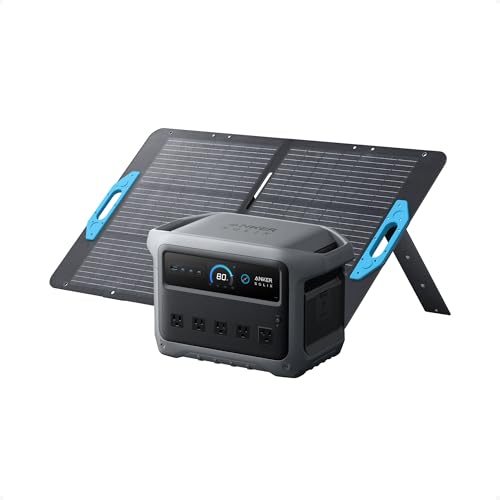
This variant pairs the same core SOLIX C1000 Gen 2 power station with a compact solar panel, enabling off-grid charging and reduced reliance on grid power. Solar recharging is reported around 1.8 hours for full recharge when conditions permit, while HyperFlash technology supports rapid 49-minute top-ups for daily use. The unit maintains a 1,024Wh LiFePO4 battery and up to 10-connected devices, balancing portability with strong versatility for homes and campsites alike.
Practical considerations:
– Solar panel pairing is ideal for campers or off-grid sites with sunny conditions.
– The integration remains smooth for emergency backup and daily use.
– The panel adds a degree of energy independence when grid access is limited.
GRECELL 999Wh Solar Generator: Lightweight Power

GRECELL delivers a compact 1,000W class unit with a 999Wh battery and a peak of 2,000W. It is designed for outdoor use with multiple ports, including USB-C PD, USB-A, DC, and 12V outputs, enabling simultaneous charging of several devices. Its battery management system guards against overcharging and short circuits, and the cooling features help maintain performance in warmer environments. The system is suitable for campsite setups, RVs, or as a backstop for essential electronics during emergencies.
Considerations include:
– Strong surge capacity supports power tools and cooling devices.
– A broad port selection supports diverse devices in one go.
– Built-in protection features enhance reliability in outdoor conditions.
Jackery Explorer 1000 v2: Reliable Off-Grid Power

The Jackery Explorer 1000 v2 pairs a 1,070Wh LiFePO4 battery with a 1,500W continuous inverter and a 3,000W surge. It balances portability—23.8 lbs and a compact footprint—with a sizable energy reserve. One-hour fast charging accelerates recharging when outlets are available, with safety features embedded to optimize battery health. The kit is well-suited for camping, RV living, or as a reliable home backup under grid disruptions.
Key takeaways:
– Strong overall power capability with a long-term battery design.
– Quick charging option supports busy schedules during outages.
– Lightweight for easy transport and deployment at different sites.
Buying Guide: How To Choose A 2000W Portable Power Station
Selecting the right unit involves balancing power needs, recharging speed, and future-proof features. Consider these perspectives to tailor a choice to your situation:
- Power needs and surge tolerance: If you power refrigerators, sump pumps, or CPAP machines, prioritize models with high continuous output and strong surge capacity (2000W+ with a 3000W peak is common). Look at the watt-hours (Wh) rating to estimate how long you can run essential devices between charges.
- Battery chemistry and longevity: LiFePO4 chemistry offers longer cycle life and better thermal stability than standard lithium-ion. This is important for long-term back-up readiness and repeated charging cycles.
- Recharging speed and methods: Fast charging (AC or via optional solar) reduces downtime. HyperFlash-style fast recharge and solar compatibility help maintain readiness in variable conditions. Check input wattage and whether solar panels are included or sold separately.
- Port selection and device compatibility: A broad mix of AC outlets, USB-C PD, USB-A, and car ports enables charging of laptops, cameras, small appliances, and medical devices. Ensure there are enough ports to handle your typical load without unplugging essentials.
- Portability and build quality: A lighter, more compact unit is easier to move between rooms or locations, but ensure it maintains sufficient battery capacity for your needs. Look for rugged enclosures and integrated handles for field use.
- Expandability and future-proofing: Some models offer expandable battery options, enabling larger capacities for extended outages. If you anticipate longer outages, assess expansion paths and total system weight.
- Solar readiness and ecosystem: If you expect to rely on solar power, confirm panel compatibility and charging efficiency under real-world conditions. A system that pairs well with panels you already own can increase long-term reliability.
In summary, aim for a unit with a solid 2,000W continuous output, a capacity near or above 1,000Wh, LiFePO4 chemistry for longevity, multiple charging options, and a design that matches your typical use cases—whether home backup, campsite adventures, or mobile off-grid living.