
Looking for the best plastic epoxy glue for durable repairs? This guide highlights top options that bond plastics, composites, and related materials with clarity and speed. The selections below are ideal for DIY fixes, automotive touch-ups, and hobby projects. Each product section explains who it’s best for, why it stands out, and a practical caveat to consider.
Summary table of selected products
| Product | Best For | Key Benefit | Typical Set Time |
|---|---|---|---|
| Gorilla 2 Part Epoxy, Clear 0.85 oz (Pack of 1) | Household and automotive repairs requiring quick, clean bonds | Dries clear; gap filling; 5-minute set | 5 minutes |
| J-B Weld PlasticWeld Quick-Setting Epoxy Syringe (25 ml) | Plastic surfaces including PVC, composites, and vinyl | 1:1 mix; 5-minute set; 3900 PSI tensile strength | 5 minutes |
| J-B Weld PlasticBonder Syringe (Tan, 25 ml) | DIY plastic repairs and bumper work | 15-minute set; 3770 PSI strength; easy syringe mix | 15 minutes |
| J-B Weld ClearWeld 5 Minute Epoxy Syringe (25 ml) | Clear bond on metal, tile, glass, plastics | Clear cure; 3900 PSI strength | 5 minutes |
| CAMALEAO 2 Part Epoxy Glue (Pack of 2) | General purpose, metal and plastic repairs | Crystal-clear formulation; 5-minute set; 3988 PSI strength | 5 minutes |
Gorilla 2 Part Epoxy, Clear 0.85 Ounce – Pack of 1

The Gorilla 2 Part Epoxy in a 0.85-ounce syringe provides a fast, strong bond with a clear finish. It dries clear for discrete repairs and works well on household and automotive projects. The resin sets in about five minutes, allowing quick repositioning and adjustments. It also functions as a gap filler, which helps bond uneven or vertical surfaces. This product is best for small to medium repairs where a clean, nearly invisible bond is required. A potential limitation is the relatively small syringe size, which may require multiple applications for larger jobs.
J-B Weld PlasticWeld Quick-Setting Epoxy Syringe
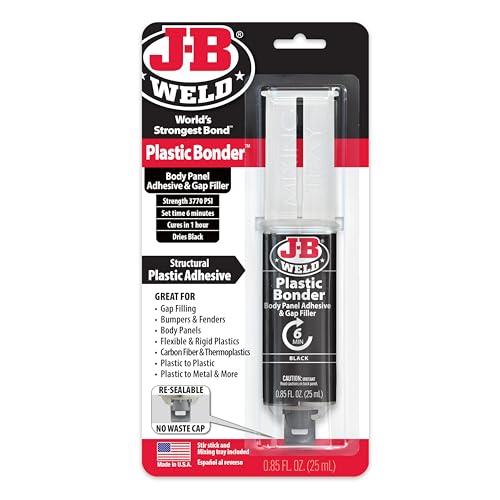
PlasticWeld is a quick-setting, two-part epoxy designed for plastics and related materials. Its 1:1 mixing ratio makes it easy to use, with a set time near five minutes and a cure period around an hour. The product offers a high tensile strength around 3900 PSI, making it suitable for durable bonds on plastics, fiberglass, and coated metals. Best for DIY plastic repairs and where a fast, strong bond is needed. A limitation is that exposed edges may require clamping or careful alignment to prevent movement during cure.
J-B Weld PlasticBonder Syringe – Tan
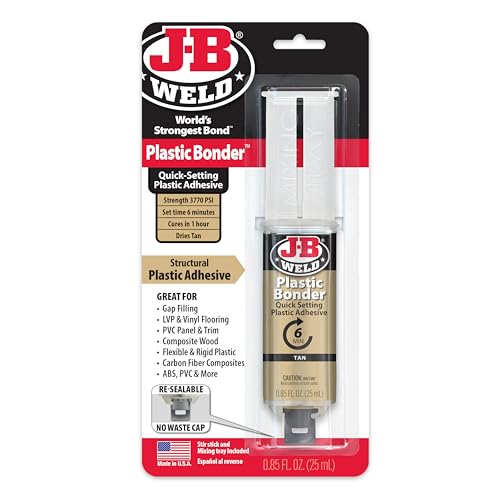
PlasticBonder is a two-part urethane adhesive designed for plastic surfaces, offering a strong, lasting bond and gap-filling capabilities. The syringe enables a straightforward 1:1 mix, with a 15-minute set time and approximately 30 hours to cure. It delivers about 3770 PSI tensile strength, making it a solid choice for bumper repairs, dents, and various plastic DIY tasks. Choose this if you need a longer working time than some epoxies provide and a bond that endures under stress. A caveat is the longer cure period compared to five-minute epoxies.
J-B Weld ClearWeld 5 Minute Epoxy Syringe

ClearWeld is a clear, quick-setting two-part epoxy suitable for metal, tile, most plastics, ceramic, glass, and wood. The syringe enables an easy 1:1 mix, and the product typically sets in about five minutes with a full cure around one hour. Its tensile strength is around 3900 PSI, providing a strong bond for visually sensitive projects where a transparent finish matters. The main limitation is that very large or heavy-duty repairs may require more robust formulations or additional support during cure.
CAMALEAO 2 Part Epoxy Glue – Pack of 2
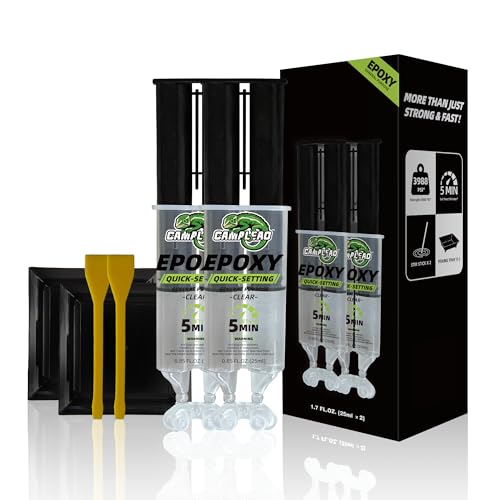
CAMALEAO’s two-part epoxy uses a user-friendly syringe packaging that keeps resin and hardener separated until use. It cures in about five minutes for quick fixes and fully hardens in 24 hours for maximum strength. The formulation is crystal clear, enabling invisible repairs, and it offers an impressive tensile strength near 3988 PSI. Best for metal and plastic repairs where a fast, clear bond is desired. A potential drawback is the relatively short handling window if parts are not prepped in advance.
Buying Guide
What makes a good plastic epoxy glue? Look for cure time, bond strength, clarity, and compatibility with your materials. Consider these questions:
- What materials need bonding? Plastics vary in resin type; some epoxies bond better to ABS or PVC than to polycarbonate.
- Do you require a clear, invisible bond? Choose clear or translucent formulations to hide repairs.
- How much working time do you need? Short set times suit quick fixes; longer times help with alignment.
- Is gap filling important? Some epoxies function as fillers for voids and uneven surfaces.
- Will the repair be exposed to stress or heat? Higher PSI ratings and heat resistance improve durability.
Practical comparison by scenario
- Small, precise repairs on visible surfaces: Gorilla 2 Part Epoxy (Pack of 1) or ClearWeld provide clear bonds with fast set times.
- Strong structural repairs on plastics and bumper areas: J-B Weld PlasticWonder and PlasticBonder offer robust bonds with longer working times.
- Clear or decorative repairs: CAMALEAO’s crystal-clear epoxy and ClearWeld’s clear resin are ideal for minimal visibility.
FAQ
- Q: Which epoxy is best for plastic bonding? A: PlasticWeld, PlasticBonder, and ClearWeld are specifically designed for plastics, offering good adhesion and strength.
- Q: How long does it take for epoxy to cure fully? A: Cure times vary; many epoxies cure in about 1 hour to 24 hours depending on formulation and conditions.
- Q: Can epoxy be sanded after curing? A: Some epoxies harden enough to be sanded; check product data for cure and finish guidance.
- Q: Is a clear epoxy better for visible repairs? A: Yes, clear epoxies minimize visual impact on repairs and can resemble the surrounding material more closely.
- Q: Do these products require clamping during cure? A: Some repairs benefit from clamping to prevent movement; always secure parts as directed for best results.
- Q: Are there safety considerations? A: Use in a well-ventilated area and follow the manufacturer’s instructions for mixing ratios and curing.