
Find the right orbital palm sander for your woodworking projects. This guide highlights five top options, detailing who cada model is best for and why it stands out. Whether you’re finishing furniture, leveling plaster, or refining cabinets, these sanders offer a range of speeds, dust collection features, and ergonomic designs to suit different skill levels.
Summary of selected models
| Product | Best For | Key Benefit |
|---|---|---|
| Skil SR211601 | DIYers prioritizing dust control | Cyclonic dust box and variable speed |
| DEWALT DWE6421K | Pro or frequent user seeking comfort | Reduced vibration with counterweight |
| Bosch ROS20VSC | Versatile sanding with integrated vacuum | Variable speed with easy disc attachment |
| DEWALT DCW210B | Cordless convenience for tight spots | Brushless motor and wide speed range |
| HYCHIKA 5-Inch | Economical option with strong dust collection | Solid vacuum dust bag and multi-speed |
SKIL 5” Random Orbital Sander with Cyclonic Dust Box

Best for DIYers who want an affordable, easy-to-clean dust system. The 2.8-amp motor delivers up to 13,000 OPM for a smooth finish on soft woods and composites. The cyclonic dust box helps keep the work area cleaner, and the variable speed control allows adapting to different materials.
Who it’s best for: Home workshop users needing straightforward dust control and adjustable power without premium-cost features.
Cautions: The dust container is transparent but may require frequent emptying during heavy dust tasks.
DEWALT Orbital Sander Kit, 5 inch, 3 amp
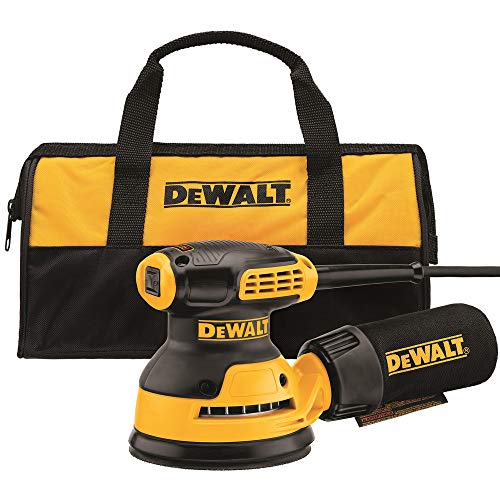
Best for frequent users who need a balance of power and comfort. The 3.0-amp motor delivers solid performance at 12,000 OPM. A shorter height helps you reach tighter spaces, and the separate counterweight design reduces vibration for longer, steadier sanding sessions.
Who it’s best for: Professionals or serious hobbyists who value reduced vibration and closer access to the work surface.
Cautions: Slightly heavier than some compact models; handling balance may require a moment of adjustment for new users.
BOSCH ROS20VSC Palm Sander

Best for versatility and dust control in one package. The variable speed dial lets you adjust for different materials, while the Hook-and-Loop disc system provides quick changes and secure disc adhesion. The built-in vacuum-ready design supports clean finishing with compatible dust collection setups.
Who it’s best for: Users who want a flexible sander that pairs well with vacuum dust collectors and offers simple disc changes.
Cautions: For users who rely on battery versatility, note that this is a corded model requiring a power source.
DEWALT 20V MAX Orbital Sander (Tool Only)

Best for cordless sanding tasks that require mobility. The brushless motor supports efficient runtime, and the 8,000–12,000 OPM range accommodates various materials. A low-profile height enables close work on tight edges and contours.
Who it’s best for: Pros or DIYers who need a cordless option for overhead or scaffold work, where a power cord is impractical.
Cautions: Tool-only design means you’ll need to source batteries and charger separately; performance depends on battery choice.
DEWALT Random Orbit Sander, Variable Speed

Best for balanced performance and comfort in corded sanding. The 3-amp motor delivers 8,000–12,000 OPM, and the separate counterweight minimizes vibration for smoother, longer sanding sessions. Dust-sealed switches help longevity in dusty environments.
Who it’s best for: Woodworkers who want a reliable, mid-range sander with comfortable operation and consistent power.
Cautions: Slightly bulkier grip can feel less agile on very tight corners compared to smaller palm sanders.
HYCHIKA 5-Inch Random Orbital Sander
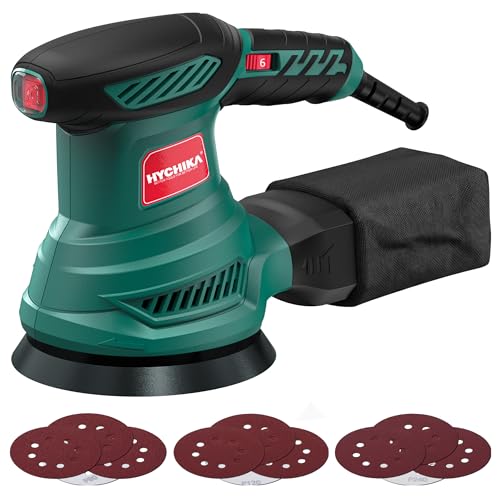
Best for users seeking high RPM and robust dust collection at a budget-friendly price. The 13000 RPM motor with 6-speed control supports diverse finishing work. The upgraded dust bag captures a large portion of debris during extended sanding.
Who it’s best for: Beginners or hobbyists who want strong dust collection without premium gear costs.
Cautions: The included dust bag may require frequent emptying on dust-heavy projects; consider an external vacuum for best dust removal.
Buying Guide: Key Considerations For Orbital Palm Sanders
- Power and speed: Higher OPM ranges improve material removal but may increase vibration. Choose a model with a comfortable balance for your typical tasks.
- Dust collection: Integrated bags or vacuum-ready ports help keep workspaces clean. Look for models with efficient dust ports and easy-empty containers.
- Vibration control: Counterweights and ergonomic grips reduce fatigue during longer sessions. If you sand often, prioritizes models with improved vibration reduction.
- Disc attachment: Hook-and-loop discs allow quick changes. Ensure the sander uses common grit packs (60–220) for versatility.
- Power source: Corded vs. cordless affects mobility. Cordless options offer reach in tight spaces but require battery management.
- Size and ergonomics: A compact, low-profile design helps when sanding edges or inside recesses. Consider weight and grip texture for comfort.
- Dust bag capacity: For longer projects, a larger bag or a vacuum connection reduces downtime on emptying.
Frequently Asked Questions
- What is the typical range of OPM for orbital sanders?
Answer: Most orbitals range from about 8,000 to 12,000 OPM, with some models offering up to 13,000 OPM for faster material removal. - Should I choose a cordless or corded orbital sander?
Answer: Corded sanders offer constant power and are suitable for long sessions, while cordless sanders provide mobility for tight spaces or elevated work. - What is the advantage of a vacuum dust collector?
Answer: Vacuum dust collectors reduce dust exposure and help maintain a cleaner work area, especially in enclosed spaces. - Do I need a variable speed sander?
Answer: If you work with multiple materials (soft wood, hard wood, metal), a variable speed model enhances control and finish quality. - How important is vibration reduction?
Answer: Lower vibration improves control and reduces fatigue, benefiting accuracy in detailing and long sanding sessions. - Is a larger dust bag worth it?
Answer: Yes, a larger bag or vacuum compatibility reduces the need for frequent emptying during extended projects.