
Oil-based paint sprayers are designed to handle durable finishes and thick coatings with fewer brush marks. This guide highlights five top options that balance power, control, and versatility for DIYers and small- to mid-scale projects. Each pick is evaluated for who it’s best for, common limitations, and why it’s a solid choice for oil-based or hard-wearing coatings like polyurethane, varnish, and enamel.
The table below compares key aspects of the five highlighted sprayers to help you decide quickly which model matches your project size and experience level.
| Product | Best For | Key Strength |
|---|---|---|
| HomeRight Super Finish Max | Small to medium furniture and cabinetry | 450-watt power with flexible spray patterns |
| WIBENTL Paint Sprayer | Beginners working on doors, fences, and chairs | Three patterns with four brass nozzles for versatile finishes |
| VEVOR 750W Stand Sprayer | Large interior and exterior surfaces | Up to 3000 PSI for fast coverage |
| InoKraft MaXpray M1 | DIY homeowners tackling walls and fences | 3000 PSI may pull from bucket with minimal thinning |
| WORKPRO 600W HVLP | Furniture and cabinets with a finer finish | Multiple nozzles and spray patterns for control |
HomeRight Super Finish Max HVLP Paint Sprayer
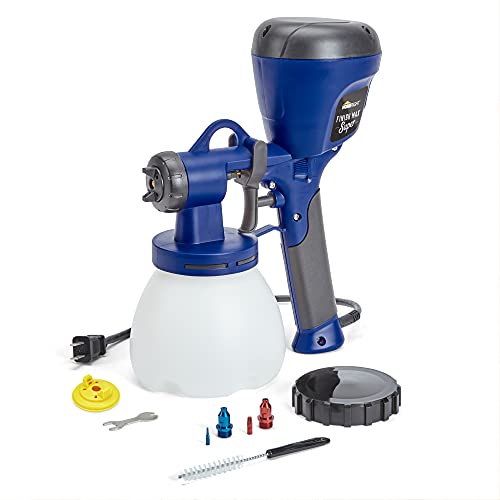
The HomeRight Super Finish Max is a versatile HVLP spray gun ideal for small to large projects such as fences, decks, furniture, and cabinetry. Its adjustable air cap supports horizontal, vertical, and round patterns, while the material flow control knob lets you tailor output to the coating or stain. This model operates at 450 watts, enabling spray of chalk type paint, latex, enamels, primers, sealers, polyurethane, and varnish. Best for DIYers seeking a capable all-around sprayer for a mixed toolkit, especially when coating furniture and small to mid-size surfaces.
Who it’s best for: Home DIYers and hobbyists needing reliable power with pattern versatility for a variety of finishes. Why selected: Strong balance of control, application options, and compatibility with common interior finishes.
Caution: For very thick coatings, thinning or test spraying may be needed to avoid clogging. Clean thoroughly after use to prevent material buildup.
WIBENTL Paint Sprayer With Multiple Modes
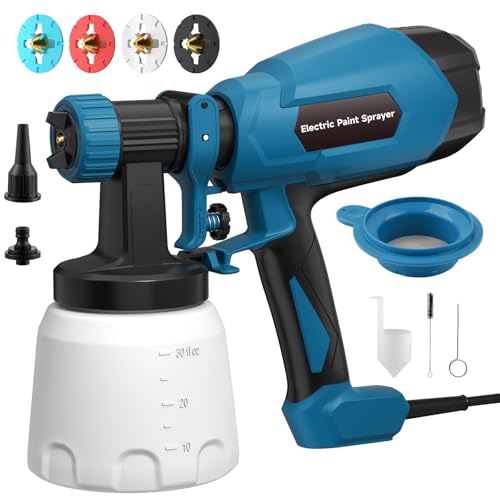
The WIBENTL sprayer includes three spray patterns (horizontal, vertical, circular) and four brass nozzles (1mm, 1.5mm, 2mm, 3mm). It is designed for beginners and provides a quick 10-second setup, tool-free assembly, and straightforward cleaning with a included cleaning brush and nozzle. Adjustable flow control helps minimize overspray for furniture, cabinets, and trim. Best for: first-time users or those needing flexible nozzle options for mixed interior projects. Why selected: Good entry point for oil-based coatings thanks to simple maintenance and varied nozzle sizes.
Limitation: While easy to use, the spray results may require more practice to achieve surgical finishes on large, exterior surfaces. Overspray can occur if misadjusted, so testing on a sacrificial piece is advised.
VEVOR 750W Stand Airless Sprayer

The VEVOR stand sprayer delivers up to 3000 PSI with a 1.2 LPM flow for efficient, large-area coverage. Its high-efficiency design uses fan-shaped atomization to produce an even, fine finish and supports a faster workflow—up to five times faster than rolling and twelve times faster than brushing. The pump is detachable for easy cleaning, and the extension pole is included for high or ground-level work. Best for: homeowners tackling interior and exterior walls, fences, and decks where speed matters. Why selected: Strong power and efficiency make it a solid pick for larger jobs with oil-based or polyurethane finishes.
Caution: Higher pressure requires careful masking and ventilation to avoid overspray on adjacent surfaces. Ensure compatible coatings and proper thinning compatibility with the sprayer’s maximum viscosity rating.
InoKraft MaXpray M1 Airless Sprayer

The InoKraft MaXpray M1 operates at up to 3000 PSI with a 550W motor and can draw coating directly from a five-gallon bucket. It’s designed for latex and stain, providing fast coverage for interior and exterior walls, fences, decks, garages, and furniture. Included features support a beginner-friendly setup in about 15 minutes and quick cleanup with a Flush-Ease valve. Best for: DIY homeowners who want a thinning-free spray solution with bucket-drawn paint. Why selected: Practical for larger projects with minimal prep and quick cleanup, reducing workflow friction.
Limitation: Requires careful monitoring of bucket supply to avoid running dry, which can affect spray consistency if not managed, especially on long runs.
WORKPRO 600W HVLP Sprayer

The WORKPRO 600W HVLP sprayer offers four nozzle options (1.5mm, 1.8mm, 2.2mm, 2.6mm) and three spray patterns (horizontal, vertical, circular). Its 600W motor and HVLP technology enable a steady atomization for smooth, even coats, making it well-suited for furniture, cabinets, doors, walls, and fences. Best for: users seeking a versatile set of nozzles and patterns to tailor finish quality. Why selected: Strong balance of control, finish quality, and adaptability across common oil-based or enamel finishes.
Caution: Some coatings may require thinning or adjustments to achieve optimal spraying; always test on a small area first before committing to a larger surface.
Buying Guide: Key Considerations For Oil Based Paint Sprayers
Choosing the right oil-based paint sprayer depends on project size, coating type, and user experience. Consider these practical questions and answers to compare options effectively.
- What project size are you targeting? Stand or tabletop sprayers work well for medium to large surfaces, while compact models fit furniture and cabinetry.
- Which coatings will you spray? Look for sprayers that handle varnish, polyurethane, enamel, and oil-based primers without clogging.
- How important is spray pattern control? A model with multiple nozzle sizes and pattern options offers greater control for detailed trims and broad surfaces.
- Do you need bucket-draw capability? Sprayers that pull from a bucket can reduce pauses for reloading on large jobs.
- Is cleanup a factor? Detachable components and easy-clean features save time and reduce maintenance effort.
Practical tips for successful oil-based spraying
- Test spray on a scrap surface to dial in nozzle size, pattern, and flow before starting on the project.
- Work in a well-ventilated area and mask surrounding surfaces to control overspray.
- Follow manufacturer guidelines for thinning, if required, and avoid over-spraying into soft materials or glass.
- Regularly clean filters, nozzles, and spray heads to prevent clogs and maintain consistent atomization.
Frequently asked questions
- What is the advantage of HVLP over conventional sprayers for oil-based finishes? HVLP typically reduces overspray and provides finer control for smoother coats.
- Can oil-based paints be thinned for spraying? Some oil-based coatings require thinning; always follow coating manufacturer recommendations and sprayer guidelines.
- How do I prevent clogging with oil-based coatings? Clean after use, avoid thick coatings, and use the appropriate nozzle size for the coating viscosity.
- Is a stand sprayer better for large surfaces? Yes, stand sprayers generally cover large areas faster and with consistent pressure, reducing fatigue on long jobs.
- Should I pull from a bucket or use a canister with an airline sprayer? Bucket-draw systems save time on big projects, but ensure the system can handle the coating’s viscosity.
- What maintenance is essential for oil-based sprayers? Thorough cleaning, proper lubrication of moving parts, and checking seals and gaskets help maintain performance.