
Whether you’re protecting a home with gas appliances, RV living needs, or simply want quick real-time gas readings, the right natural gas detector helps prevent leaks and fires. This guide highlights five reliable options ideal for different households and spaces. The top picks are best for homeowners, renters, DIY enthusiasts, and travelers who need quick locating tools, clear alarms, and dependable battery backups. Below, compare features, best用途, and caveats to choose the right detector.
| Product | Best For | Notes |
|---|---|---|
| Kidde Carbon Monoxide + Explosive Gas Alarm (3rd Edition) | Homes needing CO and gas detection with outlet power | Plug-in, battery backup, digital display |
| TOPTES PT520A Natural Gas Detector | Hard-to-reach leaks; garages, basements, RVs | 17-inch gooseneck, 0.5s response, 75dB alarm |
| TOPTES PT199 Natural Gas Leak Detector | Portable quick-checks; DIYers | LCD alert, 2x AAA, 0.5s to alarm |
| KLEIN TOOLS ET120 Gas Leak Detector | Professional or frequent users needing range | 50–10,000 ppm range; 85dB alarm |
| First Alert GCO1CN Combination Alarm | All-in-one CO and explosive gas detection | Remote mute, backlit display |
Kidde Carbon Monoxide + Explosive Gas Alarm (3rd Edition)
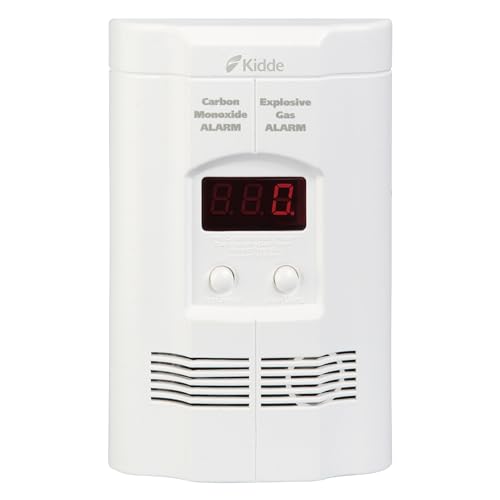
Best for: Homeowners who want a single device that detects carbon monoxide and explosive gas, with continuous power and backup battery. This unit plugs into a standard 120V outlet and includes a 9V battery backup for power outages. The digital LED displays the CO level or shows “GAS” when explosive gas is detected. The 85 dB alarm delivers a loud alert, and LED indicators help with quick status checks. This model is suitable for living rooms, kitchens, and utility rooms where gas appliances run.
Why selected: Combines CO and explosive gas detection with a straightforward installation and a clear digital readout. It’s better for households needing two-in-one protection and easy visibility during alarms.
Caution: Ensure the outlet is not in a confined or blocked space to keep the sensors unobstructed and functioning correctly.
TOPTES PT520A Natural Gas Detector

Best for: Spaces where access is difficult, such as near pipelines, basements, or outdoor storage areas. The 17-inch gooseneck enables precise probing in tight or elevated spots, making it ideal for detecting leaks in cabinets, under appliances, and RV compartments. It detects methane, propane, natural gas, LPG, butane, and more, with a 0.5-second response and a 75 dB alarm that intensifies with gas concentration.
Why selected: The long probe and rapid response are advantageous when trying to locate a leak quickly. It’s especially helpful for professional setups and DIY projects in hard-to-reach areas.
Caution: Use in well-ventilated areas and avoid direct exposure to open flames while testing to prevent ignition risks during inspection.
TOPTES PT199 Natural Gas Leak Detector
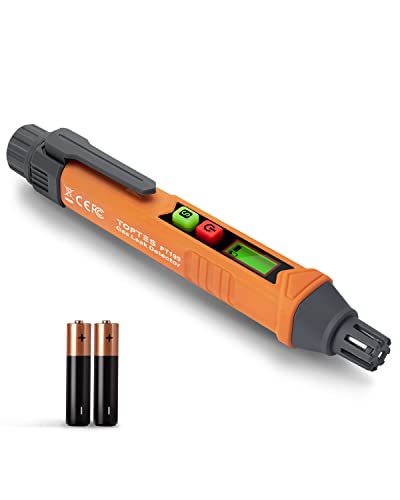
Best for: Portable, pocket-sized gas detectors for quick checks around the home or on the go. The PT199 detects natural gas, methane, propane, butane, LPG, and more, with an audible and visual alarm that intensifies as gas concentration increases. Battery operation is straightforward, and the unit includes two AAA batteries for readiness out of the box.
Why selected: Lightweight and simple to use, it’s well-suited for quick spot checks in kitchens, workshops, and vehicles. The built-in LCD turns red at higher gas levels for immediate visibility.
Caution: It requires occasional recalibration and warm-up to ensure accurate readings; avoid relying on it as the sole source of safety in high-risk environments.
KLEIN TOOLS ET120 Gas Leak Detector

Best for: Professionals or serious DIYers who need a broader detection range. The ET120 covers approximately 50 to 10,000 ppm, with adjustable sensitivity (High and Low) and strong visual and audible alerts. Its five red LEDs provide a quick visual gauge of gas concentration, and the unit offers a robust, high-contrast alarm at higher levels.
Why selected: The wide detection range and adjustable sensitivity allow precise monitoring across different environments, from small apartments to larger workshops. It’s better for users who want more granularity in readings.
Caution: The device may require calibration and familiarity with its threshold settings to avoid false alarms in environments with transient gas exposure.
First Alert Combination Gas And CO Alarm

Best for: Homeowners seeking an all-in-one detector for carbon monoxide and propane/natural gas. The GCO1CN senses high gas levels and CO with a backlit digital display showing current and peak readings. It can be remotely muted using common household remotes, which can be convenient in rooms where a quick quiet is desired.
Why selected: It consolidates CO and explosive gas detection in one wall-mounted unit, which helps reduce device clutter while delivering essential alerts and readouts.
Caution: Remote muting should be used judiciously to avoid missing important alarms; ensure placement follows safety guidelines for visibility and access.
Buying Guide: Key Considerations For Selecting Natural Gas Detectors
What should you look for when choosing a natural gas detector?
- Detection Type: Decide between single-gas vs multi-gas detectors. If you need both CO and gas sensing, choose units like the Kidde CO and explosive gas alarm or First Alert combination models.
- Power Source and Backup: Plug-in models with battery backups provide continuous protection during outages. Consider how often you rely on battery power and whether alkaline or rechargeable options are preferred.
- Alarm Type and Readouts: Look for loud audible alarms (85 dB range or higher) and clear digital readouts or LED indicators that show gas concentration levels. A backlit display helps in low-light conditions.
- Response Time: Quicker detection reduces risk. Most listed models report detection within fractions of a second to a few seconds, which matters for immediate action.
- Sensor Range and Gas Coverage: Check the ppm range and which gases are detected (natural gas, propane, methane, LPG, butane). A wider range helps identify increasing leaks more accurately.
- Placement and Reach: Long goosenecks help inspect tight spaces or appliances; portable detectors are ideal for quick checks around vehicles or RVs.
- Maintenance: Battery life, calibration needs, and replacement parts should be considered. Some devices require periodic warm-up or auto-calibration to maintain accuracy.
Practical Comparison At Glance
- Best for all-in-one home protection: First Alert GCO1CN or Kidde COPDLG models.
- Best for hard-to-reach leaks: TOPTES PT520A with a 17-inch gooseneck.
- Best for portable spot checks: TOPTES PT199 or zangang 50A (portable variants).
- Best for professional monitoring with wide range: KLEIN TOOLS ET120.
Frequently Asked Questions
- What is a natural gas detector? A device that senses flammable gases like methane, propane, and other hydrocarbons, often along with carbon monoxide, and provides alarms and readouts to help prevent explosions.
- Where should I place these detectors? Position detectors near gas appliances, in kitchens, basements, utility rooms, and near entry points to living spaces. For portable models, carry or place where leaks are most likely to occur.
- Do I need battery backups? Battery backups protect you during power outages. Plug-in detectors with backup batteries are common for continuous protection.
- How do I test a detector’s functionality? Use the built-in test function if available or follow the manufacturer’s instructions. Do not test with actual gas; use safe testing methods recommended by the manufacturer.
- How often should detectors be replaced? Check the manufacturer’s lifespan; most detectors should be replaced every 5 to 10 years, with batteries replaced according to the device’s guidelines.
- Can I use multiple detectors in the same space? Yes, but avoid placing them too close together. Distribute devices to cover different angles and spaces for optimal detection.