
For hobbyists, students, and makers exploring renewable energy on a small scale, a mini wind turbine generator kit offers hands-on insight into energy conversion. This article spotlights five mini kits that balance learning value, build quality, and practical demonstration of wind-powered electricity. Each product section includes a quick look at what you get, how the components work, and what makes it suitable for an academic or hobbyist environment. A simple buying guide follows to help compare features such as voltage ranges, assembly requirements, and expandability.
| Product | Brand |
|---|---|
| Sntieecr 6 Set Mini Generator Motors | Sntieecr |
| EUDAX 6 Set Mini Generator Motors | EUDAX |
| Thames & Kosmos Wind Power V4.0 | Thames & Kosmos |
| SWONVI 2 Pcs DC Wind Turbines | SWONVI |
| QINIZX Small Wind Turbine Generator Kit | QINIZX |
Sntieecr 6 Set Mini Generator Motors
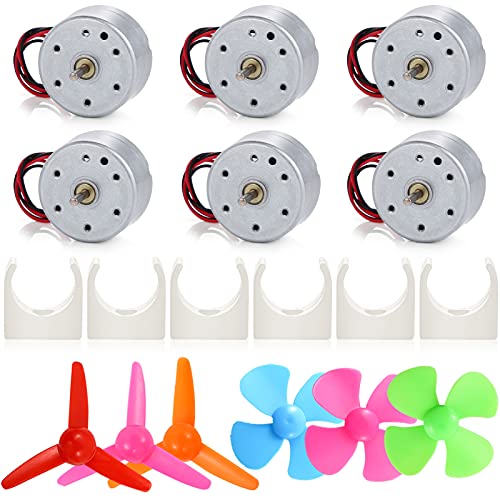
The Sntieecr kit provides six compact DC motors paired with mounting brackets and color variants for easy wind-turbine construction. Each motor operates at different voltages and speeds, enabling varied demonstrations of kinetic-to-electrical energy conversion. With a 24 mm motor body diameter and a 0.94-inch footprint, these units are compact for classroom desks or home labs. This beginner-friendly set emphasizes hands-on assembly and observation of energy transformation across multiple voltage points.
Delinx Hands-On Energy Kit

This Science, Technology, Engineering, and Mathematics (STEM) project from Delinx engages kids in multiple energy-generation modes—hand crank, wind power, and chemical reaction. The kit promotes creative inquiry about how energy is transformed and stored. It is suitable for family learning sessions and school environments alike, offering a practical exploration of wind and other energy conversion methods through hands-on experimentation.
EUDAX 6 Set Mini Generator Motors

The EUDAX kit assembles six miniature generator motors with mounting brackets and propellers for wind, gears, and pulleys-driven demonstrations. Included LEDs and a detailed manual expand learning opportunities around voltage, RPM, and energy output. The kit emphasizes versatility—driving a range of devices from LEDs to small educational electronics—making it a robust option for a classroom or maker space focused on renewable energy concepts.
Thames & Kosmos Wind Power V4.0
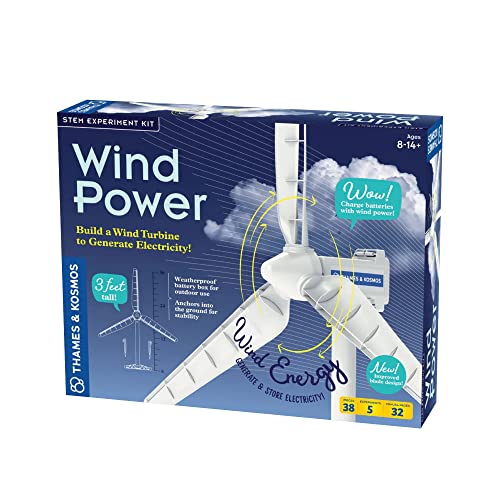
The Thames & Kosmos Wind Power V4.0 kit includes a real 3-foot wind turbine to generate electricity for a small model car or battery charging. Its single-piece blade construction improves durability and aerodynamics, while the demonstration emphasizes wind as a renewable energy source. This kit is well-suited for outdoor demonstrations or classroom experiments that illustrate wind power in a tangible, scalable format.
SWONVI 2 Pcs DC Wind Turbines

The SWONVI kit offers compact, ready-to-assemble wind turbine generators designed for demonstration and teaching purposes. With a stated output and a relatively small diameter, these units are easy to deploy in classrooms or science fairs. The kit is particularly suitable for hands-on activities that illustrate how wind translates into electrical energy, and it pairs well with DIY lab projects involving LEDs and small electronics.
QINIZX Small Wind Turbine Kit

The QINIZX kit centers on a larger propeller arrangement intended for demonstrations where wind driver speed is adjustable. It includes a DC motor suitable for powering small LEDs or other low-power devices. Note the practical guidance: natural wind alone may not reliably generate power; using a fan or blower at appropriate angles can demonstrate electricity generation more clearly. This kit is well-suited for science classrooms and experiential learning setups.
Buying Guide: Key Purchase Considerations
- Power generation method: Look for kits that support wind-driven motors, hand-cranking, or multiple energy sources to illustrate conversion principles from kinetic to electrical energy.
- Voltage and RPM ranges: Compare voltage outputs and RPM speeds across kits to match your educational goals, whether showing low-voltage LED lighting or higher-output demonstrations.
- Assembly complexity: Beginner-friendly kits provide clear instructions, assembly tools, and durable components, while more advanced sets may require soldering or precision alignment.
- Durability and materials: Nylon blades and metal housings tend to offer better longevity in classroom or outdoor settings compared to cheaper plastics.
- Expandability: Some kits are designed to integrate with solar panels, batteries, or additional turbines, enabling longer-term projects or larger-scale demonstrations.
- Safety considerations: Ensure blades are securely mounted and that any electronic components are properly insulated, especially for younger learners.
- Use-case alignment: For indoor demonstrations, smaller, quieter units may be preferable, while outdoor projects can showcase larger, more rugged designs.
Across these five kits, learners can compare different approaches to wind energy education—from compact, color-coded motors to full-scale model turbines. Each option supports hands-on exploration of how wind energy becomes usable electricity, whether through direct turbine rotation, LED lighting, or battery charging experiments. Selecting a kit should balance the intended learning outcomes, available workspace, and the level of DIY construction the user is prepared to undertake.