
Finding the right MIG wire for sheet metal means balancing steel compatibility, feedability, and clean welds across common gauges. This guide highlights five MIG wires that perform well on sheet metal projects, from automotive panels to ductwork and light fabrication. Each option targets a specific need—low spatter, gasless convenience, aluminum readiness, or easy feed for beginners. The table below helps you compare at a glance before diving into detailed product notes.
| Product | Best For | Key Benefit |
|---|---|---|
| ATLASWELDER Solid MIG Wire ER70S-6 .023 | Mild steel sheet metal | Low spatter, smooth feed, great position stability |
| ARCPEX ER70S-6 .035″ MIG Wire | Medium-thick sheet metal, auto body, garages | Low spatter, clean beads, versatile for CO2 or Ar/CO2 |
| US Forge Welding Solid Mild Steel MIG Wire .023 | Sheet metal with simple shielding gas setups | Good bead quality with shielding gas required |
| ARCCAPTAIN Flux Core Welding Wire .030 E71T-GS | Outdoor or rusty/painted sheet metal | Gasless, no shielding gas, good outdoors |
| ARCCAPTAIN ER5356 .035″ Aluminum MIG Wire | Aluminum sheet metal | Excellent corrosion resistance and stable arc for 5xxx alloys |
ATLASWELDER Solid MIG Wire, ER70S-6 .023

Best for: everyday mild steel sheet metal work in all positions. Its ER70S-6 composition supports smooth, steady arcs, even with light surface rust or mill scale. The wire is designed for clean feed and reduced spatter, cutting down grinding and finishing time. Choose this for home shops or small fabrication runs where consistent performance matters.
Why selected: Low spatter and easy feeding help beginners and hobbyists produce neat beads without constant machine fiddling. The wire is optimized for smooth operation in all-position welding, making it a reliable default for general sheet metal tasks.
Caution: When welding highly contaminated or heavily painted metal, surface prep remains important to minimize defects and ensure solid fusion.
ARCPEX ER70S-6 .035″ MIG Wire

Best for: medium-thickness sheet metal and auto body work where a slightly thicker wire improves fill and bead shape. It supports CO2 or 80/20 Argon/CO2 shielding gases for a cleaner finish. Ideal for shops needing a versatile option across several sheet metal applications.
Why selected: Low spatter and good bead quality help produce presentable welds with less cleanup. The wire’s compatibility with standard shielding gas mixes adds flexibility for indoor garages and professional setups alike.
Caution: Requires a compatible shielding gas setup; running in gasless mode is not recommended for this diameter in most cases.
ARCCAPTAIN Flux Core Welding Wire .030 E71T-GS

Best for: outdoor or indoor projects where shielding gas isn’t available, and you’re working with rusty, dirty, or painted sheet metal. The flux core design provides its own shielding and handles various surface conditions well.
Why selected: Self-shielded, easy to use for beginners and hobbyists who want to tackle T-joints, butt welds, and lap welds without a gas system. It offers reliable arc control and reasonable feedability for quick fabrications.
Caution: Flux-core wires can produce more spatter than gas-shielded options, and cleanup may be necessary for a clean appearance on high-visibility panels.
ARCCAPTAIN ER5356 .035″ Aluminum MIG Wire
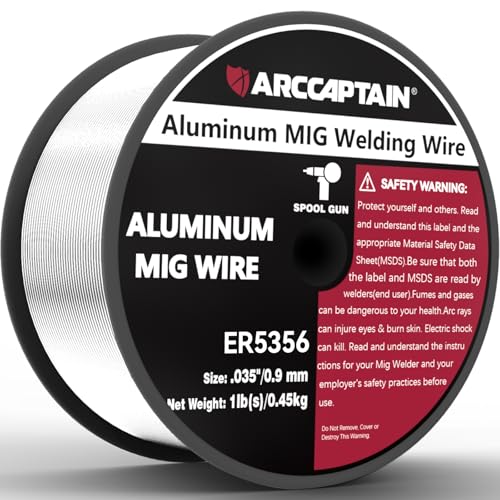
Best for: aluminum sheet metal welding, particularly 5xxx-series alloys like 5052, 5083, 5356, and related grades. The wire’s 5.0% magnesium content enhances seawater and salt spray resistance for durable welded parts.
Why selected: Aluminum MIG welding demands stable arc and good wetting behavior. This ER5356 wire offers solid corrosion resistance and reliable weld bead appearance for sheet metal fabrication and light structural aluminum work.
Caution: Aluminum welding requires appropriate equipment and technique; feed smoothness and correct gas settings remain critical for consistent results.
Buying Guide: Key Considerations for MIG Wire On Sheet Metal
What wire diameter should I choose?
Common sheet metal uses .023″ to .035″ diameter wires. Lighter gauges (.023″) are easier to feed and control for thin panels, while thicker sheets (.035″) offer better fill for medium thickness work.
Gas vs. flux-core: which is best?
Gas-shielded wires (like ER70S-6 options) deliver cleaner beads and less spatter, ideal for visible sheet metal. Flux-core wires work well where shielding gas isn’t available or for outdoor use, but can increase spatter and post-weld cleanup.
Material compatibility matters
Mild steel sheet metal pairs with ER70S-6 wires. Aluminum requires ER5356 or similar aluminum-specific wires. For mixed metal or dissimilar joints, select wires designed for those materials or consider brazing alternatives.
Position and technique considerations
All-position capable wires help in complex sheet metal assemblies. Lower-spatter formulations reduce cleanup in overhead or vertical joints. Match machine settings to your wire diameter and shielding gas for best results.
Practical quick-start tips
- Prep sheet metal surfaces: clean rust, oil, and paint for best bead quality.
- Test welds on scrap metal to dial in voltage, travel speed, and wire feed.
- Maintain a steady travel speed and consistent arc length to reduce defects.
FAQ: MIG Wire For Sheet Metal
- What MIG wire is best for beginners on sheet metal?
ER70S-6 wires (.023″ or .030″) with gas shielding are typically easiest to learn on due to stable arcs and smooth feeding.
- Can I weld aluminum with standard MIG equipment?
No—aluminum requires aluminum-specific wires (such as ER5356) and a machine capable of aluminum welding settings.
- Is Flux Core MIG suitable for outdoor sheet metal work?
Yes, flux-core wires work without shielding gas, which can be advantageous outdoors, but expect more spatter and cleanup than gas-shielded options.
- What should I expect when switching from steel to aluminum wire?
Aluminum welding requires different travel speed, shielding gas, and electrode polarity. Expect different bead appearance and joint behavior.
- Which wire diameter gives the best bead on gauge 18-20 sheet metal?
Around .023″ to .030″ typically provides a balance of control and deposition for thin-sheet work.