
Answering the top buyer question: which MIG welding pliers deliver reliable spatter removal, wire cutting, and nozzle work across common welding tasks? This guide highlights five well-rounded options, each suited to different workstyles—from DIY home repair to professional shop use. The chosen tools balance durability, multi-function design, and rust resistance, helping you pick the best fit for your welding routine and environment. Below is a quick summary table of the featured products to compare core capabilities at a glance.
| Product | Best For | Key Strength |
|---|---|---|
| IRWIN VISE-GRIP MIG Pliers | General welding maintenance | Specialized spatter nose, durable cutters |
| YESWELDER 8″ MIG Pliers | Precision tasks in harsh conditions | Rust-resistant, high-carbon steel |
| ARCCAPTAIN Professional 8″ Pliers | Versatile multi-function use | Anti-rust, smooth spring-loaded design |
| Lincoln Electric MIG Pliers | Ergonomic, hand-friendly work | Form-fitting handle, spring hinge |
| Czoynife Professional 8″ Weliding Pliers | Budget-friendly multi-tools | Multi-function, solid cutting/jaw grip |
IRWIN VISE-GRIP MIG Pliers, 8-Inch (1873303)

Best for: general welding maintenance and beginners. Why selected: This model features a specially designed nose for efficient spatter removal and an induction-hardened cutting edge that stays sharp longer. It also includes multiple jaws for drawing wire and removing or installing tips and nozzles, plus a hammer for light maintenance tasks. Caution: The tool’s versatility may be more than needed for very simple jobs; choose this if you expect varied tasks beyond spatter cleanup.
8″ MIG Welding Pliers with Insulated Handle

Best for: versatile workshop use and wire work. Why selected: These pliers offer built-in wire cutting and nozzle management, spatters cleaning inside and outside of shrouds, and a 1.7 inch (43mm) maximum opening. Caution: The description emphasizes versatility; verify your specific nozzle sizes align with the maximum opening before buying.
YESWELDER 8″ MIG Welding Pliers
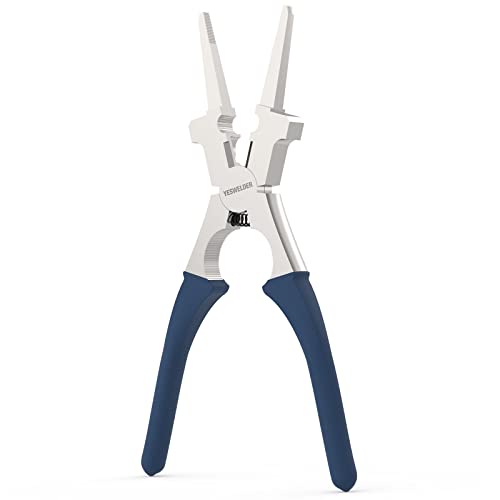
Best for: professional or demanding workshop environments. Why selected: This tool combines multi-functionality with high-carbon steel, rust resistance, and a strong grip for hot metal handling. It covers wire cutting, tip and nozzle removal/installation, and spatter cleaning. Caution: While corrosion-resistant, workloads in extremely humid environments still require regular maintenance to maximize longevity.
ARCCAPTAIN Professional 8″ Welding Pliers

Best for: pro-level multi-function use with rust resistance. Why selected: This model emphasizes a professional design with a sharp nose for spatter removal, a spring-loaded mechanism for ease of use, and anti-rust nickel-plated steel. Caution: The steel construction adds durability but may feel heavier for very fine, delicate work; choose this if you need robust all-around capability.
Lincoln Electric MIG Welding Pliers

Best for: ergonomics and hand-friendly design in regular welding tasks. Why selected: It uses a form-fitting handle with a pre-curved grip and a spring-loaded hinge, supporting easy, repetitive use. Caution: The description notes strength and comfort; verify if your application requires more aggressive spatter removal that some lighter pliers offer.
Czoynife Professional 8″ Weliding Pliers

Best for: budget-conscious buyers needing multi-function capability. Why selected: These pliers excel at cutting wires, removing/installing nozzles, and scraping weld spatter from shrouds. They offer a practical 1.73 inch opening and durable high-carbon steel. Caution: The price-focused value may come with fewer premium features; ensure it matches your expected daily usage.
Buying Guide: Key Purchase Considerations
- What functions do you need most? If you require spatter removal, nozzle work, and wire cutting, look for a nose designed for spatter removal and a robust cutting edge.
- Material and durability: High-carbon steel and rust-resistant finishes extend tool life in welding environments. Consider nickel-plated options for humidity or corrosive atmospheres.
- Ergonomics and comfort: A spring-loaded handle and a curved grip reduce fatigue during extended sessions.
- Opening size and jaw design: Ensure the pliers can reach your nozzle and fit the wire gauge you typically use. Check maximum opening measurements if you work with larger components.
- Multi-function balance: If you perform many tasks (wire cut, tip removal, nozzle work, hammering), a tool advertised as multi-functional may save time, but ensure its primary capabilities don’t compromise grip or precision.
- Rust resistance: In damp or outdoor environments, rust resistance is a practical consideration for longevity.
- Warranty and availability: Consider models from reputable brands with widely available replacements or spare parts.
Frequently Asked Questions
- What is a MIG welding plier best used for? It combines wire cutting, spatter removal, nozzle removal/installation, and sometimes hammering for quick repairs on MIG welds.
- Are insulated handles important? For electrical safety around hot components or live work, insulated grips can add comfort, but always follow manufacturer guidelines and personal safety standards.
- How do I choose between carbon steel and stainless options? Carbon steel offers strength and sharpness, while stainless resists rust better in humid environments. Your choice depends on environment and budget.
- Can I use these pliers for non-welding tasks? Yes, many pliers offer multi-functional features useful for general mechanical tasks, but design emphasis remains welding-specific.
- What should I look for in the nose design? A nose shaped to remove spatter efficiently reduces cleanup time and protects workpieces during maintenance tasks.
- Is a spring-loaded hinge necessary? It helps reduce hand fatigue and ensures consistent opening and closing, especially for repetitive tasks.