
If you’re shopping for a lightweight welding helmet, you want comfort, clear vision, and dependable eye protection without adding bulk. These top picks balance true-color viewing, fast auto-darkening, and practical features for TIG, MIG, ARC, and grinding tasks. They’re best for: professionals needing long-wear comfort; DIY enthusiasts seeking easy setup; and hobby welders who value true-color optics for precise work.
The following table highlights five strong choices. It compares viewing area, sensor count, power source, and notable features to help you pick quickly.
| Product | Viewing Area (in) | Sensors | Power | Best For |
|---|---|---|---|---|
| YESWELDER Auto Darkening Welding Helmet (Blue, 2 Arc Sensors) | 3.64 x 1.67 | 2 | Solar | Budget-conscious long sessions |
| Auto-Darkening Welding Helmet (UCC LIFE) | Large screen | 4 | Battery/Solar | Clear view with fast darkening |
| ARCCAPTAIN Large View 3.94 x 3.66 (LED Light) | 3.94 x 3.66 | 4 | Solar | Low-light environments |
| ARCCAPTAIN 1/1/1/1 True Color (Skeleton Knight) | 3.86 x 1.69 | 4 | Solar | Balanced features and reliability |
| YESWELDER Large View Auto Darkening (Blue Light Blocking) | 3.93 x 3.66 | 4 | Solar | Blue-light protection and wide shade range |
YESWELDER Auto Darkening Welding Helmet, Blue Light Blocking

Best for budget-minded buyers who still want reliable auto-darkening and true color. This YESWELDER helmet supports TIG, MIG, MMA/ARC, and grinding with a wide shade range and a large viewing area. The blue-light blocking outer lens helps reduce eye strain during long sessions, making it a practical option for professional shops and home garages alike. It’s suitable for welders who frequently use magnifying lenses for close-up work and prefer solar power with minimal maintenance.
Who this is for: professionals focusing on cost-efficiency, hobbyists needing a lightweight option, and shop owners updating older gear without sacrificing safety. Limitation: two arc sensors may be less forgiving in extremely bright or fast-wlickering arcs compared with higher-sensor models.
Auto-Darkening Welding Helmet, True Color Large Viewing Screen

This helmet emphasizes a larger viewing window and rapid 0.1 ms darkening. The true color optics help you see weld details with less eye fatigue, which is beneficial for precision tasks. A strong hard PVC shell provides solid face protection in demanding environments. This model is best for welders who trade speed for high-definition visibility and don’t mind a slightly heavier frame for enhanced optics.
Who this is for: professional fabricators and DIY users who prioritize fast, crisp visuals. Caution: the shell’s weight and size may feel bulkier to smaller-framed welders, so check for a comfortable headband fit.
ARCCAPTAIN Large View 3.94″ x 3.66″ True Color Auto Darkening

Designed for a bright, expansive field of view, this helmet uses a large screen and true color optics to improve weld visibility. With LED assist lighting, it helps in dim settings, making it ideal for low-light workshops. Four arc sensors support dependable auto-darkening across a range of processes. Power comes from solar cells with battery backup for extended jobs.
Who this is for: welders who work in dim environments or need extra screen real estate to monitor the weld puddle. Limitation: LED light feature adds a minor setup step to install if you want the light active during use.
ARCCAPTAIN Auto Darkening, 1/1/1/1 True Color

This option combines a true-color 1/1/1/1 viewing clarity with four arc sensors and a fast 1/25000 s reaction time. The design is compatible with magnifying lenses and offers solid protection with a durable PA shell. It’s a strong choice for welders seeking a balance of reliable auto-darkening performance and a distinctive styling, suitable for both professional settings and enthusiastic hobbyists.
Who this is for: welders who value fast response and a wide shade range plus compatibility with cheater lenses. Caution: some users may prefer a lighter shell if weight is the top priority.
YESWELDER Large View Auto Darkening, Blue Light Blocking
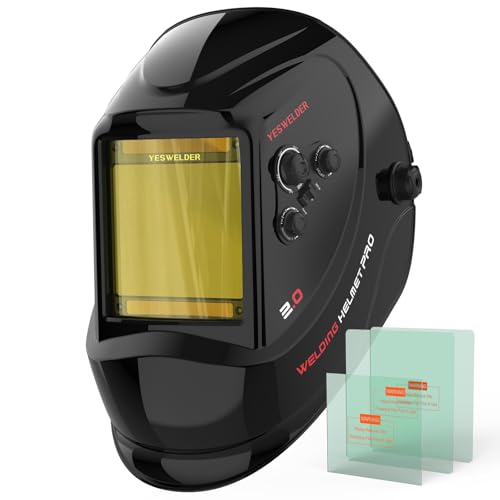
Best for extensive welding sessions where eye comfort matters, this helmet features blue light blocking outer lens and a large true-color viewing window. Its wide shade range covers TIG, MIG, and arc processes, with compatibility for magnifying lenses. The solar-powered design reduces downtime for battery changes and supports long projects without frequent maintenance.
Who this is for: professional welders who spend long hours at the bench and want enhanced eye safety from blue light. Limitation: the heavier build on some users may affect all-day wear comfort.
Buying Guide: Key Considerations for Lightweight Welding Helmets
What should you evaluate when choosing a lightweight welding helmet?
- Shade range and sensor count: Wider shade ranges (e.g., 4-9/9-13) cover more processes. More sensors improve auto-darkening accuracy and reduce false darkening during bright arcs.
- Viewing area and true color optics: A larger viewing window with true-color technology helps you see weld details clearly, reducing errors and eye strain.
- Power source: Solar-powered models with battery backups minimize downtime. Consider field conditions and the need for long sessions without frequent battery changes.
- Weight and comfort: A lighter helmet reduces neck strain during long welding sessions. Check headband adjustability and balance on your head.
- Durability and protection: Look for impact resistance, UV/IR protection, and compliance with standard safety certifications to ensure reliable face protection.
- Additional features: LED work lights, magnifier compatibility, and cheater-lens readiness can improve workflow in specialized tasks.
How to choose by welding process
If you mostly TIG weld, prioritize a large viewing area and fast auto-darkening to preserve detail. For MIG and ARC tasks, a robust shade range and four sensors can help prevent misreads during quick arc-on events. For grinding, a helmet with a stable dark state and good eye protection reduces glare and eye fatigue.
Size and fit considerations
Consider helmet width, weight, and headband design. Those with larger heads or hats may prefer models with more generous interior space and comfortable padding. If you wear magnifying lenses, ensure the helmet supports cheater lenses without blocking the viewing window.
Safety and standards
Choose helmets that meet ANSI Z87.1/EN379 safety standards for impact resistance and eye protection. A true-color display and a fast darkening response contribute to safer, more precise welding outcomes.
FAQ
- Q: Are lightweight helmets less protective than heavier ones? A: Protection levels depend on lens quality, arc sensors, and shell integrity. Light models can meet safety standards if designed properly.
- Q: Is blue-light blocking important for welding helmets? A: It can reduce eye strain during extended sessions by filtering the most harmful blue light while preserving visibility.
- Q: Do I need four sensors or is two enough? A: Four sensors provide quicker, more reliable auto-darkening in bright or flickering arcs; two sensors may suffice for lighter use or entry-level tasks.
- Q: Can I use magnifying lenses with these helmets? A: Many models support cheater lenses; verify compatibility with the helmet’s viewing window and lens mounting.
- Q: How long do solar-powered helmets last between charges? A: Solar-powered helmets with battery back-up typically offer extended operation; check the back-up battery life for long projects.
- Q: What processes are these helmets best suited for? A: The listed models cover TIG, MIG, MMA (ARC), grinding, and cutting tasks with varying shade ranges and sensor configurations.