
Choosing the right L14-20 generator cord ensures a stable, secure connection between a portable generator and a transfer switch, inlet box, or power inlet. This guide highlights five top options that deliver robust 20-amp, 125/250V service with weatherproof, durable construction for outdoor use. Each cord features a twist-lock design to resist disconnections during severe conditions, while preserving power during emergencies.
Summary of chosen products
| Product | Length | Amperage / Voltage | Connector Type | |
|---|---|---|---|---|
| 25FT NEMA L14-20P to L14-20R (Islewire) | 25 ft | 20A, 125/250V | L14-20P to L14-20R twist-lock | |
| POWGRN 20 FT L14-30 (L14-30R) — Note: 30A variant | 20 ft | 30A, 125/250V | L14-30P to L14-30R twist-lock | |
| Parkworld 25FT L14-20 Extension Cord | 25 ft | 20A | L14-20P to L14-20R twist-lock | |
| Tellegloww 25FT L14-20 Generator Cord | 25 ft | 20A, 250V | L14-20P to L14-20R twist-lock | |
| ConnTek 50FT L14-20 Generator Cord | 50 ft | 20A, 125/250V | L14-20P to L14-20R twist-lock |
Islewire: 25FT NEMA L14-20 Extension Cord
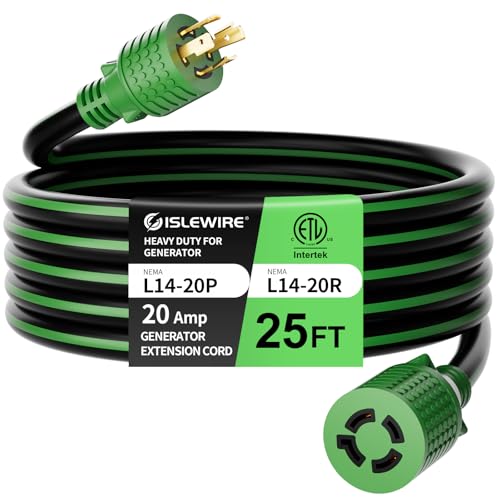
The Islewire 25 ft L14-20 extension cord uses NEMA L14-20P male to L14-20R female twist-lock connectors to deliver up to 20 amps at 125/250 volts, supporting up to 5,000 watts. It is ETL listed for outdoor safety with 12-gauge, 4-conductor copper wiring. The SJTW jacket offers weather resistance, UV resistance, and a wide operating range from -40°F to 140°F, making it suitable for varied climates. The twist-lock design aids secure connections against vibration or wind, reducing the risk of accidental disconnections during outages or emergencies.
POWGRN: 20 FT L14-30P to L14-30R

Note: This listing covers a 30-amp variant (L14-30) rather than L14-20. While it’s a twist-lock generator cord built for reliability in adverse weather, it is not identical to L14-20 conductors. It remains an option for higher-demand generator setups or for comparison purposes when evaluating locking connectors and weatherproof performance. Always match the cord rating to the transfer switch or inlet box you plan to power.
Parkworld: 25FT L14-20 Extension Cord

Parkworld’s 25-foot L14-20 extension cord is UL and cUL listed and uses 100% copper conductors. It features nickel-plated brass pins and terminals designed to resist oxidation. The STW 12 AWG/4C stranded wire outside a PVC jacket provides robust performance for generator connections, with support for up to 20 amps. This cord is built for heavy-duty generator use and transfer switch compatibility in outdoor environments.
Tellegloww: 25FT L14-20 Generator Cord

Tellegloww’s 25-foot L14-20 cord features a male L14-20P plug and a female L14-20R receptacle with 4 conductors of 12 AWG, delivering up to 5,000 watts at 125/250V. The cord uses STW construction with a flame-retardant, UV-resistant jacket designed for outdoor deployment. Its twist-lock mechanism ensures a secure connection that resists accidental disconnection during high-wind conditions or movement typical of outdoor generator setups.
ConnTek: 50FT L14-20 Generator Cord

ConnTek offers an extra-heavy-duty L14-20 generator cord with a 50-foot length, providing flexible long-range power transfer while maintaining a 20-amp, 125/250V rating. The L14-20P plug and L14-20R receptacle are twist-lock style, ensuring a firm grip and secure fit in adverse weather or when the generator experiences movement. The 100% copper conductors and rugged construction deliver reliable power delivery for extended outage scenarios or remote transfer box connections.
Southwire: 20 Feet L14-30 Cord (L14-30) — Comparison
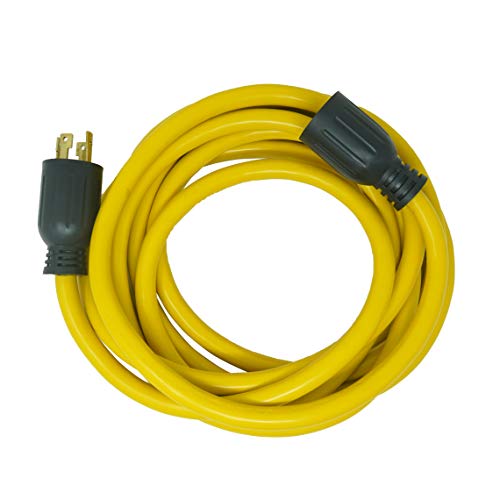
This 20-foot Southwire option uses a 10-gauge wire and offers twist-lock ends with L14-30 connectors. While it is designed for 30-amp service, it’s included here for broader context on high-amperage locking cords. Users should match the cord rating to the transfer switch or inlet box in use and avoid overloading equipment designed for L14-20. It demonstrates how different locking configurations can affect compatibility and safety in real-world outages.
Buying Guide
Key considerations when selecting an L14-20 generator cord:
- Amperage and voltage: Ensure the extension cord supports 20A at 125/250V and is rated for up to 5,000 watts where applicable. Different lengths may slightly affect voltage drop; choose the shortest length that meets the run requirements.
- Connector compatibility: Look for NEMA L14-20P to L14-20R twist-lock connectors for secure connections that resist loosening due to weather or movement.
- Conductor material and gauge: Copper conductors provide better conductivity and durability. A 12 AWG/4-conductor cord is common for 20A outdoor cords; thicker gauges yield less voltage drop over longer distances.
- Jacket material and weatherproofing: SJTW or STW jackets with UV resistance and wide temperature tolerance (-40°F to 140°F) reduce wear from sun, moisture, and temperature swings.
- Length and handling: Longer cords offer flexibility but can increase voltage drop. Choose a length that minimizes resistance while meeting the distance between the generator and transfer switch or inlet.
- Weather resistance and safety certifications: ETL or UL listings indicate compliance with safety standards. Look for cords rated for outdoor use and flame retardant properties to improve safety during power outages.
- Durability features: Twist-lock systems, rugged terminals, nickel-plated brass contacts, and heavy-duty cords with copper conductors improve long-term reliability in harsh outdoor environments.
- Cost vs. practicality: Higher-grade cords with extra-long lengths are beneficial for remote setups but may be heavier and less portable. Balance the practical needs with storage and handling considerations.
- Compatibility with transfer switches: Verify that the cord’s ends fit the transfer switch inlet or generator inlet you own. Mismatches can create unsafe configurations or failed power delivery.
In applying these choices, consider the typical outage scenario, the transfer equipment you own, and the climate where the cord will be used. A locking, weatherproof L14-20 cord is designed to deliver dependable power while reducing the risk of accidental disconnection during storms or extended outages.