
Answering the buyer’s search for reliable, compact blades, this guide highlights five Japanese folding knives well-suited for daily tasks, travel, camping, and outdoor adventures. Each pick reflects traditional craft, durable steels, and practical design. The top choices are best for: everyday carry enthusiasts, outdoor hobbyists, and cooks who value portability with blade performance. The following quick table compares key traits to help you decide at a glance.
| Product | Brand | Best For | Notable Feature |
|---|---|---|---|
| Higo no Kami 10 | HIGO NO KAMI | Everyday carry, collectors | Brass finish, Warikomi steel |
| Higo no Kami 7 | HIGO NO KAMI | Light users, hikers | Parkerized finish, Warikomi steel |
| Higonokami Blue 120mm | HIGO NO KAMI | Travelers, knife enthusiasts | Blue Paper Steel, brass handle |
| Huusk Nakiri Pocket | Huusk | Vegetable prep on the go | ATS-34 steel, folding design |
| Huusk Nakiri 440C | Huusk | Outdoor cooks, camping | 440C steel, portable kit |
Higo no Kami 10 Pocket Knife

The Higo no Kami 10 is crafted by Nagao Seisakusho, the last known maker of this trademarked knife. Blade about 3 inches; handle about 4 inches. Warikomi steel emphasizes durability and edge retention. Best for collectors, display-worthy pieces, and users who appreciate a brass finish with traditional styling. The knife is best for light daily tasks and pocket carry, where the ornate finish adds personality. A potential limitation is availability or support for some users seeking modern features like quick-release mechanisms or modern polymer handles.
Higo no Kami 7 Pocket Knife
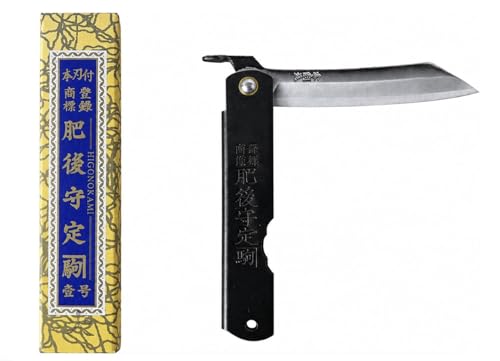
The Higo no Kami 7 Pocket Knife is also from Nagao Seisakusho, featuring a 3-inch blade and a 4-inch handle, with Warikomi steel. Its Parkerized black satin finish makes it a low-glare option for daily tasks and light outdoor use. Best for buyers who want a discreet, rugged look and reliable edge for everyday chores. A limitation to note is that it may require careful maintenance to preserve the Parkerized finish over time.
Higonokami Blue Paper 120mm

Higonokami’s 120mm model uses Blue Paper Steel with a brass handle. It offers very high wear resistance and excellent edge retention. Folded length is 120mm; full length around 220mm. This knife is best for users who value a traditional look with solid steel performance and don’t mind a longer blade for occasional tasks. Choose this if you want a “classic” folding blade in a pocket-friendly size; avoid if you need a compact, ultra-light option for every-second access.
KATSU Folding Pocket Knife

KATSU offers a 3-inch D2 steel blade with a double bevel and a G10 handle for durability and grip. The front flipper with a liner lock supports one-handed operation and secure blade exposure. Best for outdoor activities like camping or hiking, or DIY tasks where a stout, resistive blade is valued. A limitation is that D2 steel can require more care to prevent corrosion in humid environments compared to stainless alloys.
Huusk Nakiri Pocket Set

Huusk presents a Nakiri knife set with multiple folding blades, including Nakiri, Santoku, bread, and fruit knives. Each blade uses ATS-34 steel, with a liner lock for safety. Best for cooks who want a portable kit for outdoor cooking, picnics, or travel. The kit’s breadth helps replace several tools, but the overall weight may be higher than a single-pocket knife, which could be a drawback for ultra-light carry.
Buying Guide
What should I look for in a Japanese folding knife?
- Blade steel and hardness: Blues and ATS-34 offer wear resistance; D2 is strong but may require more care for corrosion resistance.
- Locking mechanism: A reliable liner lock improves safety during use and in pocket carry.
- Finish and handle material: Brass or Parkerized finishes are aesthetic and durable; consider grip texture for wet conditions.
- Size and weight: Folded length influences pocketability; longer blades may be less convenient for small tasks.
- Maintenance: Some finishes require periodic care to prevent tarnish; ensure you can access compatible maintenance products.
How do these knives compare for different buyers?
- Collectors and showpiece fans: Higo no Kami models with brass finishes provide traditional appeal and historical context.
- Everyday carry: Shorter blades paired with reliable locks are ideal for daily tasks and pocket carry.
- Outdoor cooks and campers: Nakiri designs from Huusk statements offer versatile chopping in portable kits.
- Practical campers: D2 steel folding models balance strength and affordability for rugged use.
Frequently Asked Questions
- Are Japanese folding knives legal to carry in the U.S.?
Legality varies by location and blade length. Check local regulations about blade length and lock type before carrying.
- What is Warikomi steel?
- Do these knives come with maintenance requirements?
- Which knife is best for travel?
- Is a folding knife safer than a fixed blade for camping?
Warikomi refers to layered steel construction, which can enhance edge retention and toughness.
Yes. Some finishes tarnish or wear with use; periodic cleaning and oiling help preserve performance and appearance.
Models with compact folded length and reliable locks are best for travel; Blue Paper Steel or 440C variants offer robust performance.
Folding knives generally offer safer transport and portability, but fixed blades can provide more durability for heavy tasks. Choose based on planned use and safety considerations.