
Discover top high voltage generator modules suited for science projects, hobbyist experiments, and educational demonstrations. This guide highlights five reliable options, detailing input ranges, output voltages, and notable features to help you choose a safe, capable module for your application.
Summary of selected products:
| Product | Brand | Output Range | Key Features |
|---|---|---|---|
| AEDIKO High Voltage Generator Module (2 pcs) | AEDIKO | ~500 kV to 1,000 kV | Tesla-coil-based, compact high-voltage pulse, dual cables |
| ZORZA High Voltage Generator Module | ZORZA | Up to 20 kV | H-bridge MOS topology, high efficiency, low heat |
| DEVMO 5PCS High-Voltage Generator | DEVMO | Up to 400 kV | Pulsed high-pressure output, multiple modules |
| DORHEA 3Pcs High Voltage Module | DORHEA | Up to 1,000 kV | Tesla coil-based, simple wiring, strong discharge |
| GODIYMODULES Arc Pulse Modules (2 pcs) | GODIYMODULES | Up to 1,000 kV | Arc pulse, compact, low heat design |
The following sections provide detailed product-specific information to help you compare specifications, safety considerations, and potential use cases.
AEDIKO High Voltage Generator Module (2 pcs)

These modules operate from a DC input of 6–12V and deliver high-voltage pulses in the 500 kV to 1,000 kV range. The system uses a high-voltage transformer and a circuit array inspired by Tesla coil principles, focusing on high efficiency and compact form. Cable lengths are approximately 100 mm for both input and output, with red indicating positive connections. Current draw ranges from 2A to 5A, making this setup suitable for controlled experiments and demonstrations that require strong, rapid discharge pulses.
ZORZA High Voltage Generator Module Booster Coil
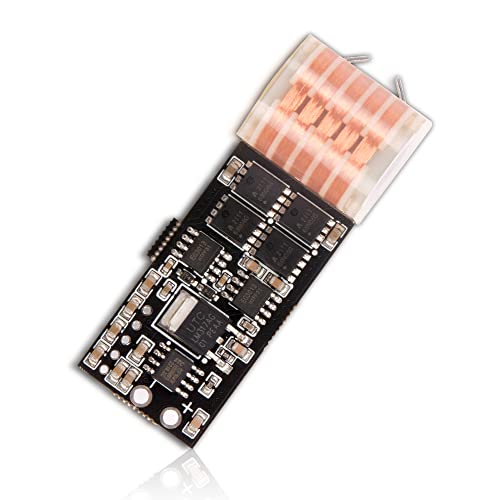
Utilizing an H-bridge four-transistor MOS topology, this module emphasizes high driving efficiency and low heating. It is designed for high-frequency operation with minimal need for heat sinks, and the arc distance capability to 1–2 cm enables direct arc striking. This makes it suitable for experiments that explore arc behavior, electrical breakdown, and pulsed high-voltage phenomena while prioritizing compactness and thermal efficiency.
DEVMO Five-Pack High-Voltage Generator
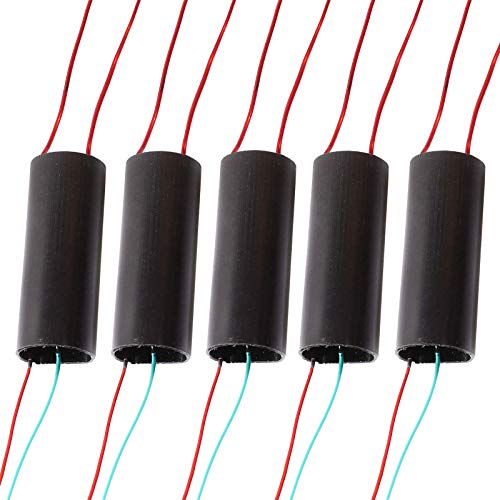
This set includes five modules designed for DC input from 3V to 6V and an impressive pulsed output reaching up to 400,000V. The modules emphasize a high-pressure discharge range of 10–20 mm and are intended for applications demanding robust pulsed HV generation. Safety notes are essential due to the high voltage; use proper insulation, secure mounting, and non-conductive enclosures during testing and demonstrations.
DORHEA 3Pcs High-Voltage Generator Modules

The DORHEA trio leverages the Tesla coil principle to produce high-voltage pulses with a compact footprint and high efficiency. Input ranges are DC 6–12V with currents around 2–5A, and the output can reach 500 kV to 1,000 kV. The design emphasizes simple peripheral circuitry and rapid discharge potential, with straightforward wiring that indicates red as positive input and accompanying color codes for the outputs. These attributes support small-scale HV experiments and demonstrations.
GODIYMODULES Arc Pulse HV Modules (2 pcs)

This two-pack focuses on arc pulse generation with an input range of 3.7–6V and current around 0.5–1A. The modules support high-voltage pulse operation, making them suitable for projects that study instantaneous high-voltage pulses and pulsed arc phenomena. Their compact design and straightforward wiring support hands-on testing while maintaining safety considerations for high-voltage experiments.
Buying Guide: Key Considerations for High Voltage Generator Modules
- Voltage and current requirements: Match output voltage and current limits to your intended experiments, while considering safety margins for insulation, enclosure, and handling.
- Input supply: Most modules expect low-voltage DC input (3–12V). Ensure your power source can provide stable current without overheating, and use appropriate power management to avoid damage.
- Pulse vs. continuous output: Some modules are designed for pulsed HV generation; others can sustain short runs. Understand the duty cycle and peak current to prevent component stress.
- Construction and cooling: Modules with higher output voltages tend to generate heat. Evaluate whether the design requires heatsinking or active cooling, especially for extended testing.
- Safety and insulation: High-voltage experiments require proper insulation, non-conductive housings, and secure mounting to prevent arcing to unintended surfaces.
- Wiring color codes and connections: Red typically denotes positive input; verify wiring diagrams to avoid miswiring, which can damage the module or pose safety risks.
- Documentation and support: Look for clear wiring guides, safety notes, and accessible manufacturer support to assist with setup and troubleshooting.
- Use cases: Consider if you need multiple modules in parallel or series to scale voltage or current, and ensure the design accommodates such configurations safely.
- Legal and safety constraints: High voltage experiments may be subject to safety regulations and consumer guidelines. Implement appropriate protective measures and work in a controlled environment.
When planning a project, prioritize modules with robust insulation, well-documented specs, and clear safety recommendations. For educational demonstrations or hobbyist experiments, selecting devices with pulsed capabilities often provides engaging arc visuals while allowing safer operation under supervision and proper protective equipment.