
Choosing a high-voltage Level 2 EV charger involves balancing charging speed, compatibility, safety, and installation requirements. The following selections focus on widely compatible, UL/ETL-certified units with 40–48 amp capabilities, 240 volt operation, and ample cable lengths to fit most garages or driveways. Each entry includes a concise overview of its standout features, plus practical notes for installation and everyday use.
| Product | Brand | Key Benefit | Connector Type | Cable Length |
|---|---|---|---|---|
| MUSTART Level 2 EV Charger | MUSTART | Sturdy build with 2.5x faster charging than basic Level 2 units | SAE J1772 | 25 ft |
| NexCyber Level 2 EV Charger | NexCyber | Flexible plug/hardwire options up to 48A | SAE J1772 | 25 ft |
| ChargePoint HomeFlex | ChargePoint | Extensive network and smart app control | SAE J1772 | 16–24 ft |
| EMPORIA Level 2 EV Charger | EMPORIA | UL listed, ENERGY STAR certified with strong safety features | SAE J1772 | 25 ft |
| WOLFBOX Level 2 EV Charger | WOLFBOX | Smart app, RFID access, durable NEMA 4X housing | SAE J1772 | 25 ft |
MUSTART Level 2 EV Charger Details
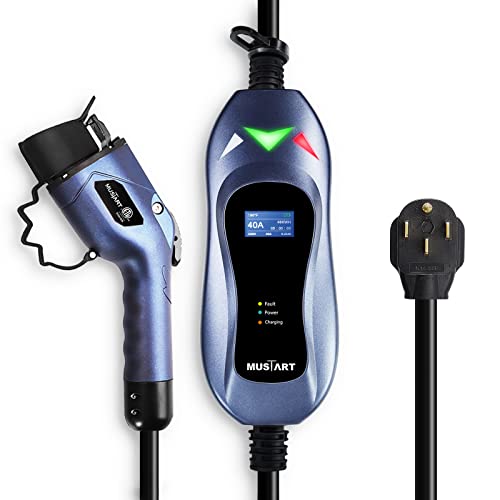
The MUSTART 40A Level 2 EV charger is designed to deliver faster charging for most plug-in electric vehicles. It features a 25-foot cable and is ETL certified with UL-2594-compliant protection. The unit emphasizes heat and over-current protection, aiming to provide reliable daily charging. It is compatible with most U.S. EVs, and Tesla owners can use the SAE J1772 adapter. A two-year warranty adds a layer of consumer protection.
Raylix 16A Level 1&2 EV Charger Details

The Raylix charger offers Level 1 and Level 2 operation with a 21-foot cable. It features a built-in display for real-time charging data and adjustable current, aiming to simplify monitoring without depending on apps. It supports SAE J1772 connectors and is compatible with multiple plug configurations, extending usage for homes, travel, or hosting guests.
NexCyber Level 2 EV Charger Details

The NexCyber charger supports up to 40 A when using a NEMA 14-50P plug or up to 48 A in hardwired configurations. It is designed for compatibility with all non-Tesla North American vehicles using J1772 connectors, including popular brands. Safety features and compliance with multiple UL and SAE standards are highlighted, with a 3-year warranty noted by the manufacturer.
VDLPOWERVP Level 1&2 EV Charger Details

This portable charger provides Level 2 (16A at 240V) and Level 1 flexibility with a 20-foot cable. It is designed for quick charging while offering a robust adapter setup to accommodate both household and industrial sockets. Protective features include leakage and lightning protection, with FCC certification and IP65 protection for outdoor use.
ChargePoint HomeFlex Details

The ChargePoint HomeFlex is designed for home charging with a focus on smart control and networked capabilities. It integrates with the ChargePoint app to manage charging, reminders, and location-based data. The ChargePoint network is extensive, offering access to thousands of charging locations and roaming options as you travel.
EMPORIA Level 2 EV Charger Details

The EMPORIA charger delivers up to 46 miles of range per hour at 48 A (hardwired) or up to 38 miles per hour via a 40 A NEMA plug. It is UL-listed and ENERGY STAR certified, aligning with stringent safety and efficiency standards. It supports pre-configuration for 40 A and can be converted to hardwired 48 A, with installation recommended by a professional.
WOLFBOX Level 2 EV Charger Details

The WOLFBOX charger emphasizes smart features, including an app for monitoring and adjusting charging, RFID access, and a durable NEMA 4X exterior suitable for indoor and outdoor use. It provides a 25-foot cable, SAE J1772 connector, and options to tailor charging schedules for off-peak hours, helping to manage electricity costs.
Buying Guide
Key considerations when choosing a high-voltage EV charger include compatibility with your vehicle (J1772 vs Tesla adapters), maximum charging current, and whether you prefer plug-in or hardwired installation. A larger amperage (40–48 A) provides faster charging but may require heavier wiring and a dedicated circuit. Cable length matters for reach and convenience, with 20–25 feet being common. Safety certifications (UL, ETL, CE) and weather resistance (NEMA 4X, IP ratings) are important for durability in various environments.
Installation options vary: plug-in chargers allow flexible placement on existing circuits, while hardwired configurations may maximize safety and reliability but require professional electrician installation. App and network features add convenience for remote monitoring, scheduling, and efficiency tracking, though they rely on Wi-Fi stability. If you often charge away from home or want access to a broad charging network, a charger with robust software support and compatibility can be advantageous.
When comparing units, evaluate: maximum charging amperage (40 A vs 48 A), physical durability (outdoor-rated housings), and whether the model supports both Level 1 and Level 2 operation. For Tesla owners, remember that an adapter might be required for non-Tesla charging cables. Warranty terms and customer support responsiveness are practical factors that influence long-term satisfaction.