
If you’re upgrading a bathroom, kitchen, or living area with tile, a heated tile floor system can deliver consistent warmth and energy efficiency. This guide highlights five top options, with clear comparisons to help buyers choose the right system for their space and budget. Each product is suited for different room sizes, installation needs, and control preferences. Read on to find the best fit for your home and comfort goals.
| Product | Size / Coverage | Best For |
|---|---|---|
| LuxHeat 20sqft Electric Radiant Floor Heating System | 20 sq ft | Smaller bathrooms or kitchens; easy upgrade |
| Warming Systems 30 Sqft Electric Radiant Floor Heating Mat | 30 sq ft | Medium rooms; flexible layout |
| LuxHeat 20sqft Floor Heating Mat Kit | 20 sq ft | Tile underlayment with simple installation |
| LuxHeat 50sqft Floor Heating Cable Kit | 50 sq ft | Medium-to-large spaces; modular layout |
| LuxHeat 100sqft Floor Heating Mat Kit | 100 sq ft | Larger areas; WiFi-enabled control |
LuxHeat 20sqft Electric Radiant Floor Heating System

The LuxHeat 20sqft system is designed for small to mid-sized tiled spaces where individual room control matters. It includes a 20 sq ft heating cable, Prova Flex-Heat uncoupling membrane, a touchscreen thermostat with GFCI, a floor sensor, alarm, and installation accessories. Best for compact bathrooms, kitchens, or compact living areas where precise temperature control improves comfort and reduces cold spots. A key advantage is the integrated GFCI on the thermostat, which enhances safety in wet areas. A potential limitation is that it covers 20 sq ft, so larger areas will require additional kits or an expanded system.
Who it’s best for: Homeowners upgrading one small bathroom or a compact tiled space who want straightforward installation and detailed temperature control.
Why selected: The kit bundles essential components with a membrane for crack prevention and waterproofing, enabling reliable tile underlayment and heat delivery. It emphasizes safety and flexible configuration, making it a solid entry-point option for tile heating projects.
Caution: Do not cut or shorten the heater wire; ensure proper embedding under self-leveler or thinset per installation guidance.
Warming Systems 30 Sqft Electric Radiant Floor Heating Mat Kit
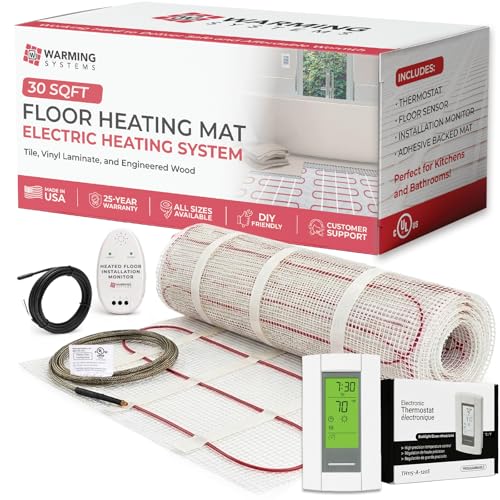
This 30 sq ft mat kit is designed for fast installation under tile floors with a flexible layout. It includes a TH115-AF-120S programmable thermostat with a floor sensor and an installation monitor that alerts if the heating wire is damaged during installation. The mat can be flipped or rotated to fit irregular spaces and uses double-sided tape to help it lay flat. Best for bathrooms, kitchens, or any tiled area where quick, adjustable heating is desired. The installation monitor adds a safeguard during setup, but ongoing monitoring is limited to the thermostat’s built-in features.
Who it’s best for: Builders or DIYers who need a versatile mat that can adapt to room layouts and want clear installation feedback during the process.
Why selected: It provides a complete kit with a dedicated monitor and sensor, supporting reliable tile heating outcomes in varied layouts.
Caution: Ensure compatible subfloors and proper embedding in self-leveling compounds; wiring must remain intact and undisturbed after installation.
LuxHeat 20sqft Floor Heating Mat Kit

The 20 sq ft LuxHeat mat kit combines a self-adhesive heating mat with an alarm and an OJ Microline UDG-4999 programmable thermostat with a floor sensor and built-in GFCI. It is designed for tile, laminates, and similar underlayment scenarios. The kit’s pre-spaced mat makes layout straightforward, and the thermostat supports a 7-day programming schedule for comfort management. Best for homeowners seeking a compact, all-in-one solution with modern control features. A consideration is to confirm compatibility with the chosen underlayment and ensure proper embedding in a self-leveling product.
Who it’s best for: Small-to-medium tile projects where a simple, modern control system is desired.
Why selected: The included thermostat with GFCI and floor sensor provides reliable safety and precise temperature management in tiled spaces.
Caution: Do not cut or shorten the heater wire; follow leveling and embedding requirements for a durable installation.
LuxHeat 50sqft Floor Heating Cable Kit

The 50 sq ft LuxHeat kit offers a broader heating cable layout with a 120V system and a programmable UDG4 thermostat with GFCI. It includes floor sensor, alarm, and strapping to guide cable placement. This option is best for medium-to-large tiled areas where you want more flexible cable routing and extended coverage. A caveat is that cable layout must be embedded in a self-leveling underlayment or thinset; cutting or shortening heater wires is not advised.
Who it’s best for: Homeowners planning to heat multiple rooms or larger tiled expanses without sacrificing floor-level control.
Why selected: The larger coverage area and robust control features make this kit ideal for expanding warmth across spaces while maintaining safety with GFCI protection.
Caution: Ensure proper underlayment and slope-free installation to avoid overheating or hot spots.
LuxHeat 100sqft Floor Heating Mat Kit

The LuxHeat 100 sq ft mat kit is designed for larger areas and offers a UWG4 WiFi programmable thermostat with floor sensor and GFCI. It uses a self-adhesive 3″ mat layout, designed to lay flat under tile or laminate installations. This kit enables remote control and scheduling via WiFi, helping manage energy use across connected spaces. Best for open-plan or larger tiled floors where centralized control improves efficiency. A limitation is that larger installations may require careful planning to maintain uniform heat distribution.
Who it’s best for: Homeowners seeking wider coverage and smart thermostat control for integrated home energy management.
Why selected: The WiFi-enabled thermostat provides modern convenience and energy management for larger floor-heating projects.
Caution: Ensure compatible underlayment and proper embedding; avoid cutting heater wires in any kit.
Buying Guide
Consider space, layout, and control needs when choosing a heated tile floor system.
- Coverage area: Match square footage to the kit’s rated area. Smaller bathrooms fit 20 sq ft kits, while larger rooms may require 50–100 sq ft options or multiple mats.
- Installation method: Mat kits are easier for irregular spaces; cable-based systems offer flexible layouts for larger rooms.
- Thermostat features: Look for floor-sensing capabilities, GFCI protection, and scheduling. WiFi-enabled thermostats support remote management but require a stable network.
- Underlayment requirements: Some systems require self-leveling underlayment or thinset; verify that your substrate is compatible.
- Safety and certifications: Thermal protection, sensor integration, and CSA/UL listings help ensure safe operation in wet areas.
- Maintenance and warranty: Most LuxHeat options include multi-year warranties; verify what’s covered and for how long.
Frequently Asked Questions
- What size of space can a 20 sq ft heated floor kit effectively warm?
Answer: It’s best suited for small bathrooms, kitchens, or confined tiled areas where targeted warmth is desirable. - Do these systems require professional installation?
Answer: Some installers can handle DIY installation for straightforward layouts, but larger or more complex spaces may benefit from professional installation. - Is GFCI protection essential for tile floors?
Answer: Yes, GFCI protection reduces electrical shock risk in wet areas and is commonly included in the thermostat or system design. - Can I control the floor heat remotely?
Answer: Some kits include WiFi-enabled thermostats for remote management; others rely on wired or non-WiFi thermostats. - Are there limitations on cutting heater wires?
Answer: Most systems specify not to cut or shorten heater wires to maintain warranty and safe operation. - What maintenance is required after installation?
Answer: Periodic checks of the thermostat, sensors, and wiring connections are typically sufficient; no routine disassembly is normally needed.