
If you’re equipping a basement gym, choose interlocking foam or rubber flooring that protects your subsurface, cushions joints, and stays put during intense workouts. The best options below are suited for home gyms, basements, and multi-use workout spaces, offering stability, moisture resistance, and easy installation. This guide highlights five top picks and explains who each product is best for, plus practical buying tips.
| Product | Best For | Approx. Coverage |
|---|---|---|
| Haulcove 18 Tiles Puzzle Mat | Compact, budget-friendly setups | 18 sq ft |
| ProsourceFit Exercise Puzzle Mat ½-inch (48 sq ft) | General home gym and play areas | 48 sq ft |
| ProsourceFit Exercise Puzzle Mat ½-inch (144 sq ft) | Medium to large floor protection | 144 sq ft |
| BeMaxx 18-pc EVA Mats | Comprehensive protection for varied layouts | 18 tiles / 18 sq ft |
| AIRHOP 48 Sq Ft Mats | Mixed-use with upgraded top | 48 sq ft |
Haulcove 18 Tiles Puzzle Exercise Mat

Best for: Small basements or budget-conscious buyers needing quick setup. The Haulcove tiles use textured EVA foam for a non-slip surface and water resistance, making cleanup after workouts easy. The interlocking design simplifies assembly and rearrangement, ideal for renters or spaces that change uses over time. The surface resists moisture to help wipe away sweat and dirt, while remaining comfortable for barefoot exercise.
Why chosen: It offers a blend of grip, light weight, and modularity. The 12.6″ x 12.6″ tiles are easy to handle and assemble without tools, which is beneficial for buyers prioritizing a fast setup in a basement environment. A caution: the tiles are thinner than some alternatives, so very heavy equipment may require additional underlayment or thicker mats for prime impact protection.
ProsourceFit Exercise Puzzle Mat ½-inch (48 Sq Ft)

Best for: Home gyms needing solid cushion and easy maintenance. This ½-inch EVA foam tile provides good impact absorption and is water-resistant, making it suitable for basements with humidity concerns. It’s also a practical choice for homes with kids, as it doubles as a play area while still serving as gym flooring. Non-toxic materials add peace of mind for long sessions on the mat.
Why chosen: The tiles are designed for versatile indoor use and are easy to clean. They fit well on flat, hard surfaces and offer reliable protection for floors under weights and equipment. A caution: color and texture may vary slightly by batch, so expect subtle differences if you purchase multiple boxes for larger areas.
ProsourceFit Exercise Puzzle Mat ½-inch (144 Sq Ft)
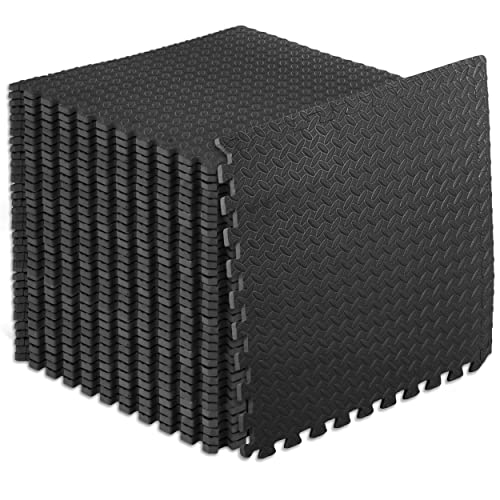
Best for: Larger basement gyms or multi-zone layouts needing consistent padding across a big area. This set features the same high-density EVA foam with water resistance, but on a larger footprint. It’s suitable for workouts that include cardio, weightlifting, and floor work, offering consistent cushioning throughout the space.
Why chosen: Large-area mats reduce edge gaps and places where equipment might shift. The design remains user-friendly and easy to maintain. A caution: ensure you have ample storage for the tiles when not in use to avoid clutter in smaller basements.
BeMaxx 18-Piece EVA Interlocking Mats

Best for: Basements needing complete floor coverage with edge-to-edge protection. BeMaxx tiles install as a puzzle with edge pieces to ensure neat borders. The mat uses BPA-free EVA foam with anti-slip surfaces, delivering reliable protection for equipment, workouts, and daily foot traffic in a home gym or playroom.
Why chosen: The set is designed for expanded layouts and emphasizes safety with non-slip surfaces and protective edge pieces. A caution: the product claims BPA-free safety, but always verify material certifications if you have chemical sensitivity or strict safety criteria.
AIRHOP 0.56in Thick Mats

Best for: Spaces requiring upgraded top layers for equipment protection and non-slip performance. The 0.56″ thickness and dual-layer design deliver improved shock absorption and stability for heavy weights and high-energy movements. The larger 24″ x 24″ tiles cover more area quickly for bigger basements.
Why chosen: The dual-layer construction combines a rubber top with EVA foam, which helps protect floors and reduces noise. A caution: the top rubber layer may have scent initially; airing out the mats before use can help reduce odor in sensitive environments.
PRAISUN 0.56″ Rubber Top Interlocking Mats

Best for: Home gyms that prioritize high traction and floor protection under heavy equipment. These mats combine a dense EVA foam core with a durable rubber top, delivering grip, cushioning, and durability in one package. Suitable for strength training, HIIT, and mixed-use spaces in basements.
Why chosen: The textured rubber top enhances grip, while the foam base dampens impacts and reduces noise. A caution: ensure a snug interlock to minimize shifting during vigorous movements, especially with heavier gym gear.
Buying Guide: Key Considerations For Basement Gym Flooring
What should guide your choice? Here are practical factors to compare across options:
- Thickness and cushioning: Thicker mats provide better impact absorption for joints and equipment drops. If you have heavy weights, consider mats at 0.6″ or thicker with a sturdy top layer.
- Material and safety: EVA foam is lightweight, affordable, and easy to clean, while rubber tops offer enhanced durability and grip. Look for non-toxic materials if you have concerns about indoor air quality.
- Interlocking design: Puzzle-edge tiles simplify installation and allow easy layout changes. Ensure edge pieces create a clean border and reduce gaps where dirt can accumulate.
- Water resistance and cleaning: Basements can be humid. Water-resistant surfaces make wiping sweat and spills easier. Quick cleanup reduces mold and odor risks.
- Foot traffic and equipment load: For high-impact workouts or heavy equipment, prioritize denser foam or rubber-top mats to prevent compression and wear.
- Room size and layout: Larger basements benefit from bigger tile sizes or larger tile counts to minimize seams. Consider underlayment if the subfloor is uneven.
- Storage and flexibility: If you need to reconfigure space, choose lightweight tiles that are easy to disconnect and store.
Frequently Asked Questions
- What’s better for a basement gym: foam or rubber mats?
Answer: Foam mats are affordable and lightweight, suitable for general workouts and kids’ areas. Rubber-top mats offer higher durability and grip, which is advantageous for heavier equipment and high-intensity training. - Do interlocking mats protect concrete floors?
Answer: Yes. They cushion against impact, reduce noise, and prevent direct contact between equipment and concrete, protecting both surfaces. - How many tiles do I need for a 10×12 ft area?
Answer: A 10×12 ft area is 120 square feet. If using 2×2 ft tiles (4 sq ft per tile), you’d need about 30 tiles, plus edge pieces for borders. Always add 5–10% extra for cuts and waste. - Are these mats easy to install by myself?
Answer: Yes. Interlocking tiles are designed for simple snap-together assembly without tools, though you may want a partner for larger areas. - Can mats be used under heavy gym machines?
Answer: Yes, but confirm the mat thickness and material; thicker, denser mats with a rubber top can better withstand heavy loads and movement. - How do I clean foam gym mats?
Answer: Wipe with a mild soap and water solution. Dry thoroughly to prevent moisture buildup that could lead to mold in basements.