
Looking for a grass trimmer that handles blades beyond standard string trimmer heads? This guide highlights five blade-capable cordless trimmers, ideal for homeowners who want multi-blade versatility, adjustable lengths, and battery-powered convenience. Each pick is explained for who benefits most, with clear pros and one practical limitation. Use this to compare blade types, cutting widths, runtimes, and portability before you buy.
| Product | Blade Types | Battery/Runtime | Best For |
|---|---|---|---|
| ALSO GO 24V | Metal, Saw, Plastic | 2x 2000mAh, 11,000 RPM | Heavy weed clearing and edging on slopes |
| BFCJSZWacker 21V | Plastic, Metal, Circular Saw, S-Shaped | 2x 2.0 Ah, up to ~40–60 min | Home gardens with mixed vegetation |
| Lipoliftco 12V | 4 blades included (types not specified) | 2x 2000mAh | Lightweight edging and small jobs |
| MILBIS 20V | 5 types (round saw, metal, 3-tooth, edging) | Battery-powered (2x 20V) | DeWalt-ecosystem users and versatility |
| ASLTYKNGLB 21V | Plastic, Metal, Circular saw, and others | 2 batteries, 4 blades | 4-in-1 weed trimming with wheels |
ALSO GO 24V Electric Weeder With 5 Blades

This cordless weed wacker uses a 650W copper motor and two 24V 2.0Ah batteries delivering up to 11,000 RPM. It ships with five blades for different tasks: metal blade for thick weeds and hedges, saw blade for branches, and plastic blades for tender grass. The adjustable rod (35–47 inches) and angled cutting head support slopes and corners. Best for: homeowners needing robust, multi-blade performance for uneven yards. Limitation: continuous run times are recommended in bursts (30–45 minutes) with cooling periods to protect the motor.
BFCJSZWacker 21V Cordless Weed Wacker

This lightweight model runs on a 21V system with two 2.0Ah batteries and a maximum speed around 20,000 RPM. It includes four blade types: plastic for tender grass, metal for quick trimming, and circular saw blades for thicker vegetation. Best for: small-to-medium lawns where low weight and quick swaps between blade types matter. Limitation: it emphasizes ease of use over heavy-duty thick-branch work.
Lipoliftco Weeder With 2 Batteries
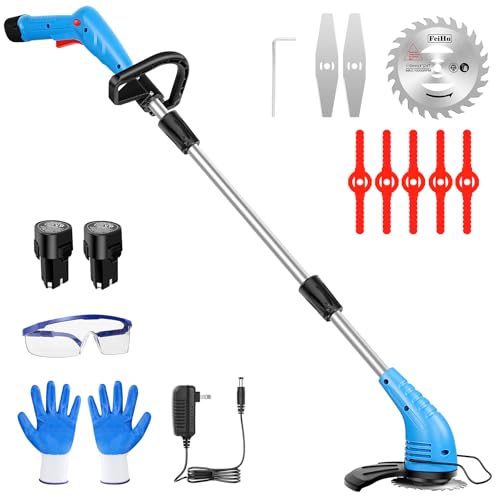
Lightweight at 4.4 pounds with adjustable length from 32 to 48 inches and a collapsible design for storage, this model uses two 2000mAh batteries to support up to 60 minutes of pruning. It handles edge work and moderate weeds with a range of blades suitable for different tasks. Best for: users who prioritize portability and simple setup. Limitation: blade compatibility and performance on very thick growth may require extra passes or a stronger motor.
Bamse 21V Weed Wacker With Blades

Powered by a 21V motor with two 2.0Ah batteries, this model offers a no-load speed around 11,000 RPM and a dual-blade design with standard diamond-shaped and circular saw blades. It includes safety features like a dual lock and a protective guard to reduce debris ejection. Best for: homeowners focusing on safe trimming with a wider cutting diameter. Limitation: may be heavier than the lightest options, and blade availability varies by region.
ASLTYKNGLB Electric Weed Wacker With Wheels
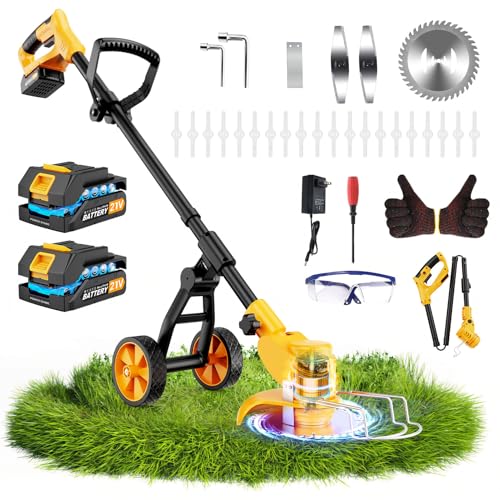
This 2026-updated 4-in-1 weed wacker converts to a wheeled trimmer, with four blade options and two 3000mAh batteries for extended runtime. It features a 12-inch cutting width and an 800W brushless motor reaching up to 20,000 RPM. Best for: yards requiring more efficient, wheel-assisted trimming and longer sessions. Limitation: heavier build compared to ultra-light models.
Buying Guide: Blade-Equipped Grass Trimmers
- Blade variety matters: Look for models offering metal blades for thick growth, saw blades for branches, and plastic blades for delicate grass to maximize versatility.
- Power and runtime: Higher RPMs and dual-battery configurations extend cutting sessions, especially on larger lawns. Consider charging time and interchangeability of batteries.
- Adjustability: An adjustable pole length and angled cutting head improve reach on slopes and around obstacles, reducing user strain.
- Weight and ergonomics: Lighter units reduce fatigue, particularly for seniors or casual gardeners. Confirm comfort features like grip design and trigger placement.
- Safety: Dual-action locks and protective guards help prevent accidental starts and debris ejection during operation.
- Maintenance: Brushless motors tend to be quieter and longer-lasting; ensure blade mounting is user-serviceable and blades are easy to replace.
- Compatibility: If you already own batteries (e.g., Dewalt or other ecosystems), verify compatibility to avoid extra purchases.
Frequently Asked Questions
- What blade types should I choose for a grass trimmer? – Metal blades for thick weeds and hedges; circular saw blades for branches; plastic blades for tender grass.
- Are blade-equipped trimmers safe for beginners? – Yes, with proper safety guards and dual-lock safety features; start with lower speeds and keep bystanders away.
- Can these tools replace a lawn mower? – They add edging and spot trimming; for broad mowing, consider a dedicated mower or a model with wheel attachments.
- Do blade-equipped trimmers require special maintenance? – Yes, inspect blades for wear, clean after use, and recharge batteries according to manufacturer guidelines.
- Are cordless blades suitable for large properties? – They work well for many yards, but heavy, continuous heavy-duty tasks may require larger batteries or a corded option.