
If you’re working with fiberglass, choose gloves that balance grip, cut resistance, chemical protection, and comfort. This guide highlights gloves suited for glass handling, construction, and DIY tasks where skin protection and dexterity matter. The top picks target different buyer needs: light-duty handling, heavy-duty cut resistance, chemical exposure, and general purpose use. The following table summarizes the five highlighted products and their best-use scenarios.
| Product | Best For | Key Benefit |
|---|---|---|
| NEOTRIL Safety Work Gloves | General handling, automotive, warehouse | Good grip in damp/oily conditions; breathable |
| Inspire Black Nitrile Gloves | Medical and industrial use | Strong protection and dexterity |
| Wells Lamont Nitrile-Coated Gloves | Construction, automotive, gardening | Durable coating with secure fit |
| COOLJOB A5 Fiberglass Free Cut Resistant Gloves (Blue, Large) | Glass handling, carving | Cut resistance; breathable and grippy |
| TitanFlex Nitrile Exam Gloves | Chemical exposure and general tasks | Heavy-duty, latex-free protection |
NEOTRIL Safety Work Gloves MicroFoam Nitrile Coated—3 Pairs

The NEOTRIL gloves feature a microfoam nitrile coating on the palm and fingers, delivering reliable grip in damp, wet, and oily conditions. They are designed for light-duty tasks and general handling, making them suitable for automotive, warehouse, and DIY projects where staying clean and protected matters.
Best for: Flexible grip and breathability in light-duty tasks. Why selected: The 13-gauge knit nylon shell combined with a breathable microfoam coating provides comfort and dexterity while protecting against oil and grease. Caution: Not intended for heavy cut or high-chemical exposure tasks.
Inspire Black Nitrile Gloves—Heavy Duty 6 Mil

Inspire gloves are designed for both medical and industrial use, offering exam-grade durability with 6-mil thickness for strong protection and tactile control. They are suited for healthcare settings, laboratories, industrial environments, and household tasks requiring reliable barrier protection.
Best for: High-protection needs and versatile use. Why selected: They balance strength and dexterity, making them suitable for mixed tasks. Caution: Some users may prefer textured fingertips for enhanced grip in slippery conditions.
Wells Lamont Nitrile-Coated Work Gloves

These gloves pair a nitrile-coated palm with a lightweight 13-gauge polyester knit shell to deliver abrasion resistance and breathability. A stretch knit wrist helps keep debris out, making them a solid option for construction, automotive, and gardening tasks where dexterity matters.
Best for: Durable protection with good airflow for long wear. Why selected: The snug fit and breathability help maintain comfort during extended use. Caution: Not specialized for high chemical exposure or extreme heat conditions.
COOLJOB A5 Fiberglass Free Cut Resistant Gloves (Blue, Large)
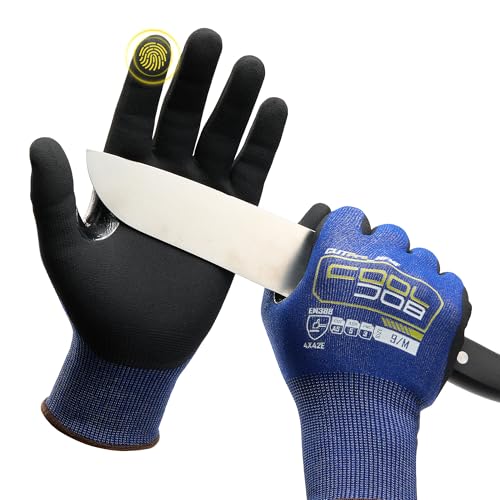
COOLJOB A5 gloves feature HPPE cut protection (ANSI Cut A5) with a sandy nitrile palm coating for strong grip. They are designed for glass handling and other cut-prone tasks, combining cut resistance with comfort and breathability for all-day wear.
Best for: Glass handling and cut-prone work. Why selected: High cut resistance with a comfortable fit enhances safety in fiberglass projects. Caution: Some users may require larger sizes for an especially roomy fit; check sizing carefully.
TitanFlex Nitrile Exam Gloves

TitanFlex nitrile exam gloves are heavy-duty, latex-free, and powder-free, offering chemical and puncture resistance with a textured finish for slip resistance. They are suitable for chemical exposure, food handling, and general tasks requiring reliable barrier protection.
Best for: Chemical exposure and general protection. Why selected: They provide strong resistance without latex-related allergies. Caution: Not specifically cut-resistant, so pair with higher-cut options if needed for fiberglass handling tasks with sharp edges.
Buying Guide
Key purchase considerations for fiberglass handling gloves include:
- Material and protection level: For fiberglass, consider cut resistance (HPPE/Nylon blends), nitrile coatings for grip, and chemical resistance depending on any resins or solvents involved.
- Dexterity and comfort: Look for breathable shells (13-gauge knits) and snug fits to maintain tactile feedback for precise work.
- Grip performance: Textured nitrile coatings or similar grip enhancements help manage wet or oily surfaces common in glass handling.
- Fit and size consistency: Ensure correct sizing and consider glove length and cuff design to protect wrists during handling.
- Durability vs. single-use needs: Heavier gloves offer longer service in demanding tasks but may reduce tactile sensitivity; balance with task requirements.
- Allergen considerations: Latex-free options are important for users with latex sensitivities.
Frequently Asked Questions
- What glove material is best for fiberglass handling?
– A combination of cut-resistant shells (like HPPE blends) with nitrile coatings often provides both protection and grip for fiberglass work. - Should I choose disposable nitrile gloves or durable work gloves?
– For ongoing handling and contact with resins, durable nitrile-coated or cut-resistant gloves are preferable; disposable nitrile gloves are better for quick, cleanups or medical-adjacent tasks. - Do I need cut resistance for fiberglass work?
– Yes, especially when handling fiberglass sheets or sharp-edged components; look for ANSI Cut A5 or higher in glove materials. - Are latex-free gloves safer for long tasks?
– Yes, latex-free options prevent allergic reactions in sensitive individuals and often offer comparable protection. - Can I use gloves with touchscreen compatibility?
– Yes, many knit shells with flexible coatings allow touchscreen use without removing gloves. - How do I choose the right size?
– Refer to manufacturer size charts and choose the size that fits snugly without restricting finger movement.