
Answer: For versatile, all-around performance, choose a general-purpose saw blade with a 40-tooth count and a 5/8-inch arbor. These blades balance clean crosscuts with solid ripping capability, making them suitable for a wide range of woods and projects. The top picks below are designed for DIY enthusiasts and small shop users who want reliable cuts without swapping blades for every task. The list highlights blades with solid carbide teeth, low kerf, and anti-vibration features to improve finish and efficiency.
Buyer’s quick-reference table
| Product | Best For | Key Benefit |
|---|---|---|
| WEN BL1040 | Hard and softwoods, general woodworking | Ultra-thin kerf for cleaner cuts |
| CMT ORANGE TOOLS 251.042.10 | Hardwoods, laminated panels | Versatile crosscut and ripcut capability |
| DEWALT DWA11040 | General wood cutting with long life | Optimized tooth geometry for accuracy |
| Freud P410 Premier Fusion | Smooth finishes on solid woods | Vibration reduction and polished cuts |
| Diablo 10-Inch 40-Tooth | Ripping and crosscutting mixed tasks | Perma-Shield coating for longevity |
Notes: The selected blades are widely compatible with common 10-inch table saws and miter saws. This guide emphasizes blades with carbide teeth, low kerf, and anti-vibration features to help you achieve clean, accurate cuts across a range of materials.
WEN Blades for Miter and Table Saws
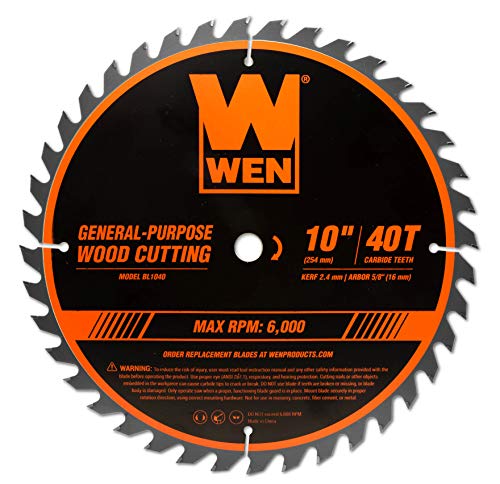
The WEN BL1040 is a 10-inch, 40-tooth carbide-tipped blade designed for both miter and table saw use. It features a 5/8-inch arbor and a thin kerf of 1/10 inch (2.4 mm), which helps reduce waste and requires less power for each cut. Best for hobbyists who need a single blade capable of clean crosscuts and efficient ripping in both softwoods and hardwoods. Caution: Ultra-thin kerf can expose more blade wear if used with aggressive feed rates or dull materials.
CMT Orange Tools General Purpose Blade

The CMT Orange Tools blade is a versatile 10-inch blade with a 5/8-inch arbor, designed for general-purpose use across hardwoods, laminates, OSB, plywood, and softwoods. It supports crosscuts and rips, making it a strong choice for mixed-material projects. Best for shops that run varied materials and want a single blade to handle most tasks. Limitation: The blade may not deliver the finest finish on highly figured veneers or melamines compared to premium options.
DEWALT Table Saw Blade, 10″, 40 Tooth

The DEWALT DWA11040 blade emphasizes longevity with carbide teeth and a fine finish approach. Its optimized tooth geometry aims to improve accuracy and cut quality across a range of woods. Best for users who prioritize durable performance and cleaner finishes on both rip cuts and crosscuts. Caution: Some users may find it less specialized for plywood or veneer-heavy work where dedicated veneer blades excel.
Freud P410 Premier Fusion 40T
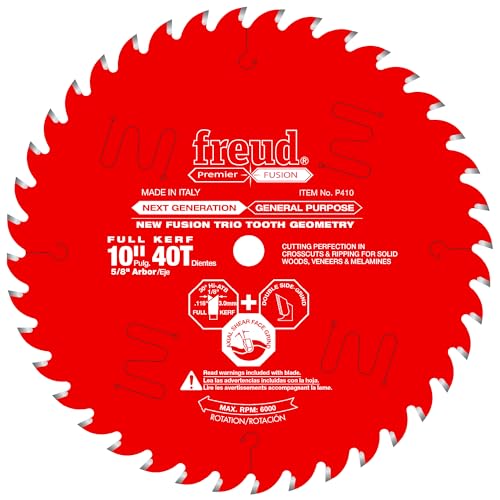
The Freud P410 Premier Fusion blade blends advanced tool design with a TiCo Hi-Density carbide edge. It features a Fusion Trio Tooth design to optimize crosscuts and rips, plus anti-vibration slots for reduced blade movement. Best for users seeking a polished finish and reliable performance on solid wood and veneers. Caution: The specialized tooth geometry may perform differently on very soft or very dense exotic woods compared to other blades.
Diablo 40-Tooth ATB General Purpose Blade

The Diablo blade uses TiCo carbide with a Perma-Shield non-stick coating to resist heat and gumming, extending blade life. Its thin kerf supports fast, clean cuts suitable for remodeling and demolition tasks. Best for cost-conscious buyers who still want reliable performance and longevity. Limitation: Coatings can wear over time with aggressive use or high-feed-rate cuts.
FOXBC 10-Inch 50-Tooth Combination Blade

The FOXBC combination blade is a 10-inch, 50-tooth blade with a 5/8-inch arbor and a 0.098″ kerf. It’s designed for a smooth finish on wood and wood composites, making it versatile for ripping and crosscutting in a single blade. Best for users who want a single blade for both tasks with a softer kerf. Caution: The higher tooth count reduces aggressive rip performance compared to dedicated ripping blades.
Freud 40T Fusion Tri-Bit Blade
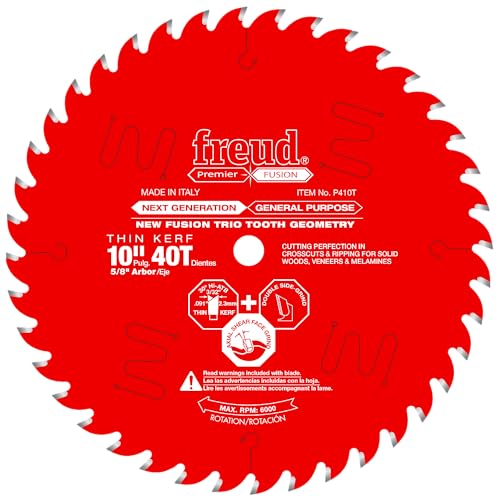
Freud’s Fusion Tri-Tooth design combines Hi-ATB geometry with a TiCo carbide edge and anti-vibration slots. This blade is optimized for a polished finish on both ripping and crosscutting tasks in solid wood and veneers. Best for users needing a balance of speed and finish quality. Caution: May require slower feed rates on very dense species to maintain optimal edge life.
Buying Guide: Key Purchase Considerations
- Tooth count: 40 teeth generally balance crosscuts and ripping, producing smoother edges without sacrificing too much cut speed.
- Kerf width: Ultra-thin kerf reduces waste and power draw but can wear faster if misused; thicker kerfs are more durable in tougher jobs.
- Arbor size: Most general-purpose blades use a 5/8-inch arbor; confirm compatibility with your saw’s arbor.
- Tooth geometry: ATB (Alternating Top Bevel) vs. Hi-ATB and specialty designs influence finish quality and suitability for plywood, veneers, or solids.
- Anti-vibration features: Slots and design elements that minimize vibration improve cut clarity and blade life.
- Coatings: Non-stick or protective coatings can reduce gumming and heat buildup; consider maintenance needs.
- Material compatibility: Some blades excel with hardwoods, others with laminates or plywood; match blade purpose to typical projects.
- Durability vs. price: Premium blades often provide longer life and cleaner finishes but at a higher upfront cost.
Frequently Asked Questions
- What blade is best for general-purpose woodworking?
A 40-tooth, 10-inch blade with a 5/8-inch arbor is a common general-purpose choice for balanced crosscuts and rip cuts. - Can I use a 40T blade for plywood?
Yes, but dedicated plywood blades or blades with special tooth geometry can yield cleaner edges on veneers. - Is a thin-kerf blade necessary for home use?
It can improve cut efficiency and reduce power needed, but durability and blade life should be considered based on workload. - What is anti-vibration tech, and why does it matter?
Anti-vibration features reduce blade wobble, improve finish quality, and extend blade life in demanding cuts. - How do I choose between rip-oriented and crosscut-oriented blades?
Consider the primary tasks: if you rip more than you crosscut, a blade with fewer teeth and optimized geometry for ripping is advantageous; for frequent crosscuts, a blade with more precise edge geometry and smoother finishes is preferred. - Are coatings on blades important?
Coatings help reduce heat and gumming, potentially extending blade life during frequent cuts.