
Answering the needs of homeowners and light-duty professionals, these extendable tree pruners let you trim high branches without ladders. Ideal for homeowners who want easy yard maintenance, hobby arborists seeking versatile reach, and DIY landscapers needing quick, safe pruning in tight spaces. Below, five top options are compared by reach, build, and core strengths. This summary helps you choose the best fit for tall-tree trimming, low-knee comfort, or precise pruning in shrubs and palms.
| Product | Reach (ft) | Key Feature | Best For |
|---|---|---|---|
| Fiskars 2-in-1 Extendable Tree Pruner | 7.9 – 12 | Rotating head; dual-locking system | High branches, quick cuts |
| Fiskars XtendControl 16′ | Up to 16 | Rotating pruner head; 1.25″ cut | Versatile configurations |
| LE TYANGER LETYANGER 7.3–27 ft | 7.3 – 27 | 7-pole system; built-in pulley | Tall trees, heavy pruning |
| LAANPOLE 26FT Reach | Up to 26 | 5-20 ft extension; ergonomic design | Wide reach, reduced fatigue |
| TONYINGO 5-20 ft | 5–20 | Dual-locking flip & screw; 2-in-1 design | Multi-task cutting and trimming |
Fiskars 2-in-1 Extendable Tree Pruner and Pole Saw

The Fiskars 2-in-1 Extendable Tree Pruner offers a practical 7.9 to 12-foot reach with a lightweight aluminum pole under five pounds. The rotating head provides nimble pruning and directional control for high branches or ground-level cuts. A robust chain-drive gearing system delivers more power for tougher limbs, while the secure double locking system keeps the pole extended during use. Best for gardeners needing a compact, high-reach pruner with reliable cutting power.
Who it’s best for: homeowners performing regular high-branch trimming and users who value a rotating head for precise cuts. Limitation: heavy limb cuts may feel slow with a manual saw, and the pole’s extension may take effort on longer sessions.
Fiskars XtendControl 16′ Tree Pruner Kit

The Fiskars XtendControl kit extends up to 16 feet and features a rotating pruner head with a 15″ X3 double-hooked saw for tougher cuts. The head pivots up to 45 degrees, enabling comfortable pruning from the ground at varying angles. The kit uses lightweight aluminum poles and a double-locking snap-fit system with a secondary lock for safety. Best for: users who need multiple configurations and strong cutting leverage in a modular setup.
Consider this if you regularly prune at different heights and angles; avoid if you require ultra-long reach beyond 16 feet without purchasing additional components.
LAANPOLE 26FT Reach Tree Trimmer

LAANPOLE offers an 8-section, 26-foot reach with a lightweight yet sturdy aluminum pole system. The blades are carbon steel with corrosion resistance, and the design emphasizes an ergonomic grip and reduced fatigue for prolonged use. Best for: professionals or serious DIYers who need maximum height without ladders and a comfortable, hand-friendly control scheme.
Note: Even with a long reach, users should plan for slower setup and higher transport space. Limitation: assembly and detaching components can add time to start pruning.
TONYINGO 5-20 FT Extendable Manual Pole Saw

TONYINGO combines a 5–20 foot adjustable pole with a dual-locking flip and screw mechanism for secure, no-slip operation. The 2-in-1 design includes a sharp saw blade for thick limbs and a pruning head that uses a pulley system to reduce cutting effort. Best for: gardeners needing a versatile, labor-saving tool for tall branches and mixed pruning tasks. Limitation: heavier use over long sessions may require more rest due to combined saw and pruner weight.
LETYANGER 7.3–27 ft Extendable Tree Trimmer
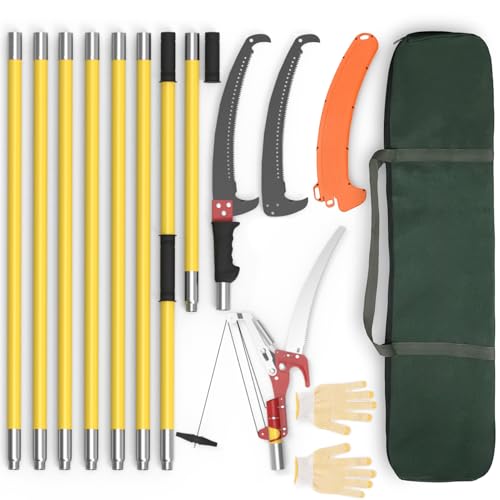
LETYANGER provides a substantial reach range of 7.3 to 27 feet using a seven-pole system. The design centers on a robust carbon steel blade with corrosion-resistant properties and a pulley-assisted operation to ease cutting force. Best for: users who need maximum extension and a sturdy build for high-priority pruning in tall trees. Caution: assembly requires careful alignment to maintain pulley efficiency.
Buying Guide
What reach do you actually need? Measure the height you routinely prune and consider whether you must work from the ground or occasionally use a ladder. For most home yards, 12–20 feet covers many high branches with comfortable operation.
What combination of features matters? A rotating head aids multi-angle cuts; a pulley system reduces cutting effort; a double-locking mechanism improves safety and stability when fully extended.
What material and weight are acceptable? Lighter poles reduce fatigue but may require more frequent maintenance. Aluminum poles tend to be durable and easier to maneuver than steel, though some models fuse both materials for balance.
How important is modularity? Systems with multiple sections enable you to tailor length precisely. Look for screw locks or flip locks that stay secure under load, especially when pruning heavy branches.
Maintenance considerations include blade material and coatings. Carbon steel blades with rust resistance and edge retention provide longer-lasting performance in outdoor environments.
Safety tips: prune from stable ground, avoid overreaching, and use two-handed control when possible. If using an extension pole, ensure all locks are engaged before applying force.
FAQ
- What extended reach do I need for backyard trees? A typical residential need ranges from 12 to 20 feet. Choose models that match your tallest branch height and add some buffer for safer pruning from the ground.
- Are rotating heads worth it? Yes. Rotating heads improve cutting angles and reduce the need to reposition the pole, saving effort on tough cuts.
- Is a pulley system beneficial? Yes, it lowers the amount of force required to cut, especially with thicker limbs or extended reach.
- How heavy are these extendable pruners? Most units weigh between 5 and 15 pounds depending on length and head design. Lighter models reduce fatigue but may have shorter reach.
- Can I use these for palm trees? Many models handle palm trimming well, but verify blade geometry and lock strength for tough fibrous fronds.
- What maintenance helps extend pole life? Keep blades clean, dry, and lightly oiled; store with locks disengaged but secured; inspect joints for wear before each use.