
If you’re just starting out in welding, you want a dependable, budget-friendly machine that’s easy to learn with and versatile enough for a range of projects. This guide highlights five entry-level welders that are well-suited for beginners and hobbyists. Each product is described with who it’s best for, why it’s a good pick, and any notable limitations to consider. Below, a quick summary table helps compare the core features at a glance.
| Product | Best For | Key Capability | Voltage |
|---|---|---|---|
| YESWELDER 135A MIG Welder | Beginner to mid-level, small projects | Gasless MIG, Stick, Lift TIG | 110V |
| SUNSIMIAO Portable 110V Welder | Lightweight DIY, quick repair jobs | IGBT inverter, 20–120A | 110V |
| ARCCAPTAIN 200A TIG/Stick Welder | Entry-level TIG with versatility | HF start TIG, Stick/Arc | 110V/230V |
| ARCCAPTAIN 200A Stick Welder | Outdoor maintenance, farm, garage | Synergic control, MMA | 110V/220V |
| SOARFLY 250A Stick Welder | Home shop with heavy metal tasks | Dual voltage, large LED display | 110V/220V |
YESWELDER 135A MIG Welder, 3-in-1 Budget Master

The YESWELDER 135A is a compact, budget-friendly 3-in-1 welder designed for beginners who want flexibility. It handles Gasless Flux Core MIG, Stick, and Lift TIG with an accessible LED display and synergic controls. Best for small to medium light-gauge projects, this unit supports mild steel up to 3/32 inch (2.5 mm) thick and uses .030 or .035 welding wire. The automatic voltage matching while adjusting wire feed helps new welders keep a steady arc. Watch for limited capacity on thicker metals and the need for a compatible TIG torch if you want full TIG capability.
Who it’s best for: First-time welders, hobbyists, and DIY enthusiasts who want an all-in-one tool without buying multiple machines.
Why chosen: The 3-in-1 approach reduces gear, and the synergic control simplifies setup for beginners.
Caution: TIG capability requires an additional TIG torch; don’t expect industrial-level TIG performance from a budget model.
SUNSIMIAO Portable 110V Handheld Welder

This compact 110V welder with IGBT inverter technology targets portability without sacrificing essential performance. It provides 20–120 amps, controlled via a five-position dial, making it suitable for light DIY and small repair work. It’s known for stable arc starts and reduced rod sticking, which can help beginners build confidence. The included kit — ground clamp, mask, gloves, brush, rods, and bag — simplifies getting started. The key limitation is its light-duty design; avoid using this model for thick metals or continuous heavy-duty welding.
Who it’s best for: Absolute beginners and hobbyists needing a lightweight, ready-to-go solution for small projects.
Why chosen: Excellent portability and a complete starter kit support quick, frustration-free learning.
ARCCAPTAIN 200A TIG/Stick Welder

This TIG/Stick 2-in-1 welder offers high-frequency TIG start and a robust arc for both stainless and mild steel. With up to 200 amps and dual voltage operation, it supports precise TIG welding and a dependable MMA mode for outdoor work or thicker sections. The device includes a large LED screen for data clarity along with post gas and down-slope features to protect the weld and equipment. It’s a strong pick for beginners who anticipate expanding into TIG work. A potential limitation is handling the learning curve for truly proficient TIG technique.
Who it’s best for: Beginners planning to grow into TIG welding while needing a reliable, versatile unit.
Why chosen: Combines TIG and stick capabilities with user-friendly digital controls and safety features.
ARCCAPTAIN Stick Welder with LED Display
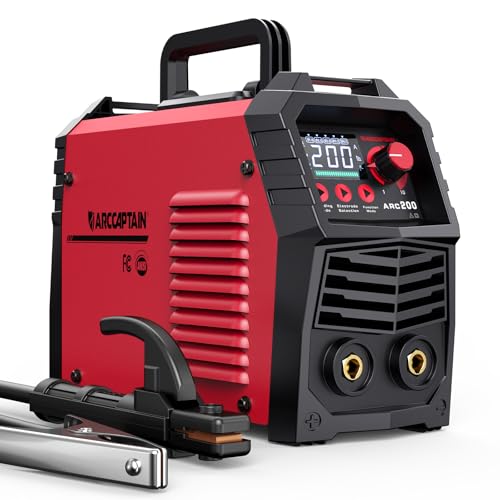
This MMA welder focuses on simplicity and robust control. The large LED display helps beginners monitor current settings, while synergic control automatically matches current and voltage for the selected electrode. Its portability (about 7.2 lbs) and built-in safety features make it suitable for outdoor maintenance, garage projects, and DIY tasks. The main caveat is that stick welding with basic features may require practice to achieve consistently clean welds, especially with harder metals.
Who it’s best for: New welders seeking a straightforward, portable stick welder for everyday repairs.
Why chosen: Clear display and automatic current matching simplify learning and operation.
SOARFLY 250A Dual-Voltage Stick Welder
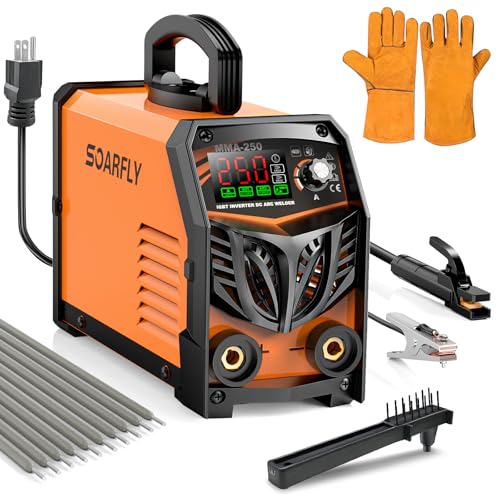
The SOARFLY 250A welder targets owner-operated shops and serious hobbyists needing more current for thicker metals. Dual voltage support (110V/220V) expands where you can work, and the large LED display provides quick, real-time feedback on current and mode. It’s well-suited for heavy fabrication within a home shop. A limitation is that it’s heavier than typical beginner units, so portability is reduced and setup may require more space and planning.
Who it’s best for: Beginners who anticipate heavier usage, thicker metal, or want a future-proof upgrade path.
Why chosen: Higher current capability and dual voltage flexibility make it a practical long-term option for new welders.
Buying Guide: Key Considerations For Entry Level Welders
What can you weld with an entry-level welder?
Most entry-level machines are best for mild steel and thin-gauge projects. Begin with 16–18 gauge for MIG, or test 18–22 gauge for TIG depending on the model. If you expect thicker metal, choose a unit with higher amperage and a robust arc-start feature.
Do you need multi-process capability?
Multi-process welders save space and money, offering MIG, TIG, and Stick within one unit. They’re ideal for beginners who want to explore different techniques without buying multiple machines. Be aware that single-process units can sometimes outperform in their niche yet cost less and are simpler to operate for dedicated beginners.
What voltage matters for home garages?
110V units are common for small projects and DIY work. Dual-voltage models offer portability between home outlets and workshops. If you plan larger projects, consider a 220V option or a future upgrade path.
Portability vs. power
Portable welders are easier to move but may have lower duty cycles. For a home shop, balance the weight, size, and current capability with your space and typical project size.
Safety and learning resources
Look for machines with clear displays and protective features like arc force, hot start, anti-stick, and overcurrent protection. Combine with basic training resources and PPE to build safe, effective welding habits early on.
Frequently Asked Questions
- What is an entry-level welder best used for? Small metal fabrication, hobby projects, repairs, and learning the basics of MIG, TIG, or Stick welding.
- Is a multi-process welder better for beginners? It can be convenient, but some beginners start with a single-process unit to master one technique before expanding capabilities.
- Do I need a TIG torch for TIG welding? Yes, a TIG torch is required for TIG welding. Some 3-in-1 machines offer TIG capability with an additional torch as an accessory.
- Should I buy dual voltage? Dual voltage increases flexibility for different outlets and job sites but may add cost and complexity. Choose based on your typical workspace and future needs.
- What safety gear is essential for beginners? A welding helmet with proper shade, gloves, jacket, and boots; plus a properly grounded workbench and a fire extinguisher nearby.
- How do I choose the right amperage? Start with the metal thickness you expect most often. Higher amps allow thicker material but require careful technique and practice.