
Whether you’re refinishing furniture, smoothing trim, or preparing panels for paint, a reliable wood sander is essential. This guide highlights five dependable options suited to different needs, from budget-friendly detail sanders to full-size random orbit sanders. The best picks balance power, dust control, and ease of use for professional tasks and DIY projects alike. Below, you’ll find who each tool is best for, plus clear reasons to choose or avoid each model.
| Product | Best For | Key Benefit |
|---|---|---|
| SKIL SR211601 | General homeowners, light to medium tasks | Strong motor with cyclonic dust box |
| SKIL SR232301 | Detail work, corners and edges | 4-in-1 versatility with micro-filter dust |
| WEN 6301 | Budget-conscious precision tasks | Small, lightweight palm sander with angled tip |
| HYCHIKA Detail Sander | Narrow spaces and rust/paint removal | Compact with multiple sanding options |
| DEKOPRO 5″ Orbital Sander | Woodworking projects with varied surfaces | Six speeds and comprehensive sanding set |
SKIL 5” Random Orbital Sander with Cyclonic Dust Box

Best for: General sanding tasks and hobby projects. The SKIL SR211601 delivers a solid balance of speed, power, and dust management. Its 2.8-amp motor reaches up to 13,000 OPM, suitable for wood, metal, and plastic surfaces. The cyclone dust box helps keep the workspace cleaner by collecting most of the dust in a transparent container for easy disposal. Variable speed control lets you tailor the aggressiveness to the material being worked on, reducing the risk of gouging soft woods.
Why selected: High orbit count and cyclonic dust collection give reliable performance for mid-range jobs. The combination of power and dust management makes it a versatile entry point for beginners upgrading from a detail sander.
Caution: The dust container is transparent, but emptying may require careful tipping to prevent spreading fine dust. Best for workshop setups with a vac attachment for maximum cleanliness.
SKIL Corded Multi-Function Detail Sander
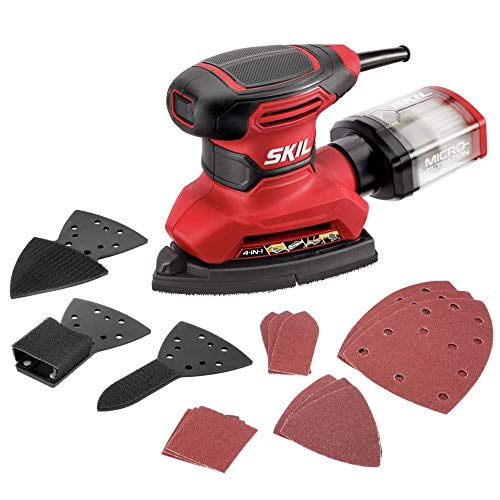
Best for: Detail work on furniture and tight corners. This 4-in-1 model includes three attachment tools and a micro-filter dust box, enabling precise control for finishing tasks and delicate profiles. The sander supports quick changes without tools, enabling rapid transitions between tasks on larger projects.
Why selected: The multi-attachment versatility makes it a strong choice for users who frequently switch between smoothing edges, carving contours, and filling small gaps. The micro-filter system helps maintain a cleaner work area during fine finishing.
Caution: The extra attachments add bulk; it’s less ideal for flat, broad-surface work where a larger orbital sander would excel.
WEN 6301 Electric Detailing Palm Sander

Best for: Precision sanding in tight spaces and light material work. The WEN 6301 features a compact 3.75 x 5.5 inch pad and an angled tip, ideal for precise edge work and small areas. A 1-amp motor provides enough power for fine finishing, and its lightweight design reduces user fatigue during extended sessions.
Why selected: Its compact footprint makes it easier to control in corners and along trim. The angled tip enhances access to difficult areas, which is helpful in cabinetry and decorative projects.
Caution: Lower power compared to larger orbital sanders; avoid heavy stock removal on dense hardwoods with this model.
HYCHIKA Detail Sander with Dust Collection

Best for: Small projects and tight spaces with rust and paint removal needs. HYCHIKA offers a compact tool at 14,000 OPM and a 6-hole dust collection system. The included 12 sanding sheets (P80, P120, P240) cover coarse to fine tasks and are hook-and-loop attached for quick changes. It is well-suited for rapid spot repairs and finishing touches.
Why selected: The combination of speed and efficient dust collection helps maintain a clean workspace during detailed work, making it a practical choice for interior trim and small furniture tweaks.
Caution: As with most detail sanders, it can feel underpowered for heavy stock removal on hardwoods; best used for finishing and minor paint removal.
DEKOPRO 5″ Orbital Sander with Dust Box

Best for: Woodworking projects requiring varied speeds and versatile discs. The DEKOPRO sander provides 6 speeds up to 14,000 RPM and ships with 16 sanding discs in multiple grits, making it adaptable for rough stock removal and fine finishing. Its detachable dust bag supports cleaner workspaces.
Why selected: The broad speed range and included discs offer a complete setup for beginning and intermediate woodworkers tackling different surface preparations.
Caution: Heavier than some other detail sanders; controls and balance matter when working in overhead positions or extended sessions.
DEWALT 1/4 Sheet Sander (DWE6411/DWE6423 family)

Best for: Medium to heavy-duty sheet sanding when detailed finish is needed. The DEWALT line offers a 1/4 sheet sanding option with improved paper retention and a robust motor. Its design emphasizes comfort and control during longer sanding tasks, with a rubber overmold texture and reliable paper clamps.
Why selected: DEWALT’s reputation for durable construction and improved paper retention makes this a dependable choice for projects requiring consistent sheet sanding with a steady hand.
Caution: More suited to flat surfaces; for tight corners you may want a detail sander or a smaller pad tool.
Buying Guide: How to Choose the Right Wood Sander
What size and type should you choose? A random orbital sander is versatile for general smoothing and finishing, while detail sanders excel in corners and tight spaces. Consider a model with adjustable speed to match the material and task complexity. Dust control is essential for health and surface quality; look for built-in dust collection or compatible vacuum attachments.
How important is weight and balance? Lighter tools reduce fatigue during longer sessions but may trade some raw power. Check for a comfortable grip, low vibration design, and easy access to power controls so you can maintain control in awkward positions.
What about accessories and discs? A kit with multiple grits and a reliable clamping system saves time. Hook-and-loop attachments allow quick disc changes, and a detachable dust bag or box helps with cleanup. For large projects, consider a tool with a broader pad or the option to attach an external vacuum.
Which features are must-haves? At minimum, choose a tool with variable speed, a stable base, and a quality dust collection system. If you work in tight spaces, pick a model with a compact footprint and a narrow nose or angled tip. For beginners, a model with tooling-free accessory changes can speed up learning curves.
FAQ
- What is the difference between orbital and detail sanders? Orbital sanders use a random orbit pattern for even material removal, suited for larger surfaces. Detail sanders focus on corners and edges with precise control for finishing touches.
- Is dust collection essential for sanding? Yes. It improves visibility, reduces health risks, and minimizes cleanup time. Look for cyclonic or micro-filter systems and compatibility with vacuums.
- Can I use any sandpaper with these sanders? Most sanders use standard Hook-and-Loop discs or sheets. Check the pad size and attachment type (hook-and-loop or clamps) before buying.
- How do I prevent gouging on soft wood? Use a lower speed and lighter pressure, and start with a coarser grit that you gradually refine with finer grits.
- What maintenance is required for a sander? Regularly clean dust and debris from the pad and vent areas. Inspect cords and clamps, and replace worn pads or discs to maintain performance.
- Are cordless sanders worth it for wooden projects? Cordless options offer mobility and reduced cord clutter, but may have lower sustained power. For large projects, corded models often provide longer run-time.