
Finding a reliable 3-phase-capable EV charger for home use means balancing charging speed, safety features, and plug compatibility. This guide highlights five strong options that support higher-current Level 2 charging, with adaptable currents and practical design for American homes. Each choice emphasizes compatibility, ease of use, and smart charging capabilities to help you optimize daily charging routines.
| Product | Brand | Current (A) | Max Power (kW) | Key Feature |
|---|---|---|---|---|
| EVDANCE Level 2 EV Charger | EVDANCE | 10-40 | 9.6 | Adjustable current; delayed start |
| SEGUMA Level 2 EV Charger | SEGUMA | 10-32 | 7.68 | NACS compatibility |
| FlowGo Tesla Charger | FlowGo | 8-40 | 9.6 | NACS plug; portable design |
| Autel MaxiCharger EV Charger | Autel | Up to 80 | Up to 14 | AI charging; Wi-Fi/Wi-SUN |
| Raylix Level 1&2 EV Charger | Raylix | adjustable | – | User display; versatile compatibility |
EVDANCE Level 2 EV Charger For Tesla

The EVDANCE charger delivers up to 40A / 9.6kW with a NEMA 14-50 plug and a 25-foot cord. It supports 240V and includes adjustable current settings from 10A to 40A, helping tailor charging to home circuit capacity. A delayed start function (1–12 hours) enables off-peak charging to reduce energy costs and protect battery health. The unit is designed for Tesla vehicles via standard 240V outlets and integrates practical safety features to manage loads and prevent overloads.
ELEGRP Level 1/2 EV Charger

ELEGRP’s unit provides Level 1 and Level 2 charging with a 25-foot cable and a 16A 240V capability via a NEMA 6-20 plug, plus an included 5-15 adapter for 120V outlets. Its PBE and LCR technologies deliver surge, leakage, and overload protection, while IP67-rated durability supports indoor and outdoor use. This charger is designed for flexible home charging with reliable performance across environments and vehicles.
Raylix 16A Level 1&2 EV Charger

Raylix offers a flexible Level 1/2 charger with 110V-240V operation and a 21-foot cable. Its built-in display provides real-time charging status and current settings for quick reference. The charger can deliver 15–18 miles of range per hour on 240V (16A) and 4–8 miles per hour on 120V, making it a versatile option for home use and travel with SAE J1772 compatibility. A simple, user-friendly interface supports straightforward operation.
SEGUMA Level 2 EV Charger

SEGUMA’s 32A Level 2 charger supports up to 7.68kW with a NEMA 14-50 plug and 25-foot cord. It features adjustable current (32A down to 10A) for diverse electrical setups and claims broad NACS compatibility for all North American EVs. The unit is designed for portability and efficient charging, aiming to reduce charging times compared with Level 1 options while maintaining safety and reliability across climates.
Autel MaxiCharger EV Charger
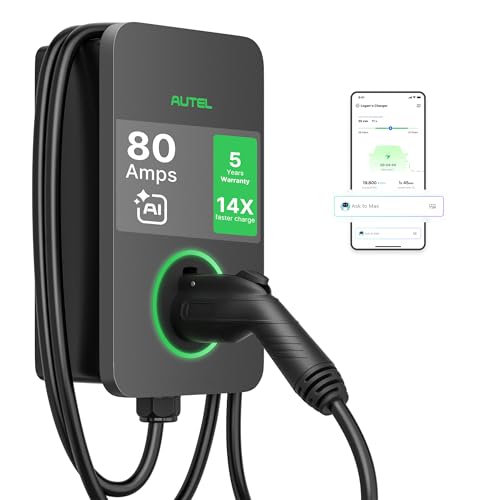
The Autel MaxiCharger offers Level 2 charging up to 80A, enabling rapid charging with the potential to add substantial range quickly. It includes integrated AI for time-of-use optimization and charging data analytics, plus dual-network connectivity (Wi-Fi and Wi-SUN) for high reliability. The unit emphasizes security with theft protection features and remote locking, along with a flexible charging start method set for various user scenarios and climate conditions.
Buying Guide: Key Purchase Considerations
When evaluating 3-phase capable or high-current Level 2 EV chargers for home use, consider these factors:
- Electrical service compatibility: Verify your home’s 240V service capacity and available circuit amperage to support higher current settings without tripping breakers.
- Charging speed vs. electrical load: Higher amperage (e.g., 32–40A) delivers faster charging but requires appropriate wiring and possible electrical upgrades.
- Plug type and connector compatibility: Ensure the unit uses a common North American standard (NEMA 14-50, NACS, J1772) suitable for your EV lineup or adapters available for others.
- Product features: Delayed start, scheduling, and smart charging can optimize energy costs by charging during off-peak hours and protecting battery health.
- Durability and weather resistance: Indoor/outdoor ratings (IP65, IP67) and temperature tolerance matter for garages, driveways, and cold climates.
- Data and security: AI-based insights and remote access features can help manage usage patterns, while theft protection and locking add security in public or shared spaces.
- Portability vs. fixed installation: Portable chargers offer flexibility for travel or multi-location use, while fixed units support permanent home installation and wall-mount setups.
- Warranty and support: Look for brands with comprehensive warranty terms and accessible customer support for maintenance and troubleshooting.
These considerations help balance performance, safety, and long-term cost of ownership, ensuring the charger fits both your vehicle needs and home electrical system.