
Answering the right questions for EDC and survival needs, these knives balance portability, durability, and practical features. The top picks below cater to campers, hikers, first responders, and daily carriers who want reliable edge retention, easy access, and functional extras. Each product is evaluated for who benefits most and why it stands out in real-world scenarios.
| Product | Best For | Key Strength | Why It’s Recommended |
|---|---|---|---|
| Gerber Ultimate Survival Knife | Survivalists & Outdoor Enthusiasts | Integrated fire starter and sharpener | |
| Smith & Wesson Extreme Ops SWA24S | Budget-friendly EDC | Balanced size with quick access | |
| NedFoss Pocket Folding Knife DA75 | Compact everyday carry | 3-in-1 tools (belt clip, Cutter, Glass Breaker) | |
| CIVIVI Mini Praxis | Legal EDC with premium steel | Fast one-handed deployment | |
| Kizer Drop Bear Fixed Blade | Minimalist hikers | Hidden tools in fixed blade design |
Gerber Ultimate Survival Knife
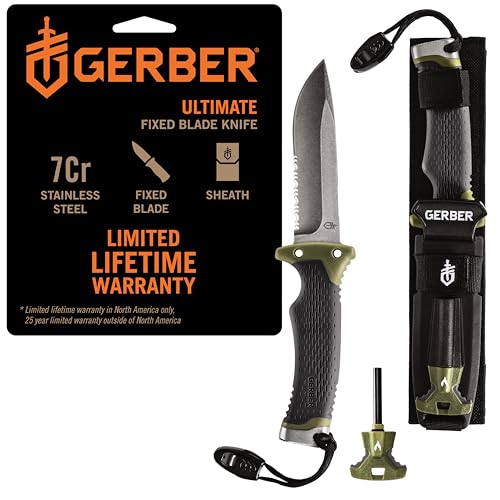
The Gerber Ultimate Survival Knife combines a half-serrated stainless-steel drop point blade with a textured rubber grip and a hammer pommel. It includes a sheath that houses a sharpening stone and a ferro rod fire starter, plus an emergency whistle. This design prioritizes rugged outdoor use, with a built-in sharpener, making it a practical choice for bushcraft, hunting, and camping trips. Best for those who want an all-in-one survival tool in a fixed blade format.
Who it’s best for: outdoor enthusiasts who value a multifunction sheath and a ready-to-use fire starter. Why selected: the integrated sharpener and ferro rod provide quick self-sufficiency in remote settings. Caution: the large, fixed blade requires secure carry and careful handling to avoid accidental contact in tight packs.
Smith & Wesson Extreme Ops SWA24S
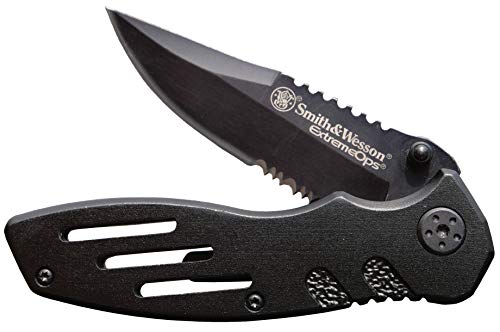
This 7.1-inch overall length folding knife features a 3.1-inch serrated blade and a black oxide stainless finish with an aluminum handle. It emphasizes quick access via a pocket clip, plus a finger flipper and ambidextrous thumb knobs for easy use as an everyday carry option. Best for: cost-conscious EDC users who want a reliable, fast-deploying blade. Why selected: slim profile and simple maintenance make it versatile for daily tasks and light outdoor work. Caution: serrated edge may not be ideal for fine wood carving or precision tasks.
NedFoss Pocket Folding Knife DA75

The NedFoss DA75 is an 8Cr14Mov steel folding knife with a comfortable G10 and aluminum handle, designed for ergonomic use. It features a liner-lock, belt clip, and a 3-in-1 concept with useful tools like a seatbelt cutter and glass breaker for emergencies. Best for: everyday carry where compact size and utility features are valued. Why selected: a robust steel option with practical emergency tools in a slim package. Caution: folding blades can require regular maintenance to maintain smooth action.
CIVIVI Mini Praxis Folding Knife
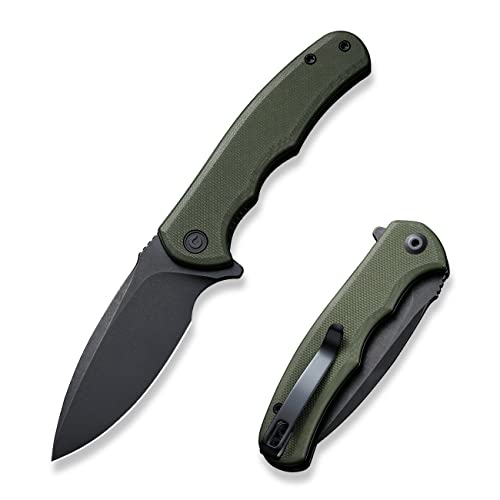
The CIVIVI Mini Praxis uses a D2 steel blade with a G10 handle and a ceramic ball-bearing pivot for fast one-handed deployment. It has a slim profile suitable for legal carry in many states. Best for: users who want premium steel and quick action in a compact size. Why selected: reliable deployment and strong edge retention in a small form factor. Caution: D2 steel requires basic care to prevent corrosion in humid environments.
Kizer Drop Bear Fixed Blade Knife

The Kizer Drop Bear is a lightweight fixed blade with a 2.57-inch D2 blade and an olive green G10 handle. It includes a hidden tool feature (tweezers and a toothpick) and a multi-carry Kydex sheath that supports horizontal, vertical, or neck carry. Best for: minimalist hikers and EDC fans who want a discreet, fully fixed option with extra tools. Why selected: fixed blade reliability and hidden tool capability. Caution: smaller size may limit heavy-duty chopping tasks; ensure proper sheath fit for secure carry.
Buying Guide: Key Purchase Considerations
- Intended use: Survival knives favor rugged blades, integrated features (fire starter, sharpener), and durable sheaths. EDC-focused blades prioritize carry comfort, deployment speed, and lighter weight.
- Blade material and geometry: Stainless steel offers corrosion resistance; high-carbon steels provide edge retention with maintenance needs. Consider drop-point or Tanto shapes based on your typical tasks.
- Handle design: Textured materials (G10, rubber) improve grip in wet conditions. Ergonomic contours reduce fatigue during extended use.
- Carrying options: Fixed blades with durable sheaths versus folding blades with clips. For emergencies, a seatbelt cutter or glass breaker adds utility.
- Maintenance and care: Some blades require regular sharpening and oiling to prevent rust. Look for built-in sharpeners or easy access to maintenance tools on the sheath.
- Legal considerations: Some areas restrict blade length or require folding mechanisms. Choose models with compliant blade lengths if legal carry is a concern.
FAQ
- What makes a good EDC survival knife?
– A good EDC survival knife balances portability, reliable edge retention, and practical features such as a robust handle, accessible deployment, and any emergency tools included with the knife or sheath. - Should I prefer fixed blades or folding blades for survival tasks?
– Fixed blades offer greater strength for tougher tasks and are less prone to accidental folding under load, while folding blades are lighter and easier to carry for daily use. Your choice depends on carry preference and typical tasks. - Are serrated edges useful for survival?
– Serrated edges excel at cutting rope and fibrous materials, but fine carving and wood work are easier with a plain edge. Some knives combine both via a partially serrated blade. - Is steel type important for an EDC knife?
– Yes. Stainless steels resist corrosion, while high-carbon steels offer sharper edges and easier sharpening. Consider your climate and maintenance routine. - What safety features should I look for?
– Look for secure blade-locking mechanisms, reliable grip textures, and carry systems that keep the blade safely enclosed when not in use.