
Answering the question of how to protect and preserve outdoor driveways and patios, this guide recommends five top paver sealers. These selections suit homeowners seeking clear protection, dramatic color enhancement, or a natural look. Each product targets different needs—from low-gloss protection for outdoor stone to wet-look finishes for a bold curb appeal. The summary table below helps compare key traits at a glance.
| Product | ||||
|---|---|---|---|---|
| MasonryDefender Patio Paver Sealer | Low Gloss | Pavers, Stone | Waterproof, color retention | Clear protection with joint stabilization |
| Armor AR350 | Low Gloss Wet Look | Concrete & Pavers | Long-lasting, non-yellowing | Professional-grade color enhancement |
| McKinnon Concrete And Paver Sealer | Semi-Gloss Wet Look | Brick, Stone, Concrete | UV resistant, outdoor/indoor use | Natural wet-look enhancement |
| DOMINATOR Low Gloss Wet Look | Low Gloss Wet Look | Brick, Flagstone, Pavers | Water-based protection against staining | Vibrant, durable color with protection |
| DOMINATOR Concrete Sealer For Driveway | Natural Look (Zero Sheen) | Concrete & Pavers | Waterproof below surface | Invisible protection that preserves look |
MasonryDefender Patio Paver Sealer – Low Gloss
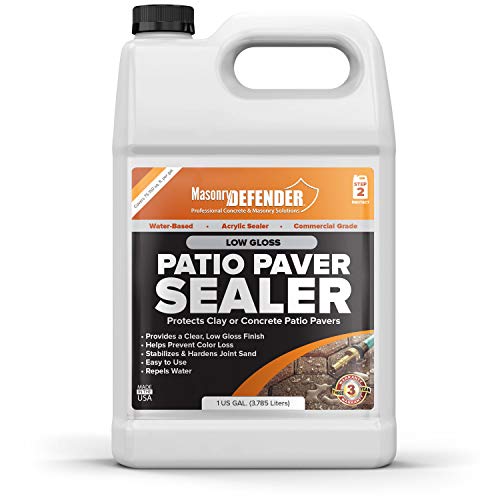
Best for clear waterproof protection on outdoor pavers and stone. This water-based acrylic sealer dries clear with a low gloss finish, helping prevent color fading and yellowing. It also seals joints, hardening sand and reducing weed growth and ant colonization. Use this when you want a subtle sheen and joint stabilization without altering color.
Who it’s best for: homeowners seeking a VOC-compliant, clear sealer that preserves color while protecting horizontal surfaces. Limitations: potential for limited deep color enhancement compared with solvent-based options.
Armor AR350 Low Gloss Wet Look

Best for professional-grade color enhancement and outdoor durability. This solvent-based sealer provides a dramatic wet look and long-lasting protection for exterior concrete and pavers. It’s designed for use on unsealed or previously sealed surfaces and resists UV exposure, abrasion, and weather.
Who it’s best for: contractors or homeowners seeking a strong color boost and durable finish. Caution: solvent-based formulas require ventilation and caution during application.
McKinnon Concrete And Paver Sealer

Best for a balanced outdoor and indoor solution with a semi-gloss wet look. This professional-grade formula penetrates to deepen color while preserving the natural beauty of stone, brick, and concrete. It is UV resistant and suitable for patios, driveways, and indoor hardscapes.
Who it’s best for: DIYers or pros wanting a reliable penetrating sealer with a natural yet enhanced appearance. Limitation: may require reapplication over several years depending on exposure.
DOMINATOR Low Gloss Wet Look Paver Sealer

Best for revitalizing dull or faded pavers with a durable, low-gloss finish. The water-based formula provides protection against sun damage, oil, stains, and water while remaining versatile for brick, flagstone, and natural stone surfaces.
Who it’s best for: homeowners needing a resilient, low-sheen sealant that still shows natural texture. Caution: results vary with surface porosity; test a small area first.
DOMINATOR Concrete Sealer For Driveway

Best for a natural look with invisible protection. This penetrating water-based sealer uses silane siloxane technology to reduce water absorption by up to 95% without changing color or look. It’s ideal for stamped concrete, pavers, and stone where a pristine, natural appearance is desired.
Who it’s best for: users who want durable water repellency without sheen. Limitation: not all surfaces will achieve the same degree of water beading; testing recommended.
Buying Guide
What finish should you choose?
Low-gloss finishes offer a subtle sheen and preserve a natural look, making them ideal for historical or muted aesthetics. Wet-look sealers provide a bold, glossy appearance that highlights color, best for decorative driveways. Natural-look penetrants minimize surface film and preserve original texture.
How does application type affect results?
Water-based sealers dry clear and are easy to clean up, with fewer odors. Solvent-based products often deliver stronger color enhancement and durability but require ventilation and careful usage.
What about surface compatibility?
Choose a sealer specified for pavers, brick, flagstone, or concrete that matches your material. Some products are designed for both indoor and outdoor use; others excel specifically outdoors on unsealed surfaces.
Longevity and maintenance considerations
Penetrating sealers generally require less frequent maintenance but may offer less surface protection against staining. Film-forming sealers provide surface protection and dramatic color but can peel if not properly prepared.
Safety and preparation tips
Always follow manufacturer instructions for ventilation and PPE. Test a small area first to confirm appearance and compatibility. Ensure surfaces are clean and dry before application.
How to choose between five top options?
If you want clear protection with joint stabilization, consider MasonryDefender. For professional color enhancement, Armor AR350 is strong. For a balanced outdoor/indoor use with a natural look, McKinnon is solid. If you prefer a vibrant low-gloss wet look, pick DOMINATOR Low Gloss. For invisible protection, DOMINATOR Concrete Sealer offers a zero-sheen option.
FAQ
Q: Do these sealers change the color of pavers?
A: Some provide a wet look or color enhancement; others are clear and preserve the original color. Always check the product features.
Q: Can I apply sealer on newly placed pavers?
A: Yes, but surfaces should be clean, dry, and properly cured as per manufacturer guidance.
Q: How often should I reapply sealer?
A: Reapplication frequency depends on weather, foot/vehicle traffic, and the specific formula used.
Q: Are these sealers safe for plants and pets?
A: Most water-based options have lower VOCs, but check label guidance and ensure proper curing before exposure to vegetation or pets.
Q: Should I seal all at once or in sections?
A: For best results, seal in sections with consistent preparation and curing times to avoid color inconsistency.