
DIY solar panels open a path to independent, renewable energy for homeowners. This guide highlights five solid options that balance efficiency, portability, and ease of use. Each listing includes a quick look at the key features to help you compare capabilities and installation considerations. The buying guide at the end covers planning, safety, compatibility, and long-term upkeep to support informed decisions.
| Product | Brand | Link |
|---|---|---|
| Install Your Own Solar Panels Book | Storey Publishing | Amazon Link |
| 200W ECO-WORTHY Panel Kit | ECO-WORTHY | Amazon Link |
| Renogy 200W Portable Panel | Renogy | Amazon Link |
| Plug and Play 640W Panels | PLUGGEDSOLAR | Amazon Link |
| DOKIO 150W Portable Panel | DOKIO | Amazon Link |
Install Your Own Solar Panels: Designing and Installing a Photovoltaic System to Power Your Home

The book from Storey Publishing offers a thorough primer for homeowners considering a DIY solar project. It covers system design, installation steps, safety practices, and practical troubleshooting. It’s a resource for readers who want a grounded, methodical approach to creating a photovoltaic array that can power a home, shed, or cabin. While it emphasizes planning and code awareness, it also provides hands-on guidance suitable for hobbyists seeking reliable results.
ECO-WORTHY 200W Panel Kit With Controller

Designed for off-grid applications, this kit pairs a high-efficiency monocrystalline solar panel with a 30A PWM charge controller. It targets RVs, campers, boats, and backup power setups, delivering robust daily output under good sunlight. The frame is corrosion-resistant to withstand weather over years of use, and the IP65-rated junction box adds weather protection. The kit emphasizes broad applicability, including power for small appliances and devices when traditional grid access is unavailable.
Renogy 200W Portable Foldable Panel

Renogy’s foldable 200W panel emphasizes portability for camping, RVs, or emergency setups. It achieves high efficiency with advanced 16BB N-Type cells and an efficiency around 25%. The lighter, compact design is easy to transport and store, with a backpack-sized footprint when folded. The system supports charging multiple devices and works with portable power stations or 12V batteries via MC4 output, offering a flexible off-grid solution for limited spaces or mobility-focused projects.
Plug and Play 640W Solar Panels And Inverter
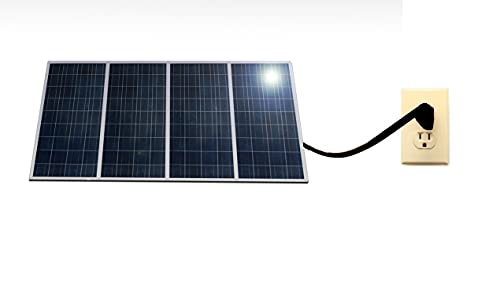
This plug-and-play system integrates 640W of solar panels with an inverter for straightforward grid-tied or off-grid operation. It’s marketed for ease of use: place the panels in sun and connect to a wall outlet. It’s suitable for homeowners looking to offset a portion of electricity usage and for those who want an approachable entry point into solar power. The kit highlights projected energy generation and potential savings on electricity bills, though actual results depend on location and sun exposure.
DOKIO 150W Portable Foldable Panel Kit

This compact kit weighs around 7.3 pounds and folds into a portable, travel-ready form. It includes a standalone PWM controller for 12V batteries and offers safety protections such as reverse polarity and overcharge prevention. The design emphasizes a balance between portability and practical charging capabilities, making it a viable option for RVs, camping, and emergency backup needs where space and weight are critical considerations.
Buying Guide: Key Purchase Considerations
- Application and scale: Determine whether you want a portable, RV/camper setup or a fixed home installation. Portable kits suit temporary needs; fixed systems prioritize long-term home use and return on investment.
- Cell technology and efficiency: 16BB or N-Type cells offer higher efficiency and better performance in partial shade or heat. Higher efficiency panels generate more power in limited space.
- Durability and weather resistance: Look for corrosion-resistant frames, IP ratings for junction boxes, and robust mounting hardware for outdoor exposure and wind loads.
- System components: Consider whether a kit includes an inverter, charge controller, or requires separate components. PWM vs. MPPT controllers impact efficiency and cost in varying sun conditions.
- Portability vs. permanence: Folding, lightweight designs are ideal for travel; larger, fixed panels suit long-term home installations and roof mounting.
- Wiring and compatibility: Check connector types (MC4 compatibility, USB-C/PD ports on panels) and battery compatibility (12V, 24V) for future expansion.
- Installation and safety: Ensure compliance with local electrical codes, proper grounding, and, if mounting on a roof, professional inspection where required.
- Expansion potential: Many kits and panels scale by adding more panels or combining with power stations and inverters for increased output.
- Budget versus longevity: Balance upfront costs with expected lifespan, maintenance needs, and the ability to recover investment through energy savings over time.
- Support and documentation: Accessible manuals, installation guides, and customer support help ensure proper setup and troubleshooting.
What To Consider When Comparing Solar Panels
- Efficiency and performance in shade: Anti-shading or N-Type technologies reduce power loss in less-than-ideal conditions.
- Weight and form factor: Lighter panels with compact folding options ease transport and storage but may require sturdier supports for fixed installations.
- Warranty and service life: Look for long warranties on panels and components to maximize return over decades of use.
- Ease of integration: Compatibility with existing batteries, inverters, and portable power stations reduces setup friction and ongoing maintenance.
- Amenities for DIY: Guides, diagrams, and community support add value when taking the DIY route and tackling troubleshooting.