
Finding a dependable power solution for CPAP therapy while camping or off-grid requires evaluating capacity, safety, and ease of use. This guide highlights five top-rated portable power stations and inverters tailored for CPAP machines, phones, laptops, and other essential devices. Each entry summarizes key features, charging options, and port variety to help you compare performance in real-world outdoor conditions.
Summary of Selected Products:
| Product | Brand | Key Benefit | Output Type |
|---|---|---|---|
| ALLWEI Portable Power Station 300W | ALLWEI | High capacity with MPPT solar charging | 2× AC Pure Sine Wave, USB-C PD, USB-A, DC |
| Flashfish 200W Portable Power Station | FF FLASHFISH | Lightweight, multiple outputs | AC, DC, USB, USB-C |
| MARBERO 300W Camping Power Station | MARBERO | Compact with extensive outputs | AC, DC, USB-C, USB-A |
| EnginStar Portable Power Station 300W | EnginStar | ETL Certified with many ports | 2× 110V AC, DC, USB-C |
| Renogy 266Wh CPAP Battery | Renogy | Long CPAP run with PD charging | USB-C PD, DC, USB-A |
ALLWEI Portable Power Station 300W Review
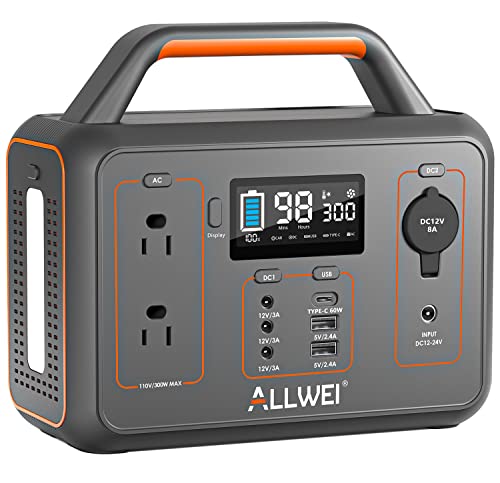
Use cases range from CPAP backup to RV trips. This ALLWEI model delivers 280Wh and a rated 300W, with a silent cooling fan to prevent overheating during longer CPAP sessions. It supports three charging methods: AC wall, car, and solar panel charging. In full sun, a 100W panel can recharge in roughly 3–4 hours, making it suitable for staking out a days-long camping setup. Nine output ports—including two AC pure sine wave outlets, USB-C PD 60W, multiple USB ports, and DC options—enable powering CPAP machines alongside phones, tablets, lights, and small appliances. The built-in LED light offers SOS mode for emergencies.
Important considerations: the device’s capacity is adequate for CPAP use over a night or two depending on machine settings and humidity/temperature. The MPPT controller enhances solar charging efficiency, and the multiple ports provide flexibility for travelers who rely on various devices. For extended trips, the higher capacity units in this guide may offer more margin, but the ALLWEI provides a balanced blend of portability and power for many camping scenarios.
Flashfish 200W Portable Power Station Review
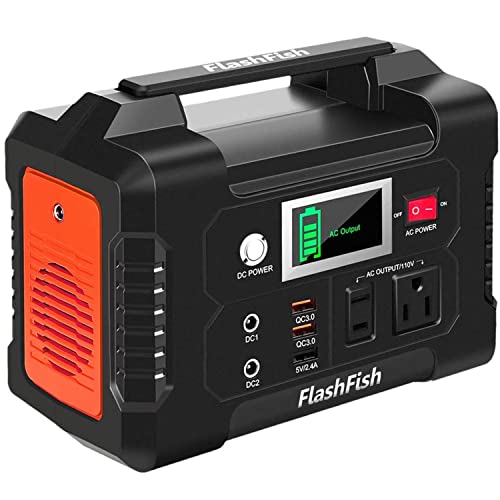
This compact generator offers 151Wh and a peak output of 400W, with a 110V AC outlet, 2 DC ports, and multiple USB options. It’s especially appealing for campers who prioritize light weight—about 4.07 pounds—with a built-in LCD that displays remaining capacity and output status. Its LED indicators and accessible controls make it straightforward to manage CPAP power, phones, cameras, and small electronic gear. Because it is lighter and less bulky, this unit is well-suited for shorter excursions where a small but reliable power reserve is enough.
Keep in mind that while 151Wh is sufficient for shorter CPAP runs, longer nights or higher heat settings can reduce run time. The absence of a dedicated MPPT controller means solar charging efficiency may vary, but flexibility remains with the available DC and USB ports for diverse charging sources.
MARBERO 300W Camping Power Station Overview

The MARBERO M82 series expands capacity to 237Wh and provides up to 300W continuous output (375W peak). Its multi-output design includes two AC outlets, DC ports, USB-A and USB-C, plus a DC output for devices needing stable 12–16.8V. The device emphasizes portability with a compact form factor and a lightweight build, suitable for backpacking and car camping. It also includes convenient LED lantern functionality, which can be a practical feature for night-time CPAP setup in a tent or RV portal. This model is a strong choice for campers who want a broad array of charging options in a single unit.
Note the CPAP compatibility considerations: check CPAP model requirements and ensure you have a CPAP adapter suitable for the unit. Battery health and cycle life may influence long-term reliability for frequent camping use.
EnginStar 300W Portable Power Station Review

The EnginStar unit weighs about 6.5 pounds and delivers 296Wh capacity with a robust 300W AC output. It features two 110V pure sine wave outlets, plus multiple DC outputs and USB-C fast charging. The battery management system emphasizes safety with protections against short circuits and overcharging, which is valuable for powering CPAP devices and other sensitive electronics during camping or emergency outages. Ergonomics and the multi-port setup support simultaneous device charging, making it suitable for larger camping groups or extended outdoor stays where several devices need power.
Renogy 266Wh CPAP Battery Overview

The Renogy option emphasizes 60W PD USB-C fast charging, enabling rapid power for laptops and high-demand devices. With 72,000 mAh at 266Wh, it can support multiple devices, including CPAP machines, simultaneously via USB-C PD, USB-A, and a DC output. It weighs a manageable amount for its capacity, and the 60W PD capability makes it an attractive choice for travelers who want efficient charging for modern devices. While it does not provide a direct AC outlet in this model, CPAP users who rely on DC adapters can still leverage this battery for off-grid runs, depending on their CPAP power supply compatibility.
Buying Guide: Key Purchase Considerations For Camping CPAP Power
1) Capacity And Run Time
CPAP machines vary in power draw. When choosing a unit, assess your nightly energy needs, including the CPAP heater, humidifier, and any accessory devices. A higher capacity (in watt-hours) generally translates to longer runs between charges, but adds weight and size. Plan for at least one night of CPAP use with a margin for weather or additional device charging.
2) Output Options
Look for units with dual 110V AC outlets (for CPAP and other devices), plus USB-C PD, USB-A, and DC ports. A mix of outputs enables charging laptops, phones, and CPAP adapters without needing extra accessories. If you rely on solar charging, ensure the unit has an efficient MPPT controller to maximize daytime recharging.
3) Charging Flexibility
Consider how you recharge: wall outlet, car charger, and solar panels. Solar compatibility is particularly useful for longer trips. Recharging duration varies by method and panel wattage; plan for slower solar replenishment on cloudy days and faster replenishment with sunny, stable conditions.
4) Portability And Build
Campers should balance capacity with weight and form factor. Some models emphasize compact, backpack-friendly designs, while others prioritize higher capacity with a heavier frame. A sturdy handle, rugged casing, and ease of transport can influence real-world usability on uneven terrain or in tents and RVs.
5) Safety, Certification, And Lifespan
Choose devices with built-in battery management systems (BMS) and certifications such as ETL or UL where applicable. A higher quality BMS extends cycle life and protects connected CPAP devices from voltage spikes. Consider warranty terms and expected cycle life for long-term camping plans.
6) Typical Running Scenarios
For CPAP-only use during a one-night trip, a model in the 200–300Wh range may suffice. For multi-night excursions, a higher-capacity unit (250–350Wh with ample AC outlets and USB-C PD) offers more headroom. If you frequently camp in hot or cold environments, pay attention to operating temperature ranges and battery efficiency under extreme conditions.
7) How To Use With CPAP
CPAP users should verify compatibility with their device’s power supply. Some CPAP machines require an AC outlet; others can operate on DC through a 12V or DC-DC adapter. Always check the CPAP’s power requirements and carry the official or a compatible adapter along with the portable power station.
8) Maintenance And Re charging
Regularly inspect cables and connectors, keep the unit dry, and charge fully before extended trips. If solar charging is used, ensure panels are clean and positioned to maximize sun exposure. Store units in a cool, ventilated area to preserve battery health over time.
These considerations help tailor a choice to travel style, CPAP model, and typical camping conditions. The five products highlighted above provide a spectrum of capacity, weight, and port configurations to fit diverse outdoor power needs without price emphasis.