
Compressed air vacuum generators provide a reliable suction source for handling delicate parts, lifting objects, and automated pick-and-place tasks. This guide highlights five top-performing options and explains what to look for when choosing a vacuum generator for your shop or small workshop. Each product is evaluated for build quality, ease of installation, noise, and maintenance needs to help you select the best fit for your application.
| Product | Brand | Key Benefit | Best For |
|---|---|---|---|
| CV-10HS Vacuum Generator | Walfront | Compact and sturdy aluminum design | Small parts handling |
| CV-25HS Compressed Air Regulator | Garosa | Versatile regulator with silencer | Industrial use with quieter operation |
| CV-20HS Vacuum Generator | Wal front | Lightweight, easy mounting | General purpose pickup |
| CV-20HS / Tiiyee Variants | Tiiyee | Durable aluminum construction | Long-term reliability |
| CV-15HS Vacuum Generator | YWBL-WH | All-round sealing and precise threads | Secure connections |
Walfront CV-10HS Pneumatic Vacuum Generator

The Walfront CV-10HS is designed for compact vacuum tasks, leveraging a robust aluminum alloy body that resists wear and tear. It emphasizes large air ventilation in a small footprint, making it suitable for benchtop use and automation setups requiring a light but reliable suction source. Features highlight simple mounting and durable construction, with threads engineered for secure connections. This unit is appropriate for lifting small components or holding parts during assembly without excessive air consumption.
Garosa CV-25HS Vacuum Generator with Silencer

The Garosa CV-25HS pairs a compact form factor with a 2.5 mm nozzle diameter, delivering dependable suction for delicate parts. Its precision threads ensure a firm, repeatable connection, while the included silencer reduces noise during operation—beneficial in crowded workshops or near workstations. The unit’s simple structure allows for straightforward mounting and maintenance, making it a practical choice for users who want reliable performance without complex setup.
Wal front CV-20HS Vacuum Generator

This Wal front CV-20HS emphasizes a sturdy aluminum alloy construction and precise threads for secure connections. It performs reliably in general vacuum tasks, offering a simple structure that makes mounting quick and maintenance easy. The design supports long-term use with confidence, making it a solid option for users who need a dependable vacuum source integrated into a compact system.
Tiiyee Pneumatic Vacuum Ejector CV 20HS

Tiiyee’s CV 20HS offers a compact aluminum alloy ejector with a muffled exhaust for quieter operation. The product emphasizes precise threaded connections and a robust build designed to resist wear. It is well-suited for applications requiring a durable, low-maintenance vacuum source with dependable performance over time, particularly in automation lines or CNC-assisted pick-and-place tasks.
YWBL-WH CV-15HS Vacuum Generator

The CV-15HS from YWBL-WH features all-round sealing and a compact aluminum alloy design. It emphasizes easy installation and maintenance, with precision threads to ensure a firm connection to piping. The polished or brushed finish adds to its aesthetic and durability, making it a practical option for users who require reliable performance in tighter spaces or integrated systems.
Hilitand AZH10BS-06-06 Pneumatic Vacuum Generator
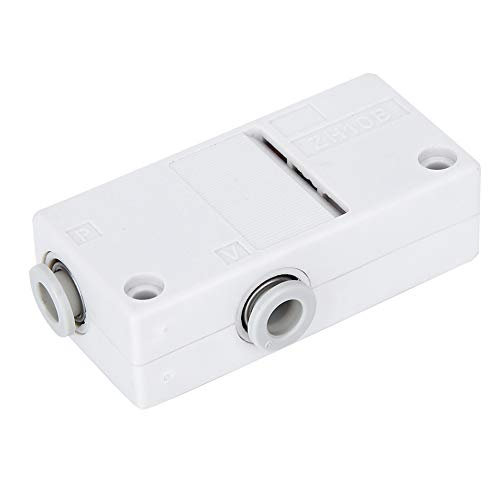
The Hilitand model presents a high-grade vacuum generator with a compact footprint and large air capacity. It is designed for straightforward installation and maintenance, making it accessible for users new to vacuum systems. It emphasizes economical operation, small size, and easy integration into various automation setups or handheld tools requiring a lightweight suction source.
Buying Guide: Key Purchase Considerations for Compressed Air Vacuum Generators
- Size and mounting options: Choose a unit that fits your workspace and can be mounted on a bench, robot arm, or fixture without crowding other components.
- Material and durability: Aluminum alloy construction improves wear resistance and reduces corrosion, increasing long-term reliability in busy environments.
- Air consumption and efficiency: Look for low air demand specifications to minimize operating costs while maintaining sufficient suction for your tasks.
- Connection standards and threads: Ensure threads match your piping or manifolds and that the connection remains secure during operation.
- Noise and silencing: Silencers or mufflers reduce noise footprint, which is important in open workshops or shared spaces.
- Maintenance and serviceability: Simple structures with accessible parts simplify routine maintenance and part replacement.
- Application compatibility: Consider nozzle diameter, suction cup compatibility, and whether the generator supports intermittent or continuous use in your process.
- Cost of ownership: Beyond initial price, factor in air consumption, wear parts, and expected lifecycle when comparing models.
Choosing the right compressed air vacuum generator depends on your specific tasks, from small-part handling to automated material transfer. Prioritize reliability and ease of maintenance while ensuring compatibility with your existing hoses, fittings, and control systems. The options highlighted above offer a range of capacities, materials, and configurations to help you balance performance with budget.