
Choosing the best circular saw for framing ensures your construction projects are both efficient and accurate. This article showcases five top circular saws tailored for framing tasks, highlighting their key features and benefits. For additional precision and ease in framing, we also include essential accessories like stair gauges and premium saw blades. Below is a summary table listing our selected products for rapid comparison.
| Product | Brand | Key Feature | Link |
|---|---|---|---|
| DEWALT FLEXVOLT 60V MAX Circular Saw (7-1/4″) | DEWALT | Left-oriented blade, 53° bevel | View on Amazon |
| Big Foot Tools 10-1/4″ Wormdrive Magnesium Circular Saw | Big Foot Tools | Magnesium build, 3-7/8″ cutting depth | View on Amazon |
| Milwaukee M18 6-1/2″ Cordless Circular Saw | Milwaukee | 3,500 RPM power, magnesium guards | View on Amazon |
| WEN 3625 5-Amp 4-1/2″ Compact Beveling Circular Saw | WEN | Bevel 0-45°, laser guide included | View on Amazon |
| Diablo 7-1/4″ Framing Saw Blade 10-Pack | Diablo | Perma-Shield coating, laser-cut vents | View on Amazon |
DEWALT FLEXVOLT 60V MAX 7-1/4-Inch Circular Saw for Framing

The DEWALT FLEXVOLT cordless circular saw combines power and convenience for framing projects. Designed with the blade on the left side of the motor and a rear-positioned handle, it offers a clear line of sight for accurate cuts. The electronic brake feature rapidly halts the blade once the trigger is released, promoting safety and efficiency on the job. A significant advantage is its bevel capacity of up to 53 degrees, with preset stops at 45 and 22.5 degrees—ideal for various angled cuts. The cordless design supports maximum mobility without sacrificing cutting power.
Big Foot Tools 10-1/4-Inch Wormdrive Magnesium Circular Saw
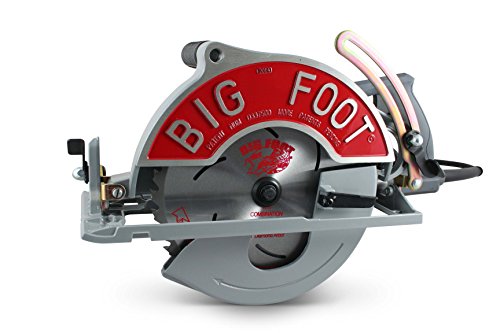
This heavy-duty wormdrive saw from Big Foot Tools offers superior performance on framing jobs requiring deep cuts. It features a 10-1/4 inch blade providing a cutting depth of 3-7/8 inches at 90 degrees, and 2-3/4 inches at a 45-degree bevel, perfect for thick lumber and dimensional framing materials. Constructed with lightweight magnesium parts, the saw weighs 16.59 lbs including the blade, which aids maneuverability versus heavier saws of its class.
Milwaukee M18 Cordless 6-1/2″ Circular Saw – BARE TOOL

Milwaukee’s M18 6-1/2 inch circular saw delivers strong cutting performance with a motor spinning at 3,500 RPM, allowing quick passage through tough framing components like LVL headers. It features magnesium upper and lower blade guards that improve durability and protect the blade during rigorous use. Additionally, the saw’s soft-grip handle enhances comfort and control, lowering user fatigue during extended cutting sessions.
WEN 3625 Compact 5-Amp 4-1/2-Inch Beveling Circular Saw with Laser
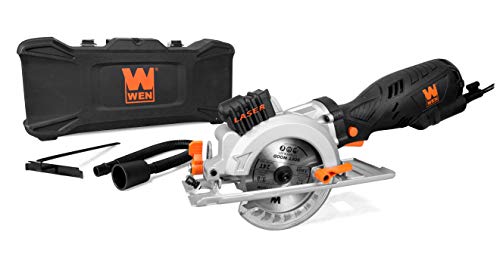
WEN’s 4-1/2 inch circular saw is an excellent option for framing and accessory cutting tasks requiring precision. It runs on a 5-amp motor and supports bevel cuts from 0 to 45 degrees, suitable for angled framing joints. One standout feature is the integrated laser guide which illuminates your cut line to improve accuracy. This compact saw excels in cutting a variety of materials including wood, tile, drywall, and PVC, adding versatility to framing projects.
Diablo 7-1/4″ Framing Saw Blade with Perma-Shield (10-Pack)

Diablo’s 7-1/4 inch framing blades are designed specifically to boost the performance of circular saws used in framing. The Perma-Shield non-stick coating reduces gumming, rust, and corrosion extending blade life. Laser-cut stabilizer vents minimize noise and vibrations while keeping the blade cool, reducing the chance of warping. These thin kerf blades enable smooth, fast, and clean cuts, essential for professional framing accuracy.
Buying Guide: Choosing the Best Circular Saw for Framing
Power Source: Corded vs. Cordless
Corded circular saws provide continuous power without battery limitations, making them ideal for long framing jobs without breaks. Cordless models offer superior portability and freedom of movement on job sites where power outlets are unavailable but ensure batteries have sufficient charge and power output for dense materials.
Blade Diameter and Cutting Depth
Framing often requires cutting through thick dimensional lumber, so a larger blade diameter, generally 7-1/4 inches or greater, allows deeper cuts (around 3-7/8 inches). Smaller blades reduce weight but limit cut depth, suitable for lighter framing or accessory tasks.
Bevel Capacity and Adjustability
A circular saw with versatile bevel settings, typically up to 45 or 53 degrees, permits angles necessary for complex framing assemblies like rafters or stair stringers. Look for saws with easy-to-set bevel stops for accuracy and speed.
Weight and Ergonomics
Heavy saws increase user fatigue, especially during overhead or repetitive cuts. Magnesium components reduce weight without sacrificing durability. Features like soft grip handles improve comfort and control, helping maintain precision over time.
Blade Quality and Replacement Options
The cutting blade greatly influences quality and speed. Premium carbide-tipped blades with non-stick coatings and stabilizer vents, such as those from Diablo or CRALY, improve cut cleanliness and blade longevity. Keep availability of replacement blades and accessories in mind.
Additional Features: Safety and Precision
Electronic brakes halt the blade quickly after release, reducing accident risks. Integrated laser guides assist in maintaining a straight cutting line, improving project accuracy. Compatibility with framing accessories like stair gauges further enhances performance.
Accessories and Compatibility
Consider complementary tools such as stair gauges that attach to framing squares to mark stringers and repetitive angles precisely. Brands like Cocowin and Miucoguier offer durable gauges compatible with carpentry squares, facilitating repetitive cuts and layout accuracy critical in framing jobs.