
When you’re cutting aluminum on a chop saw, you need blades designed for non-ferrous metals, fast heat dissipation, and burr-free finishes. This guide highlights five strong options and explains who each blade is best for, plus practical buying tips. Ideal buyers range from DIY hobbyists to professional metalworkers seeking reliable, long-lasting performance.
| Product | Material Focus | Size & Tooth Count | Arbor |
|---|---|---|---|
| TOYAKI 10-Inch Miter Saw Blade | Aluminum, Non-Ferrous Metals | 10″ diameter, 120-tooth | 5/8″ (16mm) |
| TOMAX 10-Inch 80-Tooth Blade | Aluminum, Non-Ferrous Metals | 10″ diameter, 80-tooth | 5/8″ |
| FOXBC 10-Inch 100-Tooth Blade | Aluminum, Non-Ferrous Metals | 10″ diameter, 100-tooth | 5/8″ |
| MAZING 12-Inch 100T Blade | Aluminum, Non-Ferrous Metals | 12″ diameter, 100-tooth | 1″ |
| Diablo 12-Inch 96T Blade (D1296N) | Aluminum, Non-Ferrous Metals | 12″ diameter, 96-tooth | 1″ |
TOYAKI 10-Inch Miter Saw Blade

Best for: Finishing aluminum and non-ferrous projects with a fine cut. The 120-tooth configuration is designed for ultra-fine finishes, especially on aluminum and plastics where precision matters. The 10-inch blade with a 5/8-inch arbor balances cutting accuracy with stable performance.
- Designed for Aluminum, Plastic, and Non-Ferrous Metals
- 120-Tooth for fine finishes and consistent cuts
- 2.8mm blade thickness for balance and rigidity
Who it’s for: Ideal for professionals and serious hobbyists who need smooth, burr-free edges on aluminum parts, and for projects requiring precision milling with minimal post-cut finishing. Caution: very fine teeth may wear faster on very dense materials or thicker gauge aluminum; use appropriate feed rate to preserve tooth life.
TOMAX 10-Inch 80-Tooth Blade

Best for: Durable, general-purpose aluminum and non-ferrous cutting where longer blade life is prioritized. The carbide teeth are designed for longevity in tough materials and the electrophoretic coating helps resist rust and corrosion.
- Ideal for Plastic, Aluminum, and Non-Ferrous Metals
- Construction-grade carbide teeth for longer life
- Electrophoretic coating reduces rust and corrosion
Who it’s for: Suitable for contractors and shop setups that prioritize durability and cost-per-cut efficiency. Limitation: the 80-tooth count is a balance between speed and finish; for ultra-fine finishes, a higher tooth count blade may be preferred for aluminum.
FOXBC 10-Inch 100-Tooth Blade
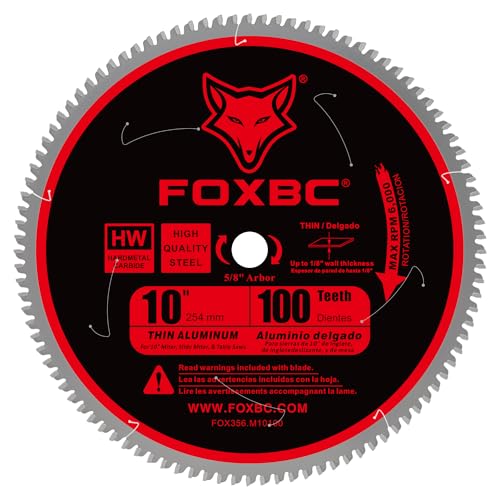
Best for: Thin aluminum sections and non-ferrous metals where a clean, burr-free edge is critical. The 0.095″ kerf and high-density carbide teeth deliver a smooth cut with reduced material waste.
- 10″ Diameter, 100-Tooth TCG
- 5/8″ Arbor; thin kerf for aluminum
- High-density tungsten carbide for toughness and wear-resistance
Who it’s for: Great for metal shops needing precise, repeatable cuts on thinner aluminum. Limitation: not ideal for very thick aluminum stock where a heavier tooth pattern would be more efficient.
MAZING 12-Inch 100T Blade
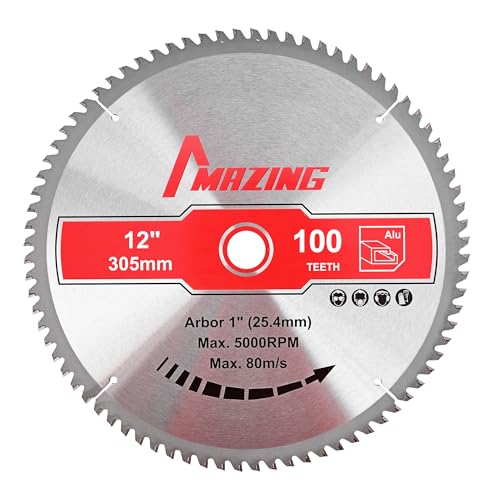
Best for: Heavy-duty aluminum and non-ferrous metal cutting with a reliable service life. This blade features triple chip grinding (TCG) for smoother, burr-free cuts and extended blade life.
- 12″ Diameter, 100T, 1″ Arbor
- TCG grind for smooth, fast cuts
- Max 5000 RPM; good wear and heat resistance
Who it’s for: Suitable for pro shops and serious DIYers tackling longer aluminum runs. Limitation: 12-inch blades require appropriate saw compatibility and clearance on smaller chop saws.
Diablo D1296N Aluminum Blade

Best for: Aluminum and non-ferrous metals with clean, burr-free finishes. The 96-tooth TCG design minimizes rework and is built for durability and impact resistance with tough brazing in place.
- 12″ Diameter, 96T, 1″ Arbor
- TCG tooth design for clean cuts
- Tri-Metal Shock-Resistant Brazing for durability
Who it’s for: Ideal for users who need reliable, precise aluminum cuts across a variety of non-ferrous materials. Limitation: some users may prefer a higher-tooth blade for ultra-smooth finishes on very thin stock.
Buying Guide: Key Considerations For Aluminum Chop Saw Blades
- Tooth pattern and count: Higher tooth counts (like 100T) yield smoother finishes, especially on aluminum; lower counts cut faster but may leave rougher edges.
- Kerf width: Thinner kerfs reduce material waste and heat buildup, beneficial for aluminum; thicker kerfs can remove more material but generate more heat.
- Arbor size: Ensure the blade matches your saw’s arbor (commonly 5/8″ or 1″); mismatches require adapters and can affect performance.
- Coatings and corrosion resistance: Electrophoretic coatings help prevent rust, extending blade life in humid or damp shop environments.
- TCG vs. standard grind: Triple Chip Grinding (TCG) blades excel at burr-free finishes on non-ferrous metals; standard grind blades are adequate for general cuts but may need extra deburring.
- Material compatibility: Verify blades are designed for aluminum and non-ferrous metals; using steel-specific blades on aluminum can cause poor finishes or rapid wear.
- Cutting environment: For thicker stock or hard alloys, a blade with robust carbide teeth and stiffer construction helps maintain accuracy and reduce chatter.
FAQ
- What blade is best for aluminum and non-ferrous metals? A high-tooth-count, carbide-tooth blade designed for aluminum, such as 100T or 96- to 100T TCGrind blades, typically delivers the cleanest cuts with less burr.
- Can I use a steel-cutting blade on aluminum? No—steel-blades are not optimized for aluminum and can gouge, dull quickly, and produce rough edges.
- Is a 12-inch blade necessary for aluminum work? A 12-inch blade is useful for longer cuts or thicker stock, but ensure your saw can accommodate the larger blade and that RPM ratings align with your tool.
- What is kerf and why does it matter? Kerf is the blade width that becomes waste material; thinner kerf blades reduce waste and heat, improving efficiency when cutting aluminum.
- Should I choose a blade with coating? Yes, coatings help resist rust and corrosion, improving blade longevity in metalworking environments.
- Do blades differ for miter saws vs. chop saws? Some blades are labeled for both; verify compatibility with your tool’s arbor, RPM, and intended material to ensure optimal performance.