
Answering the most common buyer question: which brush set is best for painting doors and trim? This guide highlights five Amazon options that excel at cutting-in, edge work, and producing a smooth, streak-free finish on doors, frames, and adjacent surfaces. Each pick targets different needs—compact interiors, fast coverage, or detailed edge work—so you can choose the right tool for your project. The following table summarizes the featured products for quick comparison.
| Product | Best For | Key Benefit |
|---|---|---|
| Pro Grade 5-Piece Brush Set | General interior & exterior doors | Complete range of sizes; premium bristles; stain and paint compatibility |
| Pro Grade 2 Inch Angled 3-Pack | Cutting in around trim and frames | Three brushes for precise edges |
| Genixart 3-Inch Chip Paint Brush | Large door panels and fences | Wide coverage; versatile for stains and varnishes |
| Bates Trim 3-Piece Set | Fine trim and molding work | Ergonomic handles; varied small sizes |
| Bates 6 Pack Brushes | General interior projects | Mix of flat and angled bristles for versatility |
When selecting a brush for doors, consider: bristle material and stiffness, handle comfort for long sessions, brush sizes that fit door panels and frames, and compatibility with your finish (latex, oil, stain, or primer). The following sections break down each option and explain who it’s best for and why it was chosen.
Pro Grade 5-Piece Brush Set
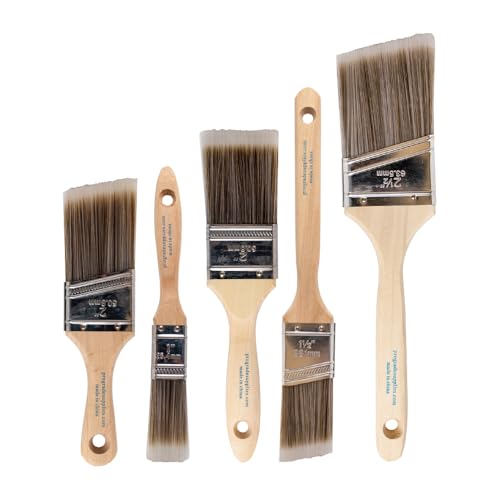
This complete set includes 1 Inch Flat, 1.5 Inch Angle, 2 Inch Flat, 2 Inch Angle Stubby, and 2.5 Inch Angle brushes. Best for doors, walls, trim, cabinets, and detailed cutting-in work. The kit provides professional-grade performance at a fraction of the cost of buying individually. Best for homeowners tackling multiple door projects or DIY enthusiasts who want versatile coverage in one purchase.
Best for: general door painting and trimming tasks, DIYers needing a broad brush assortment. Limitation: the 1 inch and 2 inch tools may require switching for very tight interior angles in complex door frames.
Pro Grade 2 Inch Angled Paint Brush (3 Pack)

Designed for precision cutting-in around trim, baseboards, ceilings, and corners. This 3-pack provides three 2-inch angled sash brushes for multiple rooms or repeat projects. Best for: doors with adjacent trim or when you need consistent edge control across several doors. Caution: angled brushes may feel short for wide door panels if you’re not comfortable with tighter lines.
Bates 6 Pack Brushes

This set includes three flat brushes (1″, 1.5″, 2″) and three angled brushes (1.5″, 2″, 2.5″). The natural bristles hold more paint for smoother finishes with fewer streaks. Best for: completing larger door panels and adjacent walls quickly. Limitation: natural bristles can wear faster with heavy oil-based coatings; ensure you select the right finish compatible with the bristles.
Genixart 3-Inch Chip Paint Brush

With a 3″ width, this brush is ideal for both furniture and fences, offering broad coverage for doors and large panels. It works well with water-based and oil-based paints, stains, and sealers. Best for: quick seaming over larger door surfaces or when finishing exterior doors. Caution: wider strokes can leave texture if not loaded evenly.
Bates Trim 3-Piece Set

Two trims and a finer 3/4 inch option deliver precise control for molding, door casings, and narrow trim work. Best for: detailed door edges and perfecting tight corners. Limitation: smaller sizes require careful handling for long, straight door panels to avoid fatigue.
Bates Trim And Detail Set (6 Pack Alternative)
A versatile mix of flat and angled brushes suited for walls, trims, doors, and furniture. Best for: homeowners who want a single kit that covers most door finishing needs. Caution: ensure you choose the correct finish compatibility for best results on delicate surfaces.
Buying Guide
What brush size should I choose for doors?
- For doors with heavy panels: 2″ to 2.5″ angled or flat brushes work well for larger surfaces.
- For trim and sashes: 1″ to 1.5″ angled brushes provide crisp lines and control.
Which bristle type matters?
- Natural bristles: good for oil-based finishes and stains but can shed and wear faster with heavy use.
- Synthetic filaments (oil- and water-based compatible): offer durability and smooth release of paint; ideal for latex and acrylics on doors.
How many brushes do I need?
- For a typical interior door project, a small angled brush (2″) plus a few smaller detail brushes covers most edges and panels. Consider a larger flat brush (2.5″–3″) for broader surfaces on exterior doors or composite panels.
Care tips for longevity
- Clean brushes promptly after use according to the finish type.
- Store bristles in their natural shape and avoid bending the ferrule.
FAQ
- Q: Which brush is best for door edges? A: Angled sash brushes around 2 inches provide crisp cuts along door frames.
- Q: Can I use the same brush for paint and stain? A: Synthetic brushes work well with both water- and oil-based finishes; check bristle compatibility with your product.
- Q: Are smaller brushes needed for interior doors? A: Yes, 1″–1.5″ brushes are helpful for tight corners and window sashes.
- Q: Do I need a complete set? A: A 3–5 piece set often suffices for most door projects, with extra brushes for detail work as needed.
- Q: What about cleanup? A: Rinse with water for latex paints and use mineral spirits for oil-based finishes, then reshaped and air-dried.
- Q: How should I choose between flat and angled brushes? A: Use angled brushes for trimming and cutting-in; flat brushes are better for broad surfaces and base areas.