
If you’re shopping for a benchtop drill press for metal, you want a model that delivers steady torque, precise holes, and durable construction. This guide highlights five solid options that balance power, accuracy, and price. The best choice depends on your material, project size, and workspace. Below, you’ll find quick product comparisons and practical buying considerations to help you pick confidently.
Summary of selected products
- WEN 12-Inch DP1263V — Best for precise metal drilling with variable speed control and digital readout.
- SKIL DP9505-00 — Best for alignment accuracy and laser-guided drilling on mixed materials.
- WEN 4208T — Best budget choice with reliable performance for light-to-moderate metal work.
- QD-KYOHO 10-Inch — Best for stepless speed control, laser alignment, and LED visibility in a cast-iron frame.
- VEVOR 3.2-Amp, 5-Speed — Best for versatile speeds and tilting worktable for complex drilling setups.
WEN 12-Inch Benchtop Drill Press DP1263V
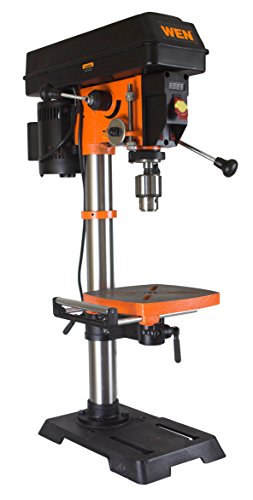
Features a 6.2-amp induction motor, a 12-inch swing, and a 3-1/8-inch spindle travel. It offers adjustable speed from 580 to 3100 RPM and a digital speed readout for maximum precision. Best for metalworkers who need fast setup, clear RPM feedback, and robust cast-iron construction.
Who it’s best for: hobbyists or small shops that require precise, repeatable metal drilling with an easy-to-read speed display. Why selected: high power in a compact frame with digital readout supports consistent hole placement. Caution: ensure adequate table clearance for large workpieces due to the 12-inch swing.
SKIL 6.2 Amp 10 In. 5-Speed DP9505-00

Powerful 6.2-amp induction motor with a 10-inch swing and 5 speeds (610–2800 RPM). Laser alignment system helps ensure precise drilling paths, and onboard LED/work light aids visibility. Best for mixed-material tasks where alignment accuracy is critical.
Who it’s best for: metal and wood projects requiring precise alignment. Why selected: reliable laser system and general-purpose speed range make it versatile. Caution: larger workpieces may require extra table support due to the 10-inch swing limit.
WEN 4208T 2.3-Amp 8-Inch DP
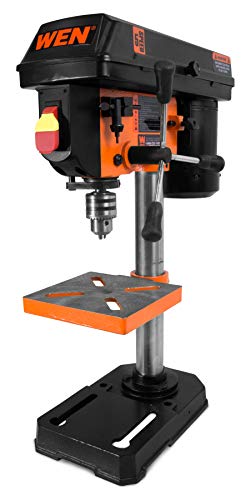
This model uses a 2.3-amp induction motor with an 8-inch swing and 2-inch spindle travel. It includes a 1/2-inch keyed chuck and onboard key storage, and it runs at five speeds from 740 to 3140 RPM. Best for budget-minded users handling smaller metal and light-duty drilling tasks.
Who it’s best for: beginners or hobbyists working on light metal projects. Why selected: value-driven choice with essential features and compact footprint. Caution: lower power makes it less ideal for heavy metals or thick steel drilling.
QD-KYOHO 10-Inch Benchtop Drill Press
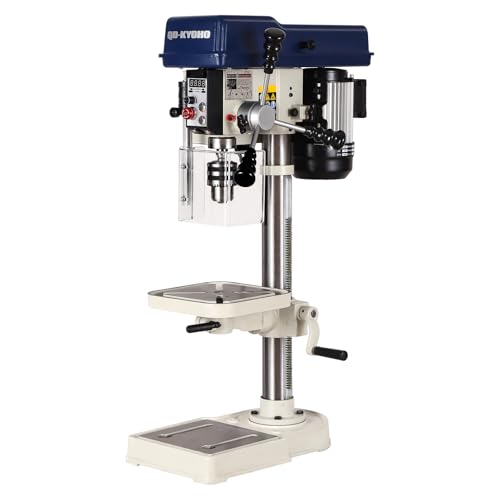
Equipped with an intelligent stepless speed adjustment using a high-performance inverter. Speed ranges from 50–650 RPM and 650–3000 RPM. It features a 10-inch swing, 2-3/8 inches of spindle travel, a 5/8-inch chuck, laser alignment, and bright LED lighting. Best for projects that demand very fine speed control and visibility.
Who it’s best for: metalworking or precision drilling where a wide speed spectrum matters. Why selected: stepless control and integrated laser/LED guidance improve accuracy. Caution: heavier weight and extra setup time may be needed for taller pieces due to table design.
VEVOR Benchtop Drill Press, 3.2 Amp

3.2-amp motor with five-speed adjustment (650–3100 RPM) and a 10-inch swing. Solid cast iron frame provides stability. Tilts the worktable for angled holes, supporting both wood and metal drilling tasks. Best for flexible setups where angled drilling or varied-speed operation is common.
Who it’s best for: DIYers needing a compact, tilt-capable press with a decent speed range. Why selected: combination of tilt table and multiple speeds helps accommodate unusual drilling angles. Caution: ensure the base is level on a busy workbench to minimize vibration during heavy cuts.
Buying Guide: How To Choose The Right Benchtop Drill Press For Metal
- Power and Torque: For metal, a higher amperage motor (at least 2.3–6.2 A) provides better torque, especially with thicker or harder metals.
- Swing and Travel: A larger swing (8–12 inches) and deeper spindle travel support larger workpieces and deeper holes.
- Speeds and Controls: Multiple speeds help adapt to metal types and bit sizes. Look for belt or electronic speed control with clear readouts.
- Laser and Lighting: Laser guides improve hole alignment; LED lighting reduces shadows on the work surface.
- Construction: Cast iron frames and bases reduce vibration and improve accuracy over time.
- Table Features: Tilting or rotating worktables enable angled drilling and better alignment for complex parts.
- Chuck Size and Storage: Common 1/2-inch chucks cover many bits; onboard storage helps with organization on small benches.
- Footprint and Weight: Ensure the model fits your bench and won’t tip during heavy cuts.
Practical comparisons
- Best for precision with digital RPM readouts: WEN DP1263V
- Best for laser-assisted alignment: SKIL DP9505-00 and QD-KYOHO 10-Inch
- Best budget option for metal basics: WEN 4208T
- Best flexible setup with tilting table: VEVOR 3.2-Amp
Frequently asked questions
- What is the typical spindle travel needed for metal drilling? Answer: A travel of 2 inches or more is common for metal work, with longer travels useful for deep holes.
- Is a laser guide essential for metal drilling? Answer: Not essential, but it helps with alignment and repeatable hole placement on most metal projects.
- Should I prefer a cast iron frame? Answer: Yes, cast iron improves rigidity and reduces vibration, which enhances accuracy in metal drilling.
- What speeds matter most for steel vs aluminum? Answer: Aluminum generally benefits from higher speeds; steel often requires moderate to lower speeds to maintain cutting efficiency and bit life.
- Is a belt-driven or electronically controlled speed system better? Answer: Both have merits; electronic (inverter) control offers smooth stepless adjustments, while belt systems provide straightforward, rugged changes.
- How important is the table for metal drilling? Answer: Very important; a sturdy, tilting table helps with alignment and allows angled holes without shifting the workpiece.