
Emergencies and outages demand reliable, safe, and scalable backup power. This guide highlights top battery generators that balance capacity, charging speed, portability, and safety features for home use. Each option below is chosen for American households seeking dependable power during outages, off-grid moments, or outdoor adventures. Compare capacity, charging speed, and expandability to find the best fit for your home backup plan.
Product Overview
Below is a quick snapshot of five leading battery generators tailored for home backup and everyday reliability. The table helps visualize capacity, peak output, and notable features across brands to support informed decisions.
- Anker SOLIX F2000 Portable Power Station — 2400W output, LiFePO4 chemistry, long lifespan.
- Jackery HomePower 3000 Portable Power Station (with solar panels option) — 3600W continuous, 3072Wh, reliable UPS.
- EF ECOFLOW Delta 2 — 1800W AC, expandable up to 3kWh with extra batteries, fast recharge.
- Anker SOLIX C1000 — 1800W (2400W peak), compact LiFePO4 unit, fast full charge.
- Jackery Explorer 2000 v2 — 2200W total, 2042Wh, compact for the power it delivers.
Product 1 — Anker SOLIX F2000 Portable Power Station
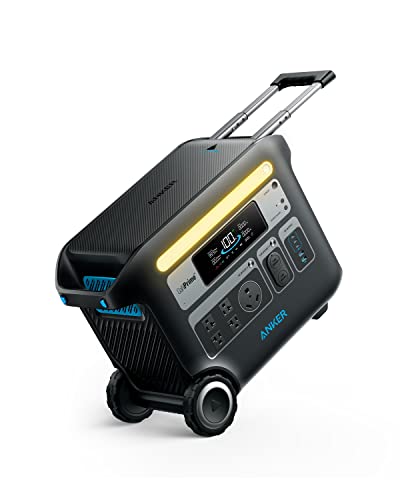
The Anker SOLIX F2000 is designed for robust home backup with high output and a long-lasting LiFePO4 battery platform. Its InfiniPower technology emphasizes extended lifespan, making it a practical long-term investment. The unit supports heavy workloads and can power multiple devices simultaneously, which is valuable during power outages or camping trips. Its compatibility with solar inputs and fast recharging modes makes it versatile for both indoor and outdoor use.
Key considerations include the 2400W continuous output capability and RV-ready ports, enabling power-hungry appliances to run without interruption. The system is built to manage surges smoothly, reducing the risk of overload when multiple devices start at once. If your home relies on critical electronics, this model’s reliability and rapid recharge capabilities help minimize downtime.
Product 2 — Jackery HomePower 3000 Portable Power Station

The Jackery HomePower 3000 delivers substantial home backup capability, featuring a 3600W continuous output (7200W surge) and a 3072Wh LiFePO4 battery. This level of capacity supports essentials such as refrigerators, WiFi routers, lights, and small medical devices for extended periods during outages. An example benefit is its ability to power a household for up to 15 hours under typical loads, which can be a critical difference in adverse weather or grid interruptions. The integrated UPS can switch in under 20 milliseconds, maintaining continuous service for sensitive devices.
Important considerations include tax incentives for solar readiness and the option to add solar panels for off-grid charging. With the large capacity, users may need a plan for storage and placement within the home or garage to ensure easy access during emergencies. The brand’s reputation for reliability and customer support also factors into a long-term purchase decision.
Product 3 — EF ECOFLOW Delta 2 Portable Power Station

The Delta 2 from EF ECOFLOW emphasizes rapid charging and scalable capacity. It offers 1800W AC output with LiFePO4 chemistry, which contributes to a longer lifespan and safer operation. The device supports a fast 0-80% charge in about 50 minutes and up to 100% in roughly 80 minutes when plugged into AC. For home backup, its expandability with optional additional batteries makes it adaptable to larger loads or longer outages. The Delta 2 provides a broad set of outlets to accommodate multiple devices—from laptops to home appliances—without relying on a noisy generator.
In evaluating this model, consider the trade-off between compact size and total energy capacity. While it provides robust performance for typical household needs, larger homes with high daily energy use might require battery expansion. Its user-friendly interface and pass-through charging capabilities also benefit everyday use and quick top-ups between outages or camping trips.
Product 4 — Jackery HomePower 3000 Portable Power Station (Solar Panel Optional)

This variant of the Jackery HomePower 3000 emphasizes essential home backup with a similar high-output profile and UPS capability. The 3600W continuous output, paired with a 3072Wh LiFePO4 battery, supports core appliances during outages. The product is designed for reliable performance, ensuring your fridge, router, lights, and other critical devices continue to operate. The option to pair with solar panels enhances energy resilience, enabling daylight charging for longer independence from the grid.
When choosing, consider whether you need a compact form factor, the weight and portability for different rooms or locations, and the potential savings from solar charging. The unit’s lower noise profile compared with gas generators is another practical advantage, particularly for indoor use or quiet environments.
Product 5 — Anker SOLIX C1000 Portable Power Station

The Anker SOLIX C1000 is a compact solution for home backups and on-the-go power, featuring an 1800W output with a 2400W peak and a LiFePO4 battery rated for long life. Full charging occurs rapidly, with a charging cycle designed to refresh to full capacity in under an hour using UltraFast charging in the app. The device integrates multiple ports across 10 outlets, supporting diverse devices from smartphones to small appliances, while maintaining portability for easy room-to-room use and emergency mobility.
Considerations include the unit’s portability and how its 1,024Wh capacity matches your typical load profile. If your home requires longer runtimes for essential circuits, pairing with a larger system or adding a second unit could be beneficial. The ease of recharging and smartphone app integration can streamline daily usage and rapid top-ups during outages.
Buying Guide: Key Purchase Considerations
- Capacity vs. Household Load: For fridges, sump pumps, Wi-Fi routers, and essential lighting, target a battery with enough watt-hours (Wh) to cover your typical outage duration. A larger capacity helps during longer events, but it comes with a heavier footprint.
- Continuous vs. Peak Power: Continuous output power (in watts) determines how many devices can run simultaneously. Peak (surge) power matters for devices with startup surges like refrigerators and power tools. Choose a model with more peak capacity than your devices’ startup needs.
- Battery Chemistry and Lifespan: LiFePO4 chemistry offers longer lifecycles and improved safety. Look for units rated for thousands of charge-discharge cycles to maximize long-term value.
- Charging Speed and Options: Fast recharging minimizes downtime. Consider AC charging speed, solar compatibility, and the potential for vehicle (DC) charging if you need flexibility in an outage.
- Expandability: Some systems allow adding extra batteries to boost overall capacity. If future power needs may grow, select a model with expandable options.
- Port Variety and Accessibility: A broad mix of outlets—AC, USB-C, USB-A, and car ports—covers a wide range of devices. Adequate port availability prevents the need for multiple adapters.
- Portability vs. Home Installation: Lighter units are easier to move between rooms or take on trips, while heavier, higher-capacity models deliver longer backup times with the trade-off of portability.
- Warranty and Support: A solid warranty and accessible customer support reduce risk if you encounter performance issues or component failures.
Additional Considerations: How To Choose The Right System
Home backup needs vary by household size, climate, and energy consumption. For critical circuits (refrigeration, medical devices, communications), aim for uninterrupted operation with a dependable UPS and sufficient surge capacity. If your area experiences frequent outages, solar readiness and expandability become more valuable. For campers or RVers, portability and a compact footprint may take precedence, even if a smaller battery means shorter outage runtimes. In all cases, verify the availability of customer support and ensure the system integrates with your existing solar setup if you plan to rely primarily on solar charging.