
The following guide highlights five top UPS and battery backup units designed to protect your computers, networking gear, and essential electronics during outages. Each product offers a different balance of capacity, runtime, and features to fit small offices, home workstations, and media setups. Below is a concise comparison to help you choose a reliable backup power solution.
| Product | Brand | Capacity | Key Strength |
|---|---|---|---|
| APC BE600M1 Back-UPS | APC | 600VA / 330W | Six battery-backed outlets; USB charging |
| GOLDENMATE 1000VA/800W Lithium UPS | GOLDENMATE | 1000VA / 800W | LiFePO4, long lifespan, low-noise cooling |
| APC BX1500M Backup Power | APC | 1500VA / 900W | High runtime, multiple outlets with data protection |
| CyberPower CP1500PFCLCD | CyberPower | 1500VA / 1000W | Pure sine wave, USB-C/USB-A charging, LCD |
| APC BE650G1 Backup Power | APC | 650VA / 390W | Compact, Ethernet dataline protection |
APC BE600M1 Back-UPS 600VA
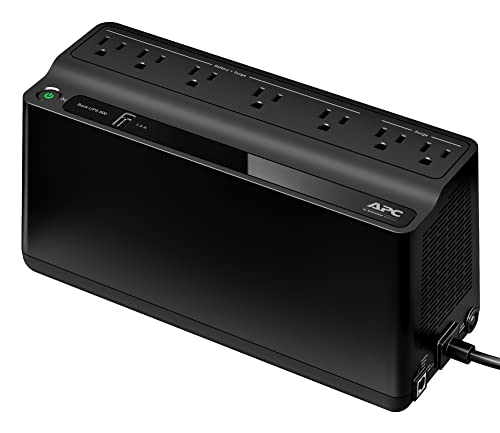
The APC BE600M1 delivers 600VA / 330W of backup power with seven outlets, five of which provide battery backup and surge protection, plus two protection-only outlets. It includes a USB charging port for mobile devices and small electronics. This compact unit is suitable for a single workstation, home office, or media setup needing immediate protection against outages and voltage fluctuations. Its straightforward design emphasizes reliability and ease of use, making it a practical choice for basic backup needs without overcommitting space or budget.
GOLDENMATE 1000VA/800W Lithium UPS

This Lithium UPS uses LiFePO4 batteries, offering an extended lifespan of over 10 years with more than 5000 charge cycles. It provides eight NEMA 5-15 outlets with both surge protection and battery backup, plus a built-in Battery Management System (BMS) and cooling system. The device aims for low noise (under 50 dB) and efficient cooling, which helps it operate quietly in office or home environments. It is well-suited for computers, workstations, network devices, and telecom equipment that require reliable, long-lasting backup power with reduced maintenance costs.
APC BX1500M Backup and Surge Protector

The APC BX1500M provides 1500VA / 900W capacity, making it suitable for larger home offices or small workstations with multiple devices. It features ten outlets, of which five offer battery backup and surge protection while the remaining five provide surge protection only. It includes data protection via a dedicated network/dataport and a six-foot power cord. This model is compatible with Windows UPS management software, offering a familiar setup for power monitoring and graceful shutdowns during outages, which helps protect important work and data.
CyberPower CP1500PFCLCD PFC Sinewave UPS

The CyberPower CP1500PFCLCD is a 1500VA / 1000W UPS with a pure sine wave output, designed to support active PFC and conventional power supplies. It provides twelve NEMA 5-15 outlets, including six battery-backed outlets and six surge-protected outlets. The unit includes dual interface USB ports (Type-A and Type-C) for fast device charging and a color LCD panel that presents real-time battery and power information. This model is ideal for protecting computers, NAS devices, gaming PCs, and home entertainment systems that demand stable power and visibility into power conditions.
APC BE650G1 Backup Power

The APC BE650G1 offers 650VA / 390W of backup power, with eight outlets split evenly between battery-backed and surge-protected-only. It also features Ethernet dataline protection to shield connected devices from network surges. This compact unit is well-suited for a small home office setup, protecting a basic array of devices such as routers, modems, and a few essential peripherals. While smaller than higher-capacity models, it provides reliable surge protection and a controlled shutdown for critical gear during outages.
Buying Guide: Key Purchase Considerations And Comparisons
- Capacity and runtime: Determine how many devices you need protected and for how long. Higher VA/W ratings like 1500VA/1000W models typically support multiple devices for longer outages, while smaller units like 600VA are ideal for essential protection of a single workstation.
- Output waveform: For sensitive electronics and power supplies with active PFC, a pure sine wave UPS (like CyberPower CP1500PFCLCD) provides cleaner, more stable power than a simulated sine wave unit.
- Number and type of outlets: Consider how many outlets offer battery backup versus surge protection. Some models add convenience features like USB charging ports or network protection.
- Battery technology and lifespan: Lithium-based backups (LiFePO4) generally offer longer lifespans and lower total cost of ownership than traditional lead-acid, though at higher upfront costs.
- Management and monitoring: Look for LCD displays, software integration, and data protection features such as dataline protection. These help monitor power conditions and orchestrate safe shutdowns during outages.
- Noise and cooling: Some lithium UPS units emphasize quiet operation, which is beneficial for home environments and quiet offices. Cooling mechanisms help stability under heavy load.
- Maintenance and replacement: Check whether batteries are user-replaceable or service-replaceable. Some models require professional service for battery replacement, impacting total ownership.
- Form factor and placement: Compact designs fit under desks or on shelves, while larger units may require dedicated equipment racks or floor space.
Additional Considerations
When selecting a backup power solution, weigh the importance of seamless system shutdowns, data protection, and device compatibility. Consider future expansion needs, such as additional peripherals or a network-attached storage array, to ensure the UPS you choose can scale with your setup. Voltage compatibility and local electrical codes should also guide your decision. Finally, verify warranty coverage and accessible service options to maintain reliability over the unit’s lifespan.