
Choosing a powerful, efficient, and easy-to-use battery backpack blower can transform yard maintenance. This guide compares top cordless models, highlighting performance, runtime, and ergonomics to help you pick the right tool for the job. The selections below focus on high CFM and MPH, long run times, and feature-rich designs suitable for American lawns and driveways.
style=”display:none;”>Summary Table of Selected Products: WORX Nitro WG572 80V, Greenworks 80V, EGO LB6003, Greenworks 40V Dual Port, Milwaukee M18 FUELTRADE
| Product | Brand | Key Power | Max Air | Notes |
|---|---|---|---|---|
| WORX Nitro WG572 80V | WORX | 80V (4x20V) | 800 CFM / 150 MPH | BaseCamp charger, long runtime |
| Greenworks 80V | Greenworks | 80V | 610 CFM / 180 MPH | Brushless motor, efficient |
| EGO LB6003 | EGO Power+ | 56V | 600 CFM / 145 MPH | Hybrid runtime, adjustable |
| Greenworks 40V Dual Port | Greenworks | 40V | 710 CFM / 175 MPH | Dual battery ports, extended run |
| Milwaukee M18 FUELTRADE | Milwaukee | 2x M18 | 650 CFM / 155 MPH | Low noise, adjustable harness |
WORX Nitro WG572 80V Cordless Backpack Blower

The WORX Nitro WG572 operates on an 80V power system using four batteries, delivering up to 800 CFM and 150 MPH. This model is designed to replace gas blowers with a quieter, cleaner electric solution while maintaining strong debris clearance. A BASECAMP power hub stores the four batteries and serves as a 4-port charger, enabling simultaneous charging and tool compatibility within the WORX PowerShare ecosystem. Runtime varies by setting, reaching up to 230 minutes on low with all batteries, and around 21 minutes on Turbo when pushed to max power.
Greenworks 80V Backpack Blower, 610 CFM
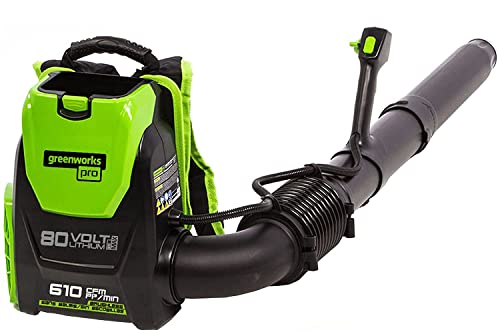
Greenworks’ 80V option provides up to 610 CFM and 180 MPH in a brushless design, delivering gas-like performance with the efficiency of batteries. The variable speed trigger and turbo button offer on-demand power for wet leaves or dense debris. This model emphasizes straightforward operation and reliable performance across various yard conditions, making it suitable for homeowners who want strong air movement without fuel or fumes.
EGO POWER+ Backpack Leaf Blower LB6003

The EGO LB6003 delivers up to 600 CFM and up to 145 MPH, with a runtime of up to 180 minutes on a single charge using the included 7.5Ah battery. It supports all EGO 56V ARC batteries and provides a variable speed trigger plus an adjustable tube that adapts to user height and stance. This model emphasizes long runtimes, flexible control, and the ability to power through damp or dense debris while keeping noise moderate for neighborhood use.
Greenworks 40V Dual Port Backpack Blower

This Greenworks model uses a 40V system with a dual-port battery design, effectively doubling run time by allowing two batteries to power the blower either in parallel or as separate power sources. It delivers 710 CFM at 175 MPH, enabling robust performance for large properties and heavy debris. The dual-port setup suits users who value extended sessions without frequent recharges and want a lighter, manageable tool for routine cleanup.
EGO Power+ LB6504 Backpack Blower

The LB6504 offers up to 650 CFM and up to 180 MPH, plus up to 90 minutes of runtime with the included 5.0Ah battery. It features a variable speed trigger with a lock-on dial for steady airflow and improved control during long cleanup sessions. The display provides real-time battery status, aiding maintenance planning and ensuring consistent performance during extended yard work.
EGO Power+ LB8803-2 Backpack Blower

The LB8803-2 reaches 880 CFM with up to 200 MPH in turbo mode, designed for heavy, extensive cleanup. It comes with two 4.0Ah batteries and a charger, delivering up to 90 minutes of runtime depending on settings. A digital display tracks blower performance and battery status, enabling careful monitoring during demanding yard tasks. This model suits users with large properties seeking maximum air output and a quick return to service after extended runs.
Buying Guide: Key Purchase Considerations
- Air Volume and Speed: Look for CFM for airflow and MPH for air velocity. Higher numbers improve debris clearing, especially in wet or thick piles, but may sacrifice runtime if powered by a smaller battery.
- Battery System and Runtime: Consider whether the blower uses a broad power platform (like 80V or 56V) or a more compact 40V system. Dual-port or multi-battery designs extend run time for longer cleanup sessions, while a larger battery may add weight.
- Weight and Ergonomics: Backpack blowers should distribute weight evenly and provide a comfortable harness. Fully adjustable shoulder straps and a balanced center of gravity reduce fatigue during extended use.
- Runtime Versus Power Settings: Many models offer Turbo or high-power modes with shorter runtimes. For daily maintenance, mid-range power often provides a better balance of effectiveness and endurance.
- Maintenance and Longevity: Brushless motors typically deliver better efficiency and longer service life. Look for durable housings, easily replaceable parts, and compatibility with an ecosystem of tools if you plan to expand beyond a single brand.
- Noise Levels: Gas alternatives can be quieter than traditional blowers, but battery models still vary in sound. Consider if quiet operation is important for neighborhood settings or late-day use.
- Compatibility and Expandability: If you already own tools from a particular brand, a PowerShare or similar ecosystem can maximize value by sharing batteries across tools.
- Maintenance Footprint: Battery health matters. Favor models with clear battery indicators, straightforward charging solutions, and accessible maintenance steps to prolong overall performance.
In choosing a battery backpack blower, weigh your yard size, typical debris, and preferred operating duration. For large properties with damp leaves, models offering higher CFM and robust turbo capability are advantageous. For smaller to mid-size lawns, a lighter model with solid runtime and straightforward controls may be more practical. Ecosystem flexibility and battery availability are also important considerations to minimize ongoing costs over time.