
Answering the search for reliable basement sealing options, this guide highlights five concrete sealers that address moisture, leaks, and cracks in basements and foundations. Each product is evaluated for who it’s best for, how it performs, and practical trade-offs. This selection favors solutions suitable for DIY homeowners, landlords, and professional remodelers seeking durable basement waterproofing without overcomplication. The following table compares key aspects to help you choose quickly.
| Product | Best For | Key Benefit | Notes |
|---|---|---|---|
| Liquid Rubber Basement and Foundation Repair Sealant (5 Gal) | Large basement projects, foundations, and outdoor below-grade areas | Permanent waterproof membrane with 900% elongation | Best for major leaks and flexible, long-lasting protection |
| RadonSeal Plus Concrete Sealer (5 Gal) | Continual moisture control in basements and block foundations | Deep-penetrating internal seal to reduce moisture intrusion | Excellent long-term interior sealing |
| DAP Concrete and Mortar Filler and Sealant (Gray, 10.1 oz) | Crack filling for small to medium repairs | Ready-to-use filler with quick return to service | Ideal for quick, non-structural fixes |
| Ames Block & Wall Liquid Rubber Waterproofer (1 Gal) | Smaller DIY projects and as a primer/coat for basements | White coating with rubberized waterproofing properties | Made in the USA; simple application |
| 1 Gallon Concrete Sealer, OAIEGSD | Outdoor driveways, patios, and indoor spaces with moderate moisture | Penetrating, water-based silane-siloxane sealer | Low odor and VOC-friendly option |
Liquid Rubber Basement and Foundation Repair Sealant

The Liquid Rubber 5-Gallon kit is designed for large-scale basement waterproofing and foundation repair. It claims a permanent waterproof membrane with high elasticity (900% elongation) to absorb movement and prevent leaks. This product is best for buyers tackling active leaks, moisture problems, or as part of a complete basement waterproofing system. It is described as compatible with self-leveling concrete and suitable for indoor and outdoor use, making it a flexible option for basements, showers, planter boxes, and foundation walls.
Who it’s best for: homeowners dealing with significant water intrusion or those seeking a long-term waterproofing membrane rather than surface coatings. Why selected: its high elongation and strong adhesion to concrete, masonry, wood, and metal help address both cracks and recurring moisture. A potential limitation: the product is a large 5-gallon container, which may be more than needed for small projects, and surface preparation is critical for best results.
RadonSeal Plus Concrete Sealer
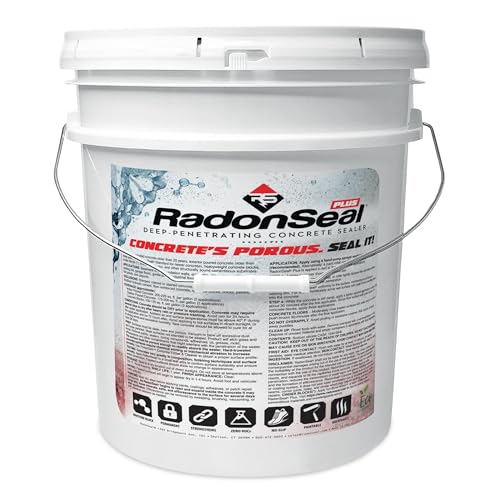
RadonSeal Plus is a deep-penetrating concrete sealer designed to react within the capillaries of concrete. It aims to reduce moisture intrusion and moisture vapor transmission in basement floors, foundation walls, slabs, and concrete blocks exposed to ground moisture. The seal forms internally rather than simply coating the surface, which helps prevent peeling or wear over time.
Who it’s best for: buyers needing a long-lasting internal seal for basements and foundations where moisture is persistent. Why selected: its focus on deep penetration can be advantageous for substrates with a history of moisture. Limitation: as with many penetrating sealers, visible surface finish changes are minimal, so it may be less suitable if you need a dramatic surface appearance change.
DAP Concrete and Mortar Filler and Sealant (Gray, 10.1 Oz)

DAP Concrete and Mortar Filler is a ready-to-use patch filler intended to seal cracks and holes in concrete and masonry. It does not require mixing and offers a low-odor adhesive that cleans up with water. The product cures to a firm surface within 24 hours and allows return to light service in a short period. It’s best for non-structural crack repairs and interior or exterior patches where aesthetics are a concern.
Who it’s best for: DIYers seeking a simple crack repair solution without the need for mixing or specialized tools. Why selected: fast setup, low odor, and ease of cleanup. Caution: it is not a long-term foundation sealing system; use it for cracks and small holes rather than extensive moistureproofing.
Ames Block & Wall Liquid Rubber Waterproofer
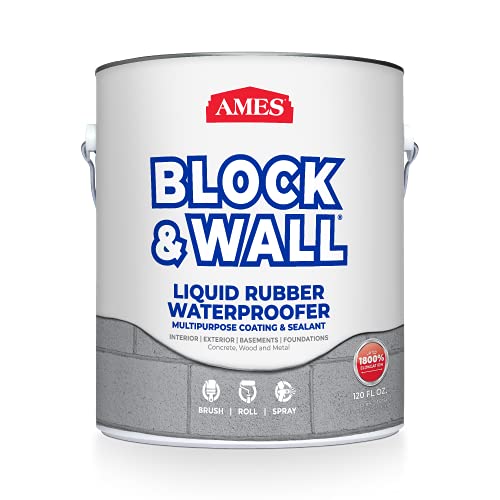
Ames Block & Wall Liquid Rubber Waterproofer is a one-gallon white coating designed for use as a concrete sealer and waterproofer in basements, foundations, and other masonry surfaces. The product is marketed for easy application and domestic use, with a straightforward formulation. This option is better for smaller projects or as a finishing coat after an initial wet sealant step. A potential limitation: being a white coating, it may show staining or require final topcoating for color consistency in some spaces.
Who it’s best for: homeowners needing a simple, approachable coating for smaller basement surfaces or for use as a primer prior to other sealers. Why selected: easy application, USA-based manufacturing emphasis, and a compact size. Caution: white finish may require cleaning or topcoat to maintain appearance depending on traffic and exposure.
1 Gallon Concrete Sealer by OAIEGSD

OAIEGSD’s 1 Gallon Concrete Sealer is a penetrating water-based silane-siloxane sealer designed for indoor and outdoor use. It emphasizes water resistance, invisible surface protection, and increased lifespan by reducing water absorption. The product is suitable for driveways, patios, garages, and other masonry surfaces where spills, stains, and freeze-thaw cycles are concerns.
Who it’s best for: buyers seeking a low-odor, penetrating seal that preserves surface aesthetics while offering moisture protection. Why selected: effective moisture barrier with a silent, protective finish that remains unobtrusive. Limitation: as a penetrating sealer, the visible color and finish of the surface are not significantly altered, which may be a drawback for those hoping for a glossy or tinted look.
Buying Guide: Key Considerations for Basement Concrete Sealers
- Leak severity and project size: For persistent leaks or large areas, consider high-elasticity sealants like liquid rubber membranes (non-surface coatings) or deep-penetrating sealers for long-term interior protection.
- Penetration vs. surface coating: Penetrating sealers reduce moisture ingress from within, but surface coats can provide immediate aesthetics and a uniform finish. Choose based on substrate condition and visibility requirements.
- Cure time and foot traffic: Some patches cure quickly and allow foot traffic within hours, while others require longer with restricted access. Plan around occupancy and activity.
- Chemical compatibility and substrates: Ensure the sealer adheres to concrete, masonry, wood, or metal as needed. Compatibility reduces peeling and improves durability.
- VOC content and odors: For indoor basements, low-VOC or odor-minimizing products support a healthier indoor environment during application.
- Maintenance and reapplication: Some products form durable internal seals; others may require periodic reapplication or topcoats to maintain aesthetics or performance.
FAQ: Quick Answers for Basement Sealing
- What is the best option for active basement leaks?
– A high-elasticity, penetrating waterproofing membrane (like Liquid Rubber Sealant) is often preferred for active leaks due to its flexible, adherent barrier. - Do I need a primer before applying these sealers?
– Some products require clean, dry surfaces and possibly a bonding primer; always follow the manufacturer’s prep instructions for best results. - Can I use these sealers on concrete blocks?
– Yes, several products advertise adhesion to concrete blocks and masonry surfaces, but verify compatibility with your specific substrate. - Are penetrating sealers better than surface coatings for basements?
– Penetrating sealers reduce moisture from within the concrete, while surface coatings offer a visible layer and sometimes added color or texture. - How long before a basement is usable after sealing?
– Cure times vary; some patches cure within 24 hours, while full sealing systems may require longer. Check the product label for guidance. - Is a white coating a concern for basements?
– White coatings like the Ames product can be aesthetically sensitive; consider topcoat options if needed to match space design.