
When choosing a band saw blade for stainless steel, look for bi-metal construction, appropriate tooth count, and a thickness that suits the metal’s hardness. This guide highlights five blades designed to handle stainless steel efficiently, with practical notes on what each blade excels at and who should consider them. The top picks cater to professional metalworkers, hobbyists, and maintenance shop crews who need reliable stainless steel cutting with consistent results.
Summary table of selected products:
| Blade | Style | Length | Width | Thickness | Tooth Count | Best For |
|---|---|---|---|---|---|---|
| Imachinist S93121214SS | Bi-Metal | 93.5″ | 1/2″ | 0.025″ | 14 TPI | Thin-walled stainless, ferrous metals |
| FOXBC 44-7/8″ Blades | Bi-Metal | 44.88″ | 1/2″ | 0.020″ | 10/14 TPI | Portable band saws, mixed metals |
| Imachinist S6412121418SS | Bi-Metal | 64.5″ | 1/2″ | 0.025″ | 14/18 TPI | Stainless and hard metals |
| Imachinist S621224SS | Bi-Metal | 62″ | 1/2″ | 0.025″ | 24 TPI | Fine stainless cuts |
| Imachinist S933414SS | Bi-Metal | 93″ | 3/4″ | 0.035″ | 14 TPI | Thicker stainless sections |
Buyer notes: For best performance, adjust feed rate and blade speed to the metal grade. If cutting non-ferrous metals, these blades are generally not recommended. Consider blade width and thickness in relation to your machine’s capabilities and the material type you intend to cut.
Imachinist S93121214SS Bi-Metal 93.5″ 14TPI For Stainless

Bi-metal blade made from M42 steel, 93-1/2″ long, 1/2″ wide, 0.025″ thick, with a 14TPI teeth profile optimized for stainless steel. Recommended cutting speeds are 100–300 SFPM for ferrous metals and 300–800 SFPM for non-ferrous metals. Avoid cutting metal on wood-cutting bandsaws exceeding 1,000 SFPM for best results.
Best for: Shop professionals cutting stainless steel bars, tubing, or thin-walled profiles with a need for stable, narrow-kerf blades. This blade suits stainless and other ferrous metals with hardness below ~30 HRC.
Caution: Do not use on non-ferrous metals; performance can drop on materials outside the stated ferrous range. The fixed teeth 14TPI is designed for specific thin profiles.
FOXBC 44-7/8 Inch 10/14 TPI Blades, 3-Pack

Three-pack, 44-7/8″ long, 1/2″ wide, 0.020″ thick with 10/14 TPI teeth. Designed for portable Milwaukee and DeWalt saws, this blade is compatible with most 44-7/8″ saws and commonly used for thicker metal cuts.
Best for: Portable band saw users needing a versatile blade that can handle a mix of stainless steel and related metals on-site or in small shops. The 10/14 TPI range balances speed and finish on moderate-thickness stainless sections.
Limitation: Not optimized for very hard stainless grades or very thick sections; consider higher thickness blades for heavy stock to reduce deflection.
Imachinist S6412121418SS M42 64.5″ Bi-Metal

Bi-metal blade with M42 steel, 64-1/2″ long, 1/2″ wide, 0.025″ thick. Features a 14/18TPI variable teeth profile for stainless steel and other ferrous metals. The teeth arrangement covers a sequence from finer to coarser as needed for different stock.
Best for: Applications requiring flexible performance across stainless steel grades and hard ferrous metals. The variable teeth help balance cutting speed with surface finish on mixed-stock runs.
Limitation: Do not cut non-ferrous metals with these blades to preserve blade life and ensure consistent results.
Imachinist S621224SS M42 62″ 24TPI Bi-Metal
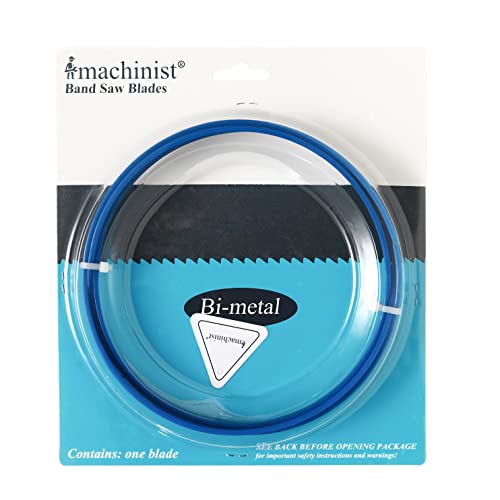
Bi-metal blade, 62″ long, 1/2″ wide, 0.025″ thick with a fixed 24TPI. Specifically designed for stainless steel with a constant teeth profile. Recommended speeds: 100–300 SFPM for ferrous metals and 300–800 SFPM for non-ferrous metals. Non-ferrous metals are not advised.
Best for: Precision cuts in thinner stainless sections where a fine finish is key, such as tubing or small-diameter profiles. The 24TPI ensures cleaner finishes on thinner stock.
Limitation: Higher tooth count can reduce material removal rate on thick stock; for heavy stock, consider a lower TPI blade.
Imachinist S933414SS M42 93″ 3/4″ Bi-Metal

Bi-metal M42 band blade, 93″ long, 3/4″ wide, 0.035″ thick, with a fixed 14TPI for cutting stainless steel. Suitable for stainless steels such as 304, 310, 410, 316L, 310, and 420. The 14TPI offers a robust balance of cutting speed and chip clearance for solid stainless sections.
Best for: Heavier stainless sections or thicker stock where a wider blade and thicker body help maintain stability and finish.This blade suits shop-floor tasks requiring longer runs between blade changes.
Limitation: The wider body and increased thickness require a compatible machine setup; ensure the machine can accommodate 3/4″ width blades.
Buying Guide: What To Consider When Choosing Stainless Steel Band Saw Blades
What material and thickness will you cut?
Stainless steel varies in hardness and thickness. Bi-metal blades with M42 steel provide toughness and wear resistance suitable for ferrous metals. For thin-walled profiles, a narrower blade or a higher tooth count can improve finish, while thicker stock benefits from wider blades for stability.
What tooth profile is best?
Fixed teeth (constant TPI) blades are reliable for uniform cuts in stainless steel. Variable teeth blades help handle a range of stock, providing faster cutting and smoother finishes on mixed materials. For heavy stainless, lower TPI offers faster material removal; for thin stock, higher TPI improves surface finish.
How important is blade speed?
Follow recommended SFPM ranges: 100–300 SFPM for ferrous metals, and 300–800 SFPM for non-ferrous metals. Exceeding these speeds on metal-cutting bandsaws can cause overheating and reduced blade life.
Machine compatibility matters
Blade width and thickness must fit your bandsaw’s wheel and guide system. Wider blades provide stability for thick stock but require a compatible machine. Ensure your setup supports the blade length and width before purchasing.
Maintenance and safety
Keep blades clean and free of built-up chips. Use proper tension and alignment to prevent blade wandering. Wear protective gear and follow machine safety guidelines during operation.
Special considerations for stainless steel
Stainless steel can work-harden if cut aggressively. Use appropriate feed rates and avoid aggressive starts or high-speed heavy cuts. Choose blades designed for stainless with appropriate tooth geometry to balance heat generation and chip clearance.
Buying tips for different buyers
- Shop technicians: prioritize blades with stable tooth profiles and reliable wear resistance for frequent use.
- Maintenance teams: select multi-pack options for quick blade swaps and reduced downtime.
- Hobbyists: consider narrower blades for tight tolerances and easier handling on portable saws.
FAQ
- What blade is best for stainless steel cutting in a portable saw?
Choose a 44-7/8″ blade with 10/14 TPI or a similar width and TPI suitable for portable saws, ensuring compatibility with your model. - Can I cut non-ferrous metals with these blades?
Most listed blades are optimized for stainless and ferrous metals. They are not recommended for non-ferrous metals. - How do I know which TPI to pick?
Higher TPI (more teeth) provides a smoother finish on thin stock; lower TPI allows faster cutting for thicker stock. Match to stock thickness and finish requirements. - Are bi-metal blades worth the extra cost?
Bi-metal blades offer improved toughness and wear resistance, which is beneficial when cutting stainless steel over long runs. - Is blade width important?
Yes. Wider blades are more stable for thick stock; narrower blades are better for tight radii or thin profiles. Check machine compatibility.