
Protecting basements from flooding hinges on reliable backup power for your sump pump. This guide reviews top backup solutions—battery backup systems and portable generators—that ensure sump pumps run during outages. Each option below is evaluated for reliability, ease of use, and compatibility with typical home sump setups. Whether you need a compact battery backup or a robust generator, you’ll find practical, objective insights to help you choose the right system for your home.
Summary Table Of Selected Products
| Product | Type | Key Benefit | Power Output |
|---|---|---|---|
| PumpSpy 2000W Sump Pump Battery Backup System | Battery Backup System | High wattage for two pumps; smart cooling | 2000W |
| VOONKE 1500W Sump Pump Battery Backup System | Battery Backup System | Easy LCD display; automatic switching | 1500W |
| PumpSpy 1500W Sump Pump Battery Backup System | Battery Backup System | Reliable power with cooling feature | 1500W |
| 1733 Battery Backup System for Sump, Sewage, and Ejector Pumps | Battery Backup System | Compact, silent operation | 1800W |
| Westinghouse 12500 Peak Watt Dual Fuel Portable Generator | Portable Generator | Dual fuel flexibility; remote start | 12500 Peak / 9500 Running |
PumpSpy 2000W Sump Pump Battery Backup System

The 2000W PumpSpy backup unit provides overcharge prevention with trickle charging to keep the battery ready for use. A smart cooling feature enhances safety and extends lifespan. It delivers a stable pure sine wave 120 VAC output capable of powering two primary sump pumps simultaneously, as long as the combined current draw stays under 16.6 amps. When AC power fails, it automatically switches to battery power and recharges when power returns. It includes two grounded outlets and a USB charge port for added utility.
Reliability is supported by the unit’s quick transition to battery operation, minimizing downtime during outages. The system is designed for homes with multiple sump pumps or higher peak demands, and the built-in charging and cooling features help maximize uptime.
VOONKE 1500W Sump Pump Battery Backup System

The VOONKE backup system delivers up to 1500 watts with a sine-wave output suitable for single or dual sump pump setups. It uses a built-in 20A charger for safe, constant current charging and includes overcharge protection to extend battery life. An LCD display provides status updates, and the unit offers straightforward assembly with side-mounted controls and wall-mount options. Note that battery compatibility matters, as lithium batteries may require different charging considerations.
Operating simplicity and reliable charging make this a practical choice for basements requiring dependable backup without complex wiring. The system is designed to integrate smoothly into typical sump pump configurations and provides clear visibility of battery and pump status via the LCD display.
PumpSpy 1500W Sump Pump Battery Backup System
The 1500W PumpSpy backup unit emphasizes cutting-edge protection with overcharge prevention and a trickle-charge mode to maintain readiness. A smart cooling feature helps manage temperature during operation, contributing to safer long-term use. It powers two primary sump pumps concurrently with an aggregate draw under 12.5 amps and includes two grounded outlets plus a USB charge port for supplemental devices.
As with other backup solutions, it switches seamlessly to battery power when AC is interrupted and reverts to AC when restored, ensuring sump pump operation without user intervention. This model suits users seeking reliable performance in moderate-to-high-demand sump pump systems.
1733 Battery Backup System for Sump, Sewage, and Ejector Pumps

The 1733 model is an 1800-watt pure sine wave battery backup designed for sump, sewage, and ejector pumps. It emphasizes compact, rugged aluminum construction and silent operation. To use, pair with a 12-volt deep-cycle marine battery (purchased separately) rated between 90 and 200 amp-hours. The kit includes battery cables, and indicators display power output and battery status to facilitate monitoring and maintenance.
Key advantages include a compact form factor and a straightforward installation process, making it suitable for smaller basements or spaces with limited installation room. The system’s quiet operation helps maintain a unobtrusive backup solution in living areas or utility rooms.
Westinghouse 12500 Watt Dual Fuel Portable Generator

This dual-fuel portable generator provides substantial backup power with 12500 peak watts (gas) and 9500 running watts, plus a propane option. It features remote electric start, transfer switch readiness, and multiple outlets including GFCI and RV-ready configurations. A 6.6-gallon fuel tank supports extended run times, and a digital hour meter helps track maintenance. This unit is appropriate for whole-home backup scenarios or for powering sump pumps along with other essential circuits during outages.
Considerations include fuel storage, noise levels, and the need for proper ventilation and transfer-switch compatibility. It’s best suited for larger homes or properties where a dedicated transfer switch can be installed to manage critical circuits safely during outages.
VMAXSLR125 Solar Battery 12V 125Ah
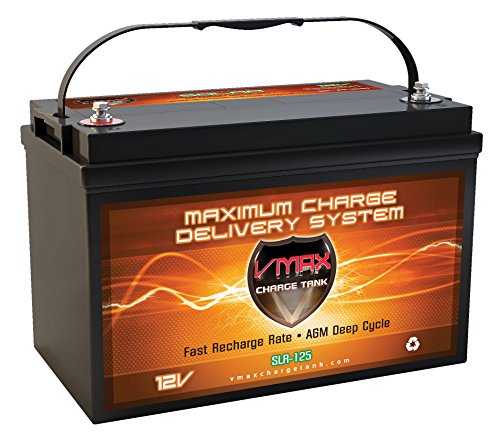
The VMAXSLR125 is a 12V 125Ah AGM deep-cycle battery designed for backup applications, including solar, wind, or generator backups for sump pumps and other essential loads. It offers a long float service life of 8 to 10 years and includes standard terminals for straightforward wiring with compatible systems. It’s compatible with a variety of charging sources, enabling flexible integration into off-grid or hybrid backup setups.
Pros include robust deep-cycle performance and compatibility with multiple charging sources. Potential considerations involve proper battery management and ensuring your backup system’s charger matches the battery’s chemistry to optimize lifespan and reliability.
Buying Guide: Key Purchase Considerations For Sump Pump Backup
- Power needs and pump count: Determine the total running watts of all sump pumps you intend to power during an outage. Battery backups with 1500–2000W support two pumps, while higher-wattage units handle more demanding setups. If you only have one pump, a smaller backup may suffice.
- Type of backup: Battery backup systems offer immediate, quiet protection without fuel or noise, ideal for frequent outages. Portable generators provide longer runtime and flexibility for whole-home backing but require fuel, maintenance, and noise considerations. Choose based on outage duration, space, and local regulations.
- Battery compatibility: For battery-powered backups, verify compatible battery types (lead-acid, AGM, or lithium). Some units require specific battery chemistries to prevent overcharge or undercharge. Check charging specs and ensure you have a suitable battery on hand if not included.
- Ease of installation: Look for plug-and-play designs or units with simple mounting options and clear indicators. LCD displays that show voltage, charge level, and status help prevent surprises during power failures.
- Transfer behavior: Automatic switching with fast transfer is crucial. Ensure the backup system detects AC loss quickly and re-engages the sump pump without gaps in operation, protecting your basement from flooding risks.
- Maintenance and lifespan: Battery backups require periodic checks and battery replacements every 3–10 years depending on chemistry. Generators require fuel management, oil changes, and routine testing to maintain reliability.
- Safety and compliance: Confirm that any generator installation complies with local codes and uses a proper transfer switch. For battery backups, ensure adequate venting and heat management for battery packs and cooling features in units with smart cooling.
- Noise and space considerations: Battery backups are typically quiet and compact, while generators produce more noise and require ventilation. Consider outdoor placement, enclosure needs, and potential neighbor impact when selecting a generator.
- Budget and lifecycle costs: Initial cost, battery replacement intervals, fuel prices, and maintenance influence total cost of ownership. A higher upfront investment in reliable backup can reduce flood risk and long-term expenses.
- System monitoring: Some units come with LCD displays or companion apps for real-time status. Monitoring helps you anticipate failures and plan maintenance before outages occur.