
When uninterrupted power is essential, a reliable automatic transfer switch (ATS) keeps critical devices running by seamlessly switching between main power and a battery or solar backup. This guide highlights five of the best options designed for DC and AC backup scenarios, with focuses on fast switching, protection features, and easy configuration. Each entry provides a quick overview and practical insights to help informed decisions for home or small business setups.
| Product | Brand | Voltage/Current | Power Source | Key Benefit |
|---|---|---|---|---|
| Dual Power Automatic Transfer Switch, 13A | Frasiu | 5-40V DC | Solar/Battery | Ultra-fast switching, real-time monitoring |
| Dual Power Automatic Transfer Switch, 8A | Frasiu | 5-40V DC | Solar/Battery | Compact, protected with clear display |
| AC120V 15Amp ATS | HCDC | AC 90-135V | AC Utility vs Inverter | Low switching time, robust relay design |
| MOES Dual Power Controller 50A | MOES | DC 12/24/48V | Grid/Battery | Auto-detects voltages, versatile battery support |
| Go Power! TS-30 30A ATS | Go Power | AC up to 30A | Dual sources + generator | Generator delay switch, easy install |
Frasiu Dual Power Automatic Transfer Switch, 13A DC 5-40V

Designed for DC backup systems, this Frasiu model offers seamless switching between primary and backup sources (solar, battery, or adapter) in under 300 microseconds. The setup supports a range of voltages from 5 to 40V, making it suitable for routers, cameras, and other essential DC equipment. It includes comprehensive protections to guard against reverse polarity and overload conditions, helping prevent damage to devices and power sources. Users can manually adjust cut-off, recovery, delay, and minimum backup voltage, with a digital screen showing real-time voltage for quick monitoring.
Frasiu Dual Power Automatic Transfer Switch, 8A DC 5-40V
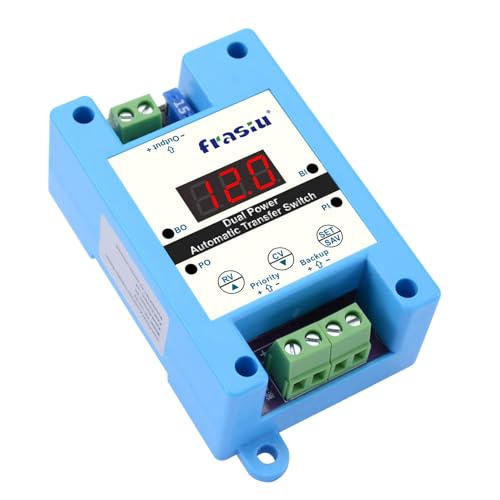
Another Frasiu option, this 8A version delivers the same dual-power seamless switching as the 13A model, with robust reverse polarity and overload protection. It is designed for compact backup deployments where space is at a premium but reliable uninterrupted power remains critical. The device supports adjustable cut-off and recovery voltages and provides a digital readout for real-time monitoring, ensuring straightforward configuration and dependable performance for sensitive DC gear.
HCDC AC120V 15Amp Automatic Transfer Switch

The HCDC HD060 ATS provides a straightforward inline transfer relay for AC-powered systems, enabling fast switching between utility and inverter/generator inputs. With a 30-millisecond switching time, it supports most smart devices and computers without interruption. The design features four high-power SPST relays to minimize arcing and protect live and neutral lines, with internal grounding to maintain safety across input and output connections.
EIIDAR ATS AC120V 20 Amp Automatic Transfer Switch

This 20A ATS supports rapid switching between dual power sources with a focus on reliable performance across indoor and outdoor environments (IP65 protection). It emphasizes stable input-to-output transitions, minimizing disruption during power status changes. Its high-quality relays are chosen to reduce arcing, and the system is built for easy installation with compatibility for common cabling and mounting practices. It also offers protection features to guard against improper power conditions and surges.
MOES Dual Power Controller 50A
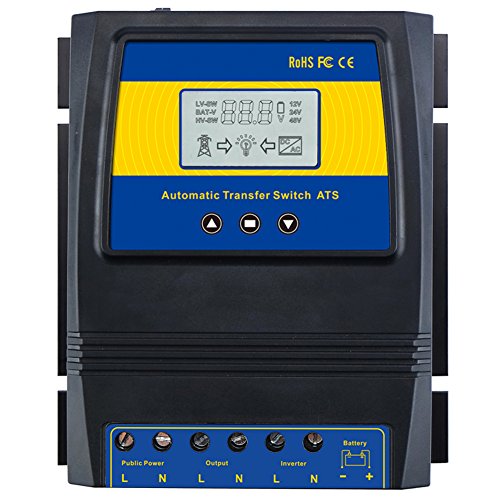
MOES offers a versatile ATS that supports both DC and AC systems, auto-detecting voltages across 12/24/48V DC and 100-240V AC. It automatically switches to backup power when battery voltage drops below the cut-off and reverts when recovery voltage is reached. The setup accommodates a wide range of battery chemistries, including sealed lead-acid, GEL, and lithium, provided the voltages stay within the supported ranges. It is suitable for off-grid solar or wind configurations and is notable for its automatic and manual control modes.
Go Power! TS-30 30 Amp ATS

The Go Power TS-30 is designed for handling two power sources up to 30 amps, offering tested compatibility with generators and other dual-source setups. It features a generator delay switch to ensure smooth and safe power transitions, reducing wear on connected equipment. The installation is kept straightforward through mounting considerations and practical wiring access, making it a practical option for residential or small business back-up systems requiring reliable switching and integration with existing generator setups.
Buying Guide
Key considerations when choosing an ATS for battery or solar back-up:
- Voltage and current range: Ensure the unit matches your system’s battery voltage (12V, 24V, 48V) or AC line (120V or 230V) and the current you expect (5A–63A or more).
- Switching speed: Faster switching minimizes interruption. DC-based ATS often target microsecond-level transitions, while some AC models operate in milliseconds.
- Protection features: Look for reverse polarity, short-circuit, overcurrent, undervoltage, and surge protection to safeguard gear and sources.
- Protection against arcing: High-quality relays and robust wiring should minimize arcing, especially for inductive loads.
- Monitoring and controls: Digital readouts or LED displays help verify real-time voltages and status. Consider whether you need automatic or manual override options.
- Installation environment: Indoor vs outdoor use, IP ratings, and enclosure compatibility influence durability and placement.
- Compatibility with sources: Verify compatibility with solar panels, batteries (lead-acid, GEL, Li-ion), inverters, and generators to avoid mismatches.
- Ease of integration: Look for clear wiring diagrams, supplier support, and whether the unit supports remote monitoring or smart home integration if needed.
- Mechanical considerations: Size, mounting method (DIN rail vs inline), and cable length requirements affect installation.
- Cost vs reliability: Higher-rated units with robust protection often offer better long-term value for mission-critical setups.
For system planners, map out your primary and backup sources, then select an ATS that offers safe, rapid switching, comprehensive protection, and straightforward deployment. Always follow manufacturer wiring diagrams and safety guidelines during installation.