
Yes—these arc welding machines are among the best options for both beginners and seasoned welders. This guide highlights five top picks that cover stick welding, portable mini models, and multiprocess options. It also explains who each product is best for, along with practical buying considerations to help you choose confidently.
| Product | Type | Voltage | Why It Stands Out |
|---|---|---|---|
| ARCCAPTAIN Stick Welder (B09YGXKZC1) | Stick Welder | 110V/220V | Synergic control and lightweight design for outdoor maintenance and DIY |
| Hpoouo 200Amp Stick Welder (B0D5Y3C7N3) | Stick Welder | 110V | Ultra-portable with 20 welding rods; strong arc control for beginners |
| S7 250A Stick Welder (B07TW57ZG8) | Stick Welder | 110V/220V | Dual voltage with hot start and arc force for larger projects |
| YESWELDER 205Amp Stick Welder (B086SNKTTK) | Stick Welder | 110V/220V | High amperage, large LED display, durable arc control |
| ARCCAPTAIN MIG Welder 6-in-1 (B0B1TGZ8XN) | Multiprocess (MIG/Stick/TIG) | 110V/220V | Versatile 6‑in‑1 with digital display and preset storage |
ARCCAPTAIN Stick Welder With LED Display
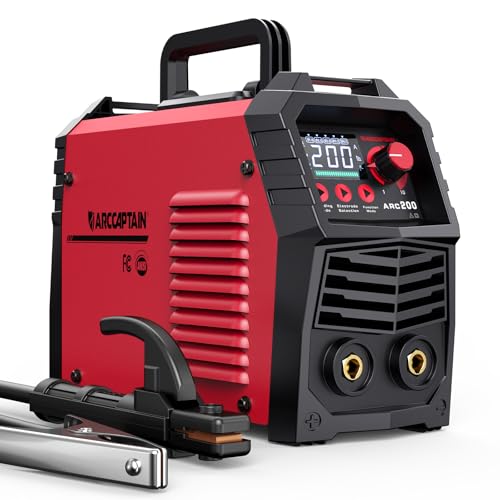
Best for outdoor maintenance and garage work where weight matters. This 110V/220V inverter welder uses IGBT technology for stable arcing and features a large LED display for easy monitoring without removing your helmet. It is particularly suitable for beginners thanks to synergic control that automatically matches current and voltage based on electrode size. The unit weighs about 7.2 lbs, making it highly portable for field repairs. A potential limitation is to avoid powering on until the screen and fan have fully shut down for safety.
Who it’s best for: DIYers, homeowners, and hobbyists who need a light, versatile welder for small to medium jobs and outdoor maintenance. Why selected: strong combination of portability, synergic control, and 6010/6011/6013/7018 compatibility.
Hpoouo 200Amp Mini Stick Welder

Better for compact tool kits and travelers who still need metal joints. This 110V unit offers 20–200A current range with included welding rods, designed for 0.06–0.2 inch thickness materials. Its ultra-light weight (about 3.7 lbs) makes it easy to carry in a backpack or toolbox. A caveat is that it is a basic model best suited for light repairs and DIY projects rather than heavy industrial work.
S7 250A Dual-Voltage Stick Welder

Best for flexible power options and heavier tasks. This dual-voltage machine supports 110V and 220V, delivering up to 250A for strong arc performance. It is compatible with common electrodes like E6010 to E7018, making it suitable for home repairs, fabrications, and farm equipment maintenance. A limitation is that some users may need a voltage adapter for 220V operation depending on locale.
YESWELDER 205Amp Large LED Display Welder

Best for strong, durable welds in a portable form. This 110V/220V dual-voltage unit offers up to 205 amps with hot start and arc force to minimize stalling and improve bead control. The large LED display supports precise, helmet-on monitoring, helping beginners and pros alike. Weight around 8.4 lbs, this model balances power and portability well, though some users may prefer a lighter unit for constant field work.
ARCCAPTAIN MIG Welder 6‑in‑1

Best for a flexible shop that needs MIG, flux core, stick, lift TIG, spot welding, and optional spool gun compatibility. This 110V/220V unit includes digital display and preset storage, with synergic MIG control and a cooling fan that runs only as needed. It’s ideal for beginners and professionals who want a single machine that covers multiple welding processes. A limitation is that some advanced TIG tasks may require separate torch equipment not included in the base kit.
Buying Guide
Power needs and voltage flexibility: Choose dual-voltage models if you work across different sites or need to switch between 110V and 220V without extra adapters. Consider whether you’ll primarily do light DIY repairs or heavier fabrication.
Process versatility: If you only weld sticks, a dedicated stick welder may suffice. For hobbyists seeking multiple methods, a 6‑in‑1 or 3‑in‑1 unit provides more value and space efficiency.
Portability: Weight and size matter for fieldwork. Lighter units are easy to carry but may compromise power. Heavier units often deliver steadier arcs and better duty cycles.
Controls and readability: An LED or digital display helps you dial in settings quickly, especially when adjusting electrode size or wire feed speed. Synergic control is handy for beginners learning arc behavior without manual setting sweeps.
Consumables and accessories: Check what comes in the kit (rods, clamps, gloves, or spool gun options). Ensure you have compatible electrodes and wire for your project materials.
Safety and maintenance: Look for units with built‑in thermal protection and fans that only run as needed. Proper shutdown procedures reduce risk when powering off the machine.
Frequently Asked Questions
- What is the difference between a dual-voltage welder and a single-voltage welder?
– Dual-voltage welders can operate on 110V and 220V power sources, offering greater flexibility for different job sites. Single-voltage devices require a compatible power supply for operation. - What welding processes are included in multiprocess machines?
– Multiprocess machines typically support MIG, flux core, stick, and sometimes TIG or spot welding, depending on the model. Always verify the included capabilities before purchase. - Is arc start important for beginners?
– Yes. Features like hot start and arc force help create a stable arc, reducing sticking and improving bead quality for learners. - Do I need a spool gun for aluminum on MIG welders?
– A spool gun is often required to feed soft/aluminum wire reliably; many budget units do not include it and require a separate purchase. - What safety practices should I follow when using an arc welder?
– Always wear appropriate PPE (helmet, gloves, jacket), ensure proper ventilation, and follow manufacturer shutdown recommendations to avoid electrical hazards.