
When choosing an arborist hand saw, look for a blade that stays sharp, a handle that minimizes fatigue, and a blade geometry that fits your typical pruning tasks. This guide highlights five top options for professional and serious DIY arborists, each suited to different cutting needs—from delicate pruning to heavy-duty limb removal. Whether you prune small branches from ornamental trees or tackle thicker limbs, these selections balance efficiency, control, and durability.
Buyer types and quick picks:
– Professional arborists: Kanzawa Samurai and EZ Kut Kamikaze offer durable Japanese steel and optimized teeth for clean cuts under demanding workloads.
– Homeowners with frequent pruning: Oregon curved saw and Auto Dynasty provide curved blades and ergonomic grips for ease of use around yards.
– Budget-conscious but quality-seeking: Samurai GC330LH and Auto Dynasty give reliable performance with practical features.
Kanzawa Samurai 330mm Pruning Saw
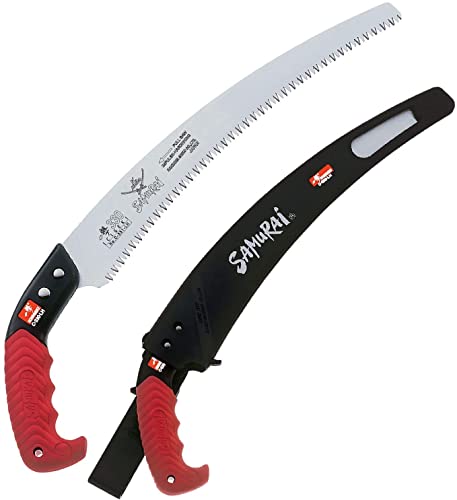
Brand: SAMURAI
Blade: 13 inch TRI CUT TEETH JAPANESE BLADE with Ergo Grip; sheath included with belt clip and easy release.
Best for: Professionals and serious hobbyists who need precise, fast pruning on medium branches. The 13-inch blade with triple-cut teeth helps reduce friction for smoother cuts, and the ergonomic handle improves grip during long sessions.
Why selected: It combines a compact 330mm blade length with specialized teeth geometry for efficient pruning, plus a protective sheath for transport and storage. The orange handle is easy to locate in cluttered tool areas.
Caution or limitation: The shorter blade may be less effective on very thick limbs; consider pairing with a longer saw for heavy-duty tasks.
Oregon 13″ Curved Curved Pruning Saw
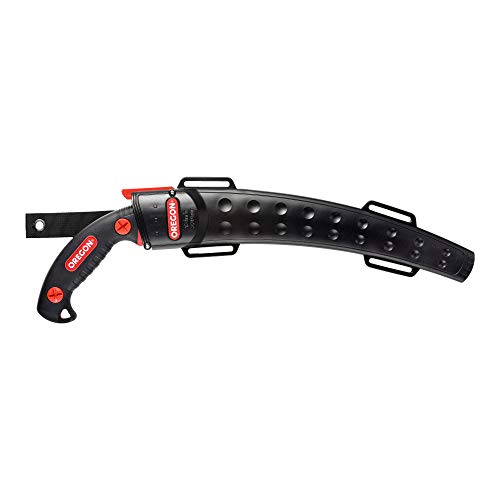
Brand: Oregon
Features: Curved blade, tri-edge offset teeth for three cutting angles, ergonomic design, high-carbon steel with chrome plating for rust resistance; impulse hardened teeth for staying sharp.
Best for: Arborists and homeowners who frequently work on distant branches where a curved blade helps leverage cutting power and reduce effort.
Why selected: The curved profile and offset teeth provide efficient pruning with less pull resistance, making it ideal for repetitive cuts on larger yard trees. The scabbard adds safety during transport.
Caution or limitation: The blade’s curved design can be less maneuverable for very small limbs or tight spots where straight blades excel.
Samurai Ichiban GC-330LH 13″ Curved Pruning Saw

Brand: SAMURAI
Features: 13-inch blade, curved blade design, includes scabbard; made in Japan.
Best for: Professionals and enthusiasts who want a reliable Japan-made pruning tool with a protective carrying case for field use.
Why selected: This model is a staple for arborists due to its proven curved blade geometry and portability with an included scabbard. It is a balanced choice for regular pruning tasks.
Caution or limitation: Blade length is fixed at 13 inches; very thick limbs may require a longer blade for efficient cutting.
TTTA Japanese Pull Saw 10.5″

Brand: T.TAOMI
Features: Thickened SK5 steel, three-sided grinding, sharp teeth; 10.5-inch blade length; professional scabbard included.
Best for: Pruning and light lumber tasks at home or on smaller properties where a compact pull saw provides clean cuts with minimal effort.
Why selected: The SK5 steel with enhanced teeth geometry supports sharper, smoother cuts and good edge retention for everyday pruning tasks.
Caution or limitation: The 10.5-inch blade is shorter than others listed here; plan around occasional longer limb work with a longer model.
EZ Kut Kamikaze Curved Pruning Saw

Brand: EZ Kut
Features: Premium SK5 high-carbon steel blade, triple-beveled teeth for smooth cuts, pull-cut design for better control, ergonomic non-slip grip.
Best for: Arborists needing long-lasting sharpness and precise cuts in demanding pruning environments, with improved control on pull strokes.
Why selected: The combination of durability, aggressive teeth design, and a comfortable grip suits extended pruning sessions where reliability matters.
Caution or limitation: The pull-cut design may feel unfamiliar to users accustomed to push-cut saws; adjust technique accordingly for best results.
Auto Dynasty 15.5″ Curved Handsaw

Brand: Auto Dynasty
Features: Curved blade for increased cutting power, double-edge with offset teeth, thermoplastic rubber over-molded handle, blade length 22.4 inches (57 cm).
Best for: Users needing a longer curved blade with robust grip for extended pruning tasks and larger branches.
Why selected: The longer blade enables faster cutting on bigger limbs, while the grip design supports comfort during long use sessions.
Caution or limitation: The longer blade increases overall weight and may be less maneuverable in tight spaces; use in open areas where space permits.
Buying Guide: How To Choose The Right Arborist Hand Saw
- Blade length and curve: Shorter blades (8–10 inches) work well for fine pruning and small branches; longer blades (13–15 inches) cut thicker limbs more efficiently. Curved blades provide more leverage on pulling cuts, especially for distant branches.
- Tooth geometry: Tri-edge and impulse-hardened teeth stay sharper longer and reduce friction, aiding clean cuts in green or dry wood. Three-sided or offset teeth can improve performance on curved blades.
- Material quality: SK5 steel and Japanese carbon steel are common for durable, sharp blades. Rust resistance and edge retention are important for frequent outdoor use.
- Ergonomics: A soft-grip, non-slip handle reduces fatigue and improves control, especially during long pruning sessions. Consider gloves if you work in wet conditions.
- Safety features: A reliable sheath or scabbard protects the blade during transport. Secure storage reduces accidental cuts.
- Use-case alignment: For distant or hard-to-reach branches, curved blades and longer lengths are advantageous. For tight spots, straight blades with shorter lengths offer better maneuverability.
- Budget and availability: Durable models with good tooth geometry often justify a higher initial cost, as they require less frequent sharpening and replacement blades.
Frequently Asked Questions
- What is the best pruning saw for professionals? A saw with a curved blade, high-carbon steel, and impulse-hardened teeth tends to offer consistent performance and durability for repeated professional use.
- Should I choose a curved or straight blade? Curved blades excel at pulling cuts and reach; straight blades are often easier to control in tight spots and for small branches.
- How important is blade length? Longer blades cut thicker limbs faster but are heavier and less maneuverable in tight spaces. Shorter blades are lighter and better for precision pruning.
- What maintenance does a pruning saw require? Regular cleaning of sap and debris, occasional sharpening, and drying after use to prevent rust. Store in a sheath to protect the blade.
- Are Japanese blades worth it? Yes, many arborists prefer Japanese blades for edge retention and cutting efficiency, though they can be pricier and require more maintenance.
- How do I select a saw for my yard size? For small to medium yards with frequent pruning, a mid-length curved saw with a protective sheath is convenient. For larger yards, a longer blade with robust grip offers faster work and comfort.
| Product | Blade Type | Best For | Notes |
|---|---|---|---|
| Kanzawa Samurai 330mm | 13″ TRI CUT/ergonomic | Medium branches, professionals | Compact, protective sheath |
| Oregon 13″ Curved | Curved with offset teeth | Distant branches | Rust-resistant, ergonomic |
| Samurai GC-330LH 13″ | Curved | Japan-made reliability | Includes scabbard |
| EZ Kut Kamikaze 19.3″ | Curved, SK5 steel | Heavy pruning | Triple-beveled teeth |
| Auto Dynasty 15.5″ | Curved, long blade | Thick limbs, extended pruning | Long reach, robust grip |